

Free Hotel & Room Maintenance Checklist Templates
Template Library > Hospitality Inspections > Hotel Maintenance Checklists
Maximize Guest Satisfaction with Hotel Maintenance Checklists & Templates
A hotel maintenance checklist ensures efficient operations and guest safety by outlining essential maintenance tasks. Regular use of the checklist facilitates proactive management, reduces costly repairs, and extends the lifespan of hotel assets. This structured approach ensures a well-maintained environment that supports both staff efficiency and a positive guest experience.
Using a hotel maintenance checklist PDF template offers the following benefits:
- Proactively identifies issues before they escalate
- Streamlines maintenance tasks for improved staff efficiency
- Enhances guest satisfaction through well-maintained facilities

With the GoAudits Hotel QA App, you can:
- Eliminate paperwork: conduct efficient digital audits, add photos from mobile device
- Customize this template or easily create your own
- Save time with instant reports & assign corrective actions
Guest Rooms
Garden And Outdoor Spaces
Gym
Industrial Kitchen
Landscaping And Grounds
Pools And Jacuzzis
Boilers And Chillers
Electrical
HVAC System
Plumbing
Safety And Emergency
Security
Exterior
Plumbing
Roof
Safety And Emergency
Security
Industrial Laundry
Guest Rooms
Garden And Outdoor Spaces
Gym
Industrial Kitchen
Landscaping And Grounds
Pools And Jacuzzis
Boilers And Chillers
Electrical
HVAC System
Plumbing
Safety And Emergency
Security
Exterior
Plumbing
Roof
Safety And Emergency
Security
Industrial Laundry
Save Time with Digital Inspections
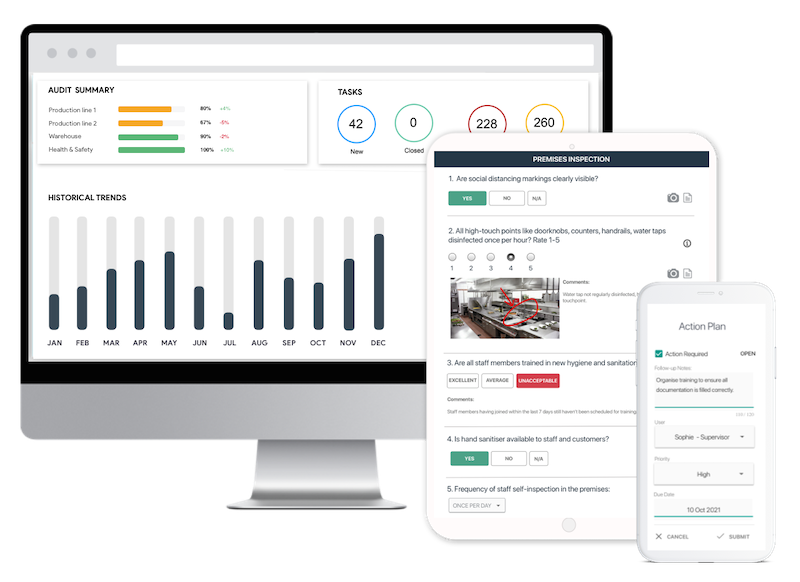
- Easily capture & attach photos, directly on your mobile device.
- Instantly generate and share detailed reports after the inspection.
- Track corrective actions, view historical trends, improve standards.


What is a Hotel Maintenance Checklist?
A hotel maintenance checklist is a document used to list all the maintenance and inspection tasks that need to be completed to ensure the upkeep of various areas in a hotel.
Typically, a hotel checklist for maintenance includes the following areas:
- Guest Rooms: Well-maintained guest rooms are essential to creating a positive impression on guests and delivering a comfortable experience.
- Common Areas and Amenities: Guests often select hotels based on the quality and condition of shared spaces and amenities. For instance, Gen Z guests may prioritize strong Wi-Fi connections and modern social areas, while business travelers might focus on reliable conference room facilities. Poor maintenance of these areas and amenities can negatively impact guest satisfaction.
- Building Systems: This includes routine inspection and maintenance of heating and cooling systems, ventilation, lighting, power supplies, and elevators.
- Facilities: It covers the structural and operational components of the building, including the roof, walls, flooring, windows, and doors. Regular checks are essential to ensure the facility remains in good condition.
- Equipment: All equipment, from kitchen appliances to hotel housekeeping tools, must be regularly inspected and maintained. This includes ensuring that laundry machines, dishwashers, fire safety equipment, and elevators are functioning properly.
Thus, a comprehensive hotel maintenance inspection checklist template provides a safe and positive guest experience while maintaining operational efficiency and keeping your business profitable.

Why is It Important to Use a Hotel Checklist for Maintenance?
First and foremost, a good hotel maintenance checklist sample helps hoteliers identify and address maintenance issues before they escalate into serious problems. This proactive approach helps prevent guest complaints, negative reviews, a bad reputation, or legal liabilities.
Checklists list the items and procedures to the T for the maintenance staff to know exactly what needs to be done and how. This ensures your hotel delivers a positive guest experience consistently. Furthermore, it increases operational efficiency by allowing staff to prioritize duties, allocate resources, and prevent overlapping or overlooked maintenance tasks.
You can customize your checklists to include checks for relevant regulatory and industry standards (like Forbes and LQA standards) to enhance compliance and establish your hotel as a reliable and trustworthy establishment.
Using a hotel maintenance list is also an effective cost-control measure. It helps hotels identify and address maintenance issues early on, prolonging the lifespan of their assets and preventing expensive repairs and replacements.
👉 Case Study: How the hotel management company TMS (Hilton, Marriott) ensure high standards and brand compliance across its portfolio.
Types of Hotel Maintenance Checklists
Depending on when and how an issue needs to be addressed, there can be two types of hotel maintenance checklists.
Reactive Maintenance Checklist
Reactive maintenance refers to a type of maintenance wherein the issue is addressed after it has occurred. It includes problems or breakdowns that are relatively easy and quick to resolve.
A reactive maintenance checklist in hotels would have items like replacing a malfunctioning light bulb, repairing the fire alarm, and cleaning a clogged toilet in a guest room.
Hotel Preventive Maintenance Checklist PDF
As the name suggests, preventive maintenance involves performing upkeep tasks to prolong the equipment and asset lifespan and prevent costly repairs. In essence, it deals with addressing minor problems before they escalate into something serious.
Here are some of the examples that one may find in a preventive hotel maintenance checklist:
- Regular servicing of HVAC systems
- Routine checks of water heaters, pipes, and faucets
- Scheduled inspections of the roof for signs of leaks, damage, or wear
- Frequent checks of pool filters, pumps, chlorine levels, and tile conditions
How to Prioritise Hotel Maintenance Requests
Not all maintenance issues carry the same urgency, and treating them equally is one of the most common causes of engineering team overload. A clear priority framework ensures guest-facing failures get fixed first, compliance-critical systems get fixed fast, and low-impact work gets scheduled without clogging the queue.
Most hotel engineering teams use a four-tier priority system:
- P1: Immediate (respond within 15 minutes). Issues that affect guest safety or make a room uninhabitable. Examples include no hot water in a guest room, a broken door lock, a malfunctioning smoke detector, a flooding bathroom, or a non-functional heating or cooling unit during extreme weather.
- P2: Urgent (resolve within 2 hours). Issues that significantly impact guest comfort or experience but are not safety-critical. Examples include a broken TV or in-room entertainment, a faulty minibar, a stuck window, or a flickering light in a guest room.
- P3: Standard (complete same day). Issues that affect back-of-house operations or common areas without an immediate guest impact. Examples include a dripping tap in a staff bathroom, a scuffed wall in a corridor, or a broken lobby chair.
- P4: Scheduled (complete within 48–72 hours). Non-urgent maintenance tasks can be planned into the weekly schedule. Examples include preventive HVAC filter checks, routine plumbing inspections, and exterior paint touch-ups.
Assign priority levels at the point of issue reporting — not retrospectively. A digital maintenance checklist with a built-in priority field ensures that every reported fault is automatically routed to the right engineer with the right deadline, without supervisors having to triage manually.
What Are the Most Common Hotel Maintenance Problems?
The most common hotel maintenance problems are HVAC failures, plumbing leaks, electrical faults, broken door locks, and worn or damaged furniture. These five categories account for the majority of guest complaints and reactive work orders across most hotel types and sizes.
- HVAC failures are the single most disruptive category. A guest room that’s too hot or too cold generates an immediate complaint and often a room move, comp, or refund. HVAC failures are also among the most preventable: clogged filters, dirty coils, and uncalibrated thermostats cause most in-season breakdowns and are all addressed by routine preventive maintenance.
- Plumbing issues such as dripping faucets, slow drains, running toilets, and intermittent hot water are the most frequently reported maintenance categories in guest rooms. Most are minor individually, but add up to significant water waste and maintenance hours if not caught during regular inspections.
- Electrical faults cover everything from tripped circuits and blown bulbs to faulty outlets and malfunctioning USB charging points. Guests increasingly rely on in-room charging, and a non-functional outlet is now a more frequent complaint than it was five years ago.
- Door lock failures like keycards that demagnetise, locks that stick, or electronic lock systems that drop connection, are both a guest experience problem and a security concern. They also represent one of the leading causes of late-night emergency maintenance calls.
- Furniture and fixture damage accumulates gradually and tends to go unreported by guests who assume it’s normal. Regular room inspection cycles that include furniture condition checks are the only reliable way to catch wear before it embarrasses the property on a guest review.
Building each of these categories into a dedicated section of your hotel maintenance checklist, with specific inspection items, not just general prompts, ensures none of them get missed during routine rounds.
What Should be Included in a Hotel Maintenance Checklist Form?
A hotel maintenance checklist should cover five areas: guest rooms, common areas, building systems (HVAC, electrical, plumbing), facilities and structure, and equipment. Each area needs tasks broken down by frequency: daily, weekly, monthly, and quarterly.
For thorough and efficient operations, a hotel checklist should cover different areas of the property. Moreover, tasks enlisted for each area should address problems related to safety, cleanliness, functionality of equipment, and regulatory compliance.
Here’s what a typical hotel maintenance checklist sample looks like:
Hotel Preventive Guest Room Maintenance Checklist
Guest rooms are where guests spend most of their time, making their upkeep critical. Regular maintenance checks should focus on cleanliness, comfort, and the functionality of equipment in the room to ensure a positive guest experience.
Here are the items included in a typical hotel room maintenance checklist template:
- Check and clean air conditioning and heating units
- Test electrical outlets for functionality
- Inspect lighting and replace burnt-out bulbs
- Inspect plumbing for leaks in faucets, showers, and toilets
- Ensure the television, remote, and Wi-Fi are working
- Verify that doors and windows lock securely
- Ensure that all room keys or keycards are functioning properly
- Clean and check under beds, dressers, and closets for debris
- Inspect furniture for wear and tear, replace as needed
- Ensure linens and towels are clean
Verify that room amenities like mini-fridge, coffee maker, etc. are stocked and functional
👉 Maintenance Checklist for Hotel Rooms: Use this room audit form for daily checks of each room by the maintenance team.

Common Area Maintenance Checklist
Common areas are the face of the hotel, where first impressions are formed. Ensuring that these spaces are well-maintained can build a strong brand identity.
- Inspect and clean floors, carpets, and tiles
- Ensure lobby furniture is clean and in good condition
- Check lighting in hallways, staircases, and elevators
- Clean and sanitize high-touch surfaces like door handles, elevator buttons
- Inspect and maintain restrooms for cleanliness and functionality
- Check for and repair any damage to walls, ceilings, and doors
- Test and maintain fire extinguishers and fire alarms
Ensure elevators are operational and inspected regularly
👉 Guest Experience in Communal Areas: Here’s a free checklist to help you maintain high standards in shared spaces.
Building System Maintenance Checklist
The building’s core systems, including electrical, HVAC, and plumbing, must be regularly inspected and maintained to prevent malfunctions and deliver top-notch hotel service.
- Inspect and service HVAC systems
- Check electrical panels and breakers for any signs of wear
- Test emergency lighting and backup power generators
- Ensure the fire suppression system is operational
- Inspect plumbing systems for leaks, water pressure, and drainage
- Inspect elevators for smooth operation and ensure they meet safety standards
- Test and maintain water heaters for a consistent hot water supply
- Regularly clean air ducts and change filters for proper airflow
- Inspect and clean sump pumps and drainage systems
Facilities Management Maintenance Checklist
The facilities’ overall structure, from the exterior to the interior, requires constant upkeep to maintain the hotel’s image and functionality.
- Maintain landscaping and parking lots, ensuring walkways are free of hazards
- Ensure windows and doors are sealed properly to prevent drafts
- Inspect exterior walls and signage for wear or damage
- Inspect and maintain safety equipment, including handrails and anti-slip mats
- Ensure pathways and emergency exits are well-lit and unobstructed
- Conduct regular deep cleaning of floors, including tile, carpet, and grout
- Check for pests or insects in the facility and schedule pest control
- Inspect for structural damage (cracks, water damage, etc.) and repair as necessary
👉 Facility Management Checklist: Here’s a free checklist to help you get started with facility inspection at your hotel.
Equipment and Assets Maintenance Checklist
Proper maintenance of hotel equipment is essential for smooth operations, from kitchen tools to laundry machines. This helps prevent breakdowns that could disrupt service.
- Test and maintain all kitchen appliances
- Inspect laundry machines for lint buildup and operational issues
- Check housekeeping equipment for wear and performance
- Ensure the pool and spa filtration systems are cleaned and operational
- Service and calibrate electronic door locks and keycard systems
- Regularly inspect boilers and water heaters for proper functioning
- Check if the fitness center equipment is clean and functioning
Develop a Preventive Maintenance Schedule with a Hotel Maintenance Log Template
A well-structured preventive maintenance schedule is essential for ensuring the efficient operation of a hotel. For smooth planning and execution, organize tasks by frequency, for example into daily, weekly, monthly, quarterly and annual hotel preventive maintenance checklist templates. This will help you proactively prevent equipment failures, extend the life of assets, maintain safety standards, and, of course, enhance guest satisfaction.
- Daily Hotel Preventive Maintenance (PM) Checklist: This includes tasks that are performed daily to address immediate concerns, such as checking HVAC systems and inspecting public areas for cleanliness.
- Weekly Hotel Preventive Maintenance Checklist Template: These tasks focus on regular upkeep and inspection and typically include water quality tests, elevator inspections, and guest room inspections.
- Monthly Hotel PM Checklist: Monthly tasks dig deeper into routine maintenance tasks. Examples include checking for plumbing leaks and water damage.
- Quarterly Preventive Hotel Checklist for Maintenance: Quarterly tasks involve comprehensive inspections and maintenance like roof inspections and pest control.
- Annual Preventive Maintenance Hotel Checklist: These are annual or biannual tasks performed to ensure the longevity of the assets and systems. Examples include painting, HVAC servicing, structural audits, and more.
Hotel Preventive Maintenance Checklist Template: Check out our free hotel preventive maintenance checklist to get started.
How to Use a Hotel Maintenance Checklist Template for Your Hotel?
Start by customizing the hotel maintenance checklist sample using a hotel maintenance software to fit the specific needs and size of your property. Break down tasks into daily, weekly, monthly, quarterly, and annual categories to ensure all maintenance activities are covered.
Assign responsibilities to the appropriate staff members and set clear deadlines for each task. Regularly review and update the checklist to accommodate new equipment, regulatory requirements, or changes in hotel operations.
Conduct routine hotel inspections and audits using the checklist to monitor progress and identify areas that need improvement. By consistently using the template, you can stay proactive, prevent costly repairs, and ensure a safe and comfortable environment for guests.
How to Track Hotel Maintenance Performance
A hotel maintenance checklist captures what was done. KPIs tell you whether it’s working. Without measuring performance, it’s impossible to know whether your preventive maintenance programme is reducing reactive work, or whether your team is spending most of its time on emergency repairs that a better schedule would have prevented.
The three KPIs to start with are:
- Reactive-to-preventive ratio. This is the most revealing single metric in maintenance management. It measures the proportion of maintenance hours spent on unplanned reactive repairs versus scheduled preventive work. A well-run hotel engineering team targets a ratio of 80% planned to 20% reactive. A team spending more than 40% of its time on reactive work is in firefighting mode — the schedule is being dictated by failures, not by the maintenance programme.
- PM compliance rate. This measures the percentage of scheduled preventive maintenance tasks completed on time. World-class programmes run above 95%. A rate consistently below 80% signals that reactive demand is structurally crowding out planned work, which requires either additional staffing or a reduction in the reactive load through better asset management.
- Mean time to repair (MTTR). This measures the average time from fault report to resolution. For P1 issues, the target is 15–30 minutes. For P2, 2 hours. Tracking MTTR by priority tier and by asset type quickly reveals where the bottlenecks are, whether that’s parts availability, technician training gaps, or communication delays between departments.
A digital maintenance checklist platform like GoAudits automatically captures the data behind all five of these KPIs without additional manual logging, every completed checklist item, every flagged fault, and every closed work order feeds directly into the dashboard.
👉 Create your Own Checklists: Sign up for a 14-day free trial to build a digital hotel maintenance checklist that matches your requirements.
FAQs
What is the difference between preventive and reactive hotel maintenance?
Preventive maintenance is scheduled upkeep performed before a fault occurs. Reactive maintenance is unplanned repair work carried out after something breaks or a guest reports a fault. Preventive programmes reduce reactive workload over time; well-run hotel engineering teams aim for at least 80% of their maintenance hours to be planned rather than reactive.
How often should hotel rooms be inspected for maintenance?
Hotel rooms should receive a light maintenance check during each housekeeping clean, typically daily for occupied rooms and on every checkout. A deeper preventive maintenance inspection of each guest room should occur at least monthly, covering HVAC function, plumbing for leaks or slow drains, electrical outlets, door lock function, furniture condition, and in-room technology. Full deep inspections, including behind and under furniture, should run quarterly.
Who is responsible for hotel maintenance?
Responsibility is split across roles. The engineering or facilities manager owns the overall maintenance programme. Technicians and maintenance engineers carry out inspections and repairs. Housekeeping attendants serve as the first line of detection during daily cleaning rounds, reporting faults they find to engineering via a work order. General managers and operations directors are accountable for maintenance KPIs, budget, and how maintenance performance affects guest satisfaction scores.
What are the most common hotel maintenance problems?
The five most common hotel maintenance problems are HVAC failures, plumbing leaks and slow drains, electrical faults, broken or malfunctioning door locks, and worn or damaged furniture.
How can hotels reduce maintenance costs?
Hotels reduce maintenance costs by shifting from reactive to preventive maintenance, which eliminates emergency repair premiums and extends asset lifespan. Preventive maintenance programmes typically reduce emergency repair frequency by 70–80%. Additional cost levers include tracking and replacing high-failure assets before they fail, scheduling major maintenance during low-occupancy periods, training housekeeping staff to report faults early, and auditing vendor SLAs annually to ensure contracted response times are being met.
How do you build a hotel’s preventive maintenance schedule?
Start by listing every physical asset in the hotel and assign each one a service interval based on manufacturer guidance and your property’s usage level. Group tasks by frequency and assign each task to a named role with a clear deadline. Digitise the schedule so tasks auto-assign and send reminders, and review it quarterly to adjust for new equipment, seasonal demands, or recurring failure patterns.
What should a hotel maintenance log include?
A hotel maintenance log should record the date and time of each inspection, the area or asset inspected, the name of the technician who performed the check, the result, any corrective action taken, the date the corrective action was completed, and a photo where relevant.
Other Popular Hotel Checklists:

Digitize your Property inspections
- Easily perform audits anywhere in the property using a mobile device.
- Attach photos to document issues or prove compliance
- Assign tasks, set deadlines and track progress - all within a single app
- Analyze data from audits to identify trends, pinpoint recurring issues, and assess compliance levels.