

Key Takeaways
- Cleanliness in hospitality is non-negotiable, directly affecting guest satisfaction and reputation, and even more so post-pandemic.
- Maintaining consistently high hygiene standards across all hotel areas is difficult, especially with large teams and high turnover.
- Hospitality audit apps like GoAudits help simplify cleaning protocols, offer clear performance tracking, and help teams sustain hygiene standards.
- This guide covers hotel cleaning practices, tips, and best practices across every area of the property.
Maintaining high standards is a priority for any hospitality business. Following the COVID-19 pandemic, cleanliness, safety, and hygiene standards have become even more of a priority.
Hotels and resorts can accept negative feedback or online reviews in areas like service delays. However, it’s not acceptable to receive negative reviews or compromise on cleanliness, safety, or hospitality hygiene standards.
- What is Hotel Hygiene?
- Types of Hygiene in the Hotel Industry: Key Areas of Hotel Cleanliness and Sanitation
- What is Personal Hygiene in the Hospitality Industry and Why Is It Important?
- What is the Importance of Food Hygiene in the Hotel Industry
- What Common Mistakes Do Hotels Make with Cleaning Protocols?
- Best Practices for Implementing Hygiene Procedures in Hospitality
- Ensure Hotel Hygiene and Sanitation With GoAudits
- FAQs
What is Hotel Hygiene?
Hygiene in hotels typically involves a set of protocols designed to maintain cleanliness and prevent the spread of germs and diseases throughout the establishment. This includes areas such as guest rooms, common areas, food services, and personal hygiene.
Besides mentioning the cleaning, disinfecting, and sanitization procedures, these hotel cleanliness protocols also dictate the frequency, method, equipment, and products that must be used for each task. The hospitality hygiene protocols are designed based on the guidelines and recommendations of the relevant health authorities and industry standards, and they must be updated regularly.
What are Hotel Hygiene Standards by Property Type?
Hotel hygiene standards vary significantly depending on property tier, operational model, and the regulatory environment each hotel operates in. Understanding the differences matters because a standard that satisfies a budget property’s legal obligations will fall well short of what guests expect at a 5-star resort.
- Budget and economy hotels must meet baseline hotel cleaning standards set by local health codes, food safety laws, and OSHA workplace sanitation requirements. These cover the minimum acceptable levels of room cleanliness, food handling safety, and staff hygiene. Cleaning schedules are typically simpler, and deep-clean frequency is lower than at mid-scale or luxury properties.
- Midscale and upper-midscale hotels apply more demanding hotel room hygiene standards. Guests notice cleanliness not just visually but sensorially: fresh-smelling rooms, residue-free surfaces, properly folded linens, and no visible grime on fixtures all signal that hygiene protocols are being followed consistently. Public areas must look presentable throughout the day, not just after a morning clean.
- Luxury and 5-star hotels treat hygiene as part of the guest experience itself. Hotel room cleanliness standards at this level cover details many guests never consciously register but would immediately notice if they were missing: streak-free glass, uniform pillow placement, no trace of cleaning product scent, and perfectly restocked amenities. Many luxury properties pursue voluntary certifications such as ISO 9001 (quality management) or ISO 22000 (food safety) as independent verification of their hygiene management systems.
Regardless of tier, all hotels face the same regulatory floor. Local health departments conduct unannounced inspections that can result in fines or temporary closure for serious violations. The difference across tiers depends on how far above the hotel cleanliness standards set by local regulators a property chooses to go.
Importance of Hygiene and Sanitation in the Hotel Industry
Hygiene and sanitation in the hospitality industry matter because they directly impact the guest experience. As per the AHLA’s 2025 report, cleanliness in the guest rooms and at the overall property is the key driver of guest satisfaction.
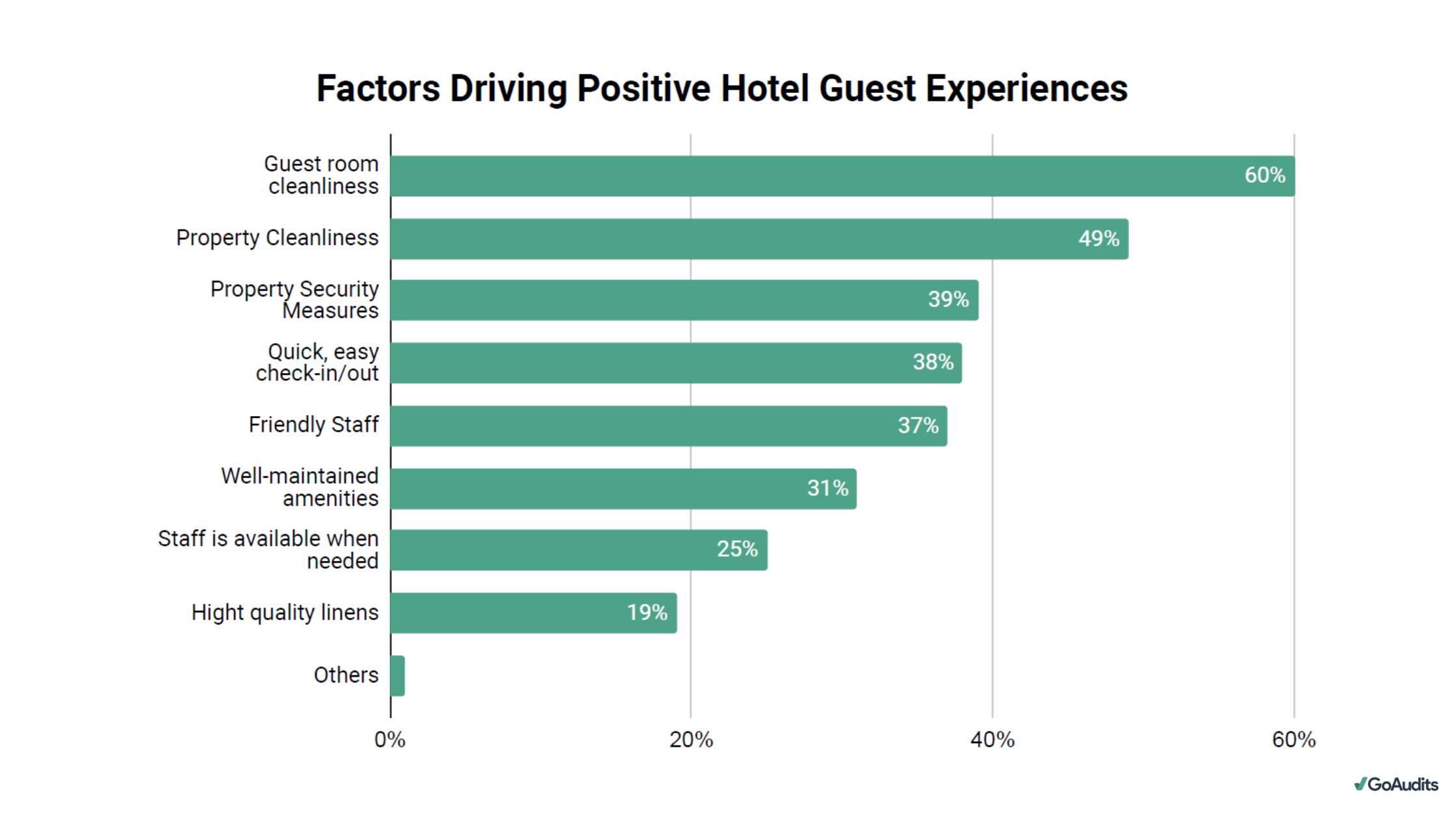
Guests expect a clean and safe environment. Failure to meet these expectations can attract negative reviews. Considering over 81% of travelers read reviews before booking their stays, poor ratings can affect your hotel’s bottom line and also damage its reputation. In some cases, they can even lead to penalties and lawsuits.
Moreover, poor hygiene practices can lead to outbreaks of illnesses, which can have serious consequences for guests and staff.
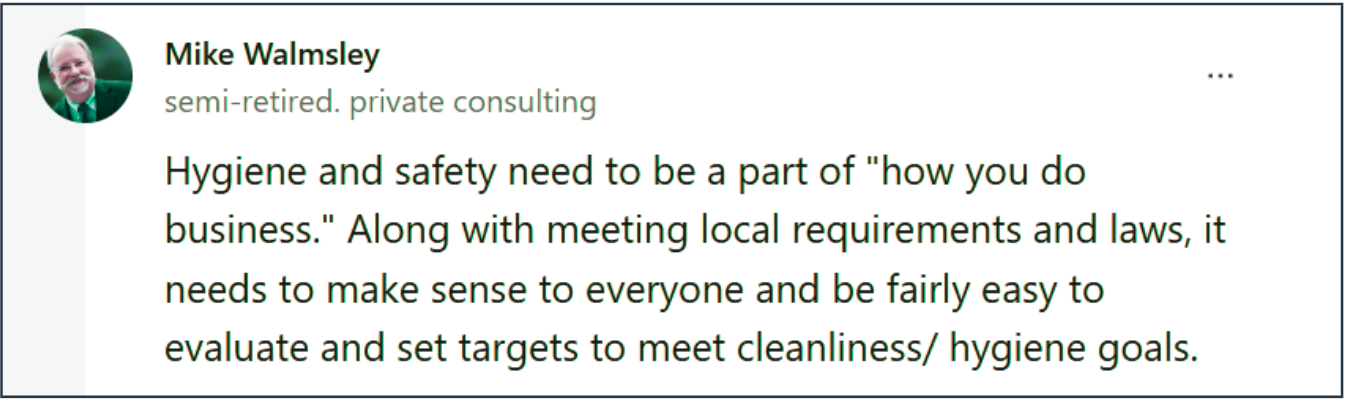
According to Mike Walmsley, a hospitality consultant and instructor, safety and hygiene should be a part of the establishment’s culture and how it operates in the business. Apart from catering to the regulatory requirements, hygiene protocols must ‘make sense’ to the people following them:
With a tool like GoAudits, you can do exactly that. Our hospitality audit software allows you to convert your hotel cleaning protocols into an actionable list of items in the form of checklists.
You can track individual checklist items and monitor performance over time to understand where your staff needs to focus more. You can set cleanliness KPIs and track their effectiveness through frequent audits and inspections.

Hotel Hygiene Certifications: What They Are and Why They Matter
Hotel hygiene certifications are third-party-verified credentials confirming that a property meets recognised international standards for cleanliness, food safety, or hygiene management. They go beyond local regulatory compliance. A hotel that holds hygiene certification has had its systems independently audited, not just its surfaces inspected.
For hotel management teams, certifications do two things. Externally, they give guests and corporate clients a trusted signal that health, safety, and hygiene in hospitality are taken seriously at that property. Internally, they create a documented management framework that makes hygiene inspection, staff training, and corrective action trackable and consistent.
The most relevant certifications for hotel sanitation and food safety are:
- ISO 22000 (Food Safety Management). Applies to any hotel with food and beverage operations. ISO 22000 requires a full HACCP-based food safety management system, covering supplier sourcing, storage, preparation, cooking, and service. It’s the most widely recognised standard for food hygiene in hotels.
- ISO 9001 (Quality Management). A broader standard covering service consistency across all departments, including housekeeping and guest room cleaning. Hotels with ISO 9001 have documented procedures, internal audit schedules, and measurable hygiene standards built into their operations.
- ISO 14001 (Environmental Management). Relevant to hotels pursuing sustainable hygiene practices. It requires a formal review of environmental impact — chemical use, water consumption, waste disposal — with measurable reduction targets. Increasingly sought by eco-conscious corporate clients.
- AHLA Safe Stay Initiative. A US-specific industry framework covering enhanced cleaning protocols, hygiene product standards, and staff training requirements. Adopted by major chains including Marriott, Hilton, and Choice Hotels.
- Green Key. An international eco-label with hygiene criteria alongside sustainability requirements. Hotels must meet standards for sanitation practices, cleaning chemical management, and guest-facing hygiene protocols.
For hotel groups managing multiple properties, certifications serve an additional function: they create a shared standard that every site can be audited against. GoAudits integrates with these frameworks by letting managers map checklist items directly to certification criteria, generating audit reports that document compliance against each standard.
Designating a Hygiene Manager and Local Hygiene Officers in Hotels
Everyone in the hotel has a great responsibility to follow the proper cleanliness and hygiene standards. However, adopting proper measures and ensuring consistent adherence for all staff requires having a dedicated person in charge.
If designating a Hygiene Manager was a luxury in the past, post-pandemic, it has become a must to ensure that all safety and hygiene practices and measurements are implemented and followed through. Moreover, all department heads should have a designated Hygiene Officer in their department to ensure the best compliance.
Roles and Responsibilities of a Hygiene Manager in Hotels
The roles and responsibilities of a hotel hygiene manager include overseeing:
- Personal hygiene of the hotel staff
- Food hygiene
- Housekeeping practices
- Overall safety of the hotel
They must also have experience in hotel sanitation training, inspections, corrective and preventive actions, and record-keeping for the above-mentioned job roles. In detail, this is what is included in the roles and responsibilities of a hotel hygiene manager:
- Develop and Enforce Hospitality Hygiene Standards: Prepare and implement comprehensive hygiene SOPs and cleaning schedules across all hotel/ catering areas.
- Staff Training & Oversight: Conduct food safety and hygiene training for all relevant staff, monitoring their personal hygiene and work habits.
- Daily Hygiene Inspections: Conduct regular inspections of all food production, storage, and service areas.
- Audit & Compliance Management: Perform internal and supplier audits to ensure adherence to food safety regulations and standards, overseeing corrective actions.
- Pest & Waste Control: Implement and manage effective pest control and waste disposal systems.
- Structural and Maintenance Coordination: Identify structural hygiene deficiencies and coordinate preventive/ corrective maintenance with engineering.
- Food Safety Monitoring: Review microbiological results and manage the food traceability system for product safety.
- Management Communication: Keep top management informed of high-risk areas concerning foodborne illness.
Types of Hygiene in the Hotel Industry: Key Areas of Hotel Cleanliness and Sanitation
Clean and hygienic facilities can turn an average experience into an exceptional one and drive more business. Here are the key areas that you must focus on when creating your hospitality hygiene program, along with tips and free resources:
Guest Rooms
Room cleanliness is the most important factor that impacts guest experience. During our research, we came across a Reddit post discussing how hotel room cleanliness standards affect a guest’s stay. Here’s a thread showing how particular guests are when it comes to hygiene in hotel rooms:
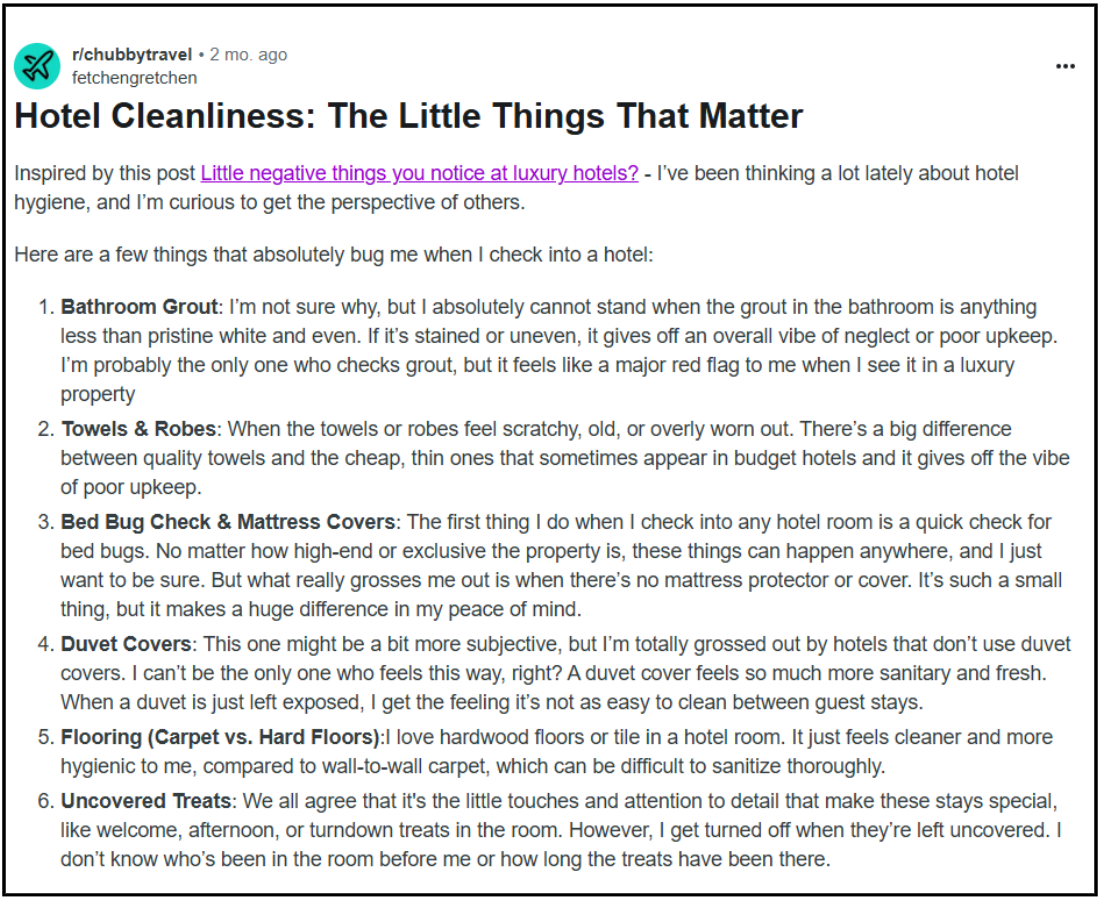
Here are some tips that you can implement to improve hotel room cleaning standards for your business:
- Replace or sanitize all items from the room that could have been touched by the guest, such as pens, notepads, and complimentary magazines.
- Use high-quality, washable duvet covers and fully encased, washable mattress protectors on all beds.
- Apply hospital-grade disinfectants to all high-touch surfaces.
- Provide all in-room amenities in individual, sealed packaging.
- Place a seal at the door after the final housekeeping inspection so that nobody can access the room prior to guest arrival.
👉 Useful Resource: Free Hotel Guest Room Checklists
Utilize these free templates to make sure rooms in your hotel are guest-ready:
→ Hotel Room Maintenance Checklist
→ Hotel Bathroom Cleaning Checklist
→ Hotel Room Inspection Checklist
→ Hotel Room Amenities Checklist
→ Hotel Room Cleaning Checklist
→ Bed Bug Inspection Checklist
» Hotel Inspection Checklists: Explore our library of FREE hospitality checklists that will help you streamline hotel operations and manage quality and brand standards.
Public Areas
Beyond the guest rooms, the cleanliness of a hotel’s public spaces leaves a lasting impression, shaping how guests feel about the entire property. Any overlooked spot can quickly become a point of concern, signaling a lack of attention to detail.
To keep these high-traffic areas spotless and inviting, focus on these key practices:
- Regularly disinfect all high-touch surfaces like elevator buttons, handrails, doorknobs, and public restroom fixtures throughout the day.
- Maintain strict cleaning schedules for all public restrooms, checking and restocking them frequently.
- Clean all flooring, whether carpet or hard surface, and pay immediate attention to spills or dirt.
Use these free templates to ensure property cleanliness in your hotel:

Recreational Facilities
Guests go to pools, gyms, and spas to relax and rejuvenate. A dirty gym machine or a questionable-looking pool can quickly turn a leisure activity into a negative experience. The expectation here is absolute cleanliness, as these areas involve direct contact with equipment and water.
For pristine recreational facilities, consider these practices:
- Clean and sanitize all gym equipment at frequent intervals throughout the day.
- Maintain strict chemical balance and filtration for all pools and hot tubs.
- Disinfect all changing rooms, showers, and locker areas multiple times.
👉 Useful Resource: Free Checklist Templates for Recreational Facilities
Utilize these free templates to ensure cleanliness and hygiene in recreational facilities:
→ Fitness Center Cleaning Checklist
→ Pool Safety Checklist
→ Steam Room Checks
→ Sauna Checklist
Indoor Air Quality and HVAC Hygiene in Hotels
Indoor air quality is one of the most commonly overlooked hotel room hygiene standards. HVAC systems move air through guest rooms, lobbies, restaurants, and back-of-house areas continuously. When those systems are poorly maintained, they distribute dust, mould spores, allergens, and airborne pathogens through the same spaces guests eat, sleep, and breathe in.
Three practices keep HVAC hygiene under control:
- Regular filter replacement. Air filters should be checked and replaced on a fixed schedule, monthly at minimum for high-occupancy properties, and quarterly at lower-occupancy sites. A blocked or degraded filter stops capturing contaminants and can begin recirculating them. Filter checks should appear on every hotel room cleaning standards procedure and back-of-house inspection checklist.
- Duct cleaning and inspection. Ductwork requires periodic professional inspection and cleaning, with frequency based on property type, local climate, and occupancy patterns. Kitchen exhaust ducts need more frequent attention because grease accumulation creates both a hygiene risk and a fire hazard.
- Humidity control. Maintaining indoor humidity between 40-60% prevents mould and mildew growth in guest rooms and bathrooms. Properties in humid climates should monitor bathroom ventilation closely. Visible condensation on walls or behind fixtures is an early warning sign that ventilation is insufficient, left unaddressed, it becomes a hotel hygiene and infection prevention issue that requires professional remediation.
Guest room air conditioning units also need attention during deep cleans. The internal filter and condensate drain tray should be inspected and cleaned at each deep-clean cycle. A blocked condensate drain is a frequent source of hidden mould growth behind walls, often invisible until it’s spread significantly.
Back of House Operations
While not seen by guests, the hygiene in back-of-house areas affects the guest experience and the hotel’s overall operation. Additionally, kitchens, laundry facilities, storage areas, and staff common rooms are breeding grounds for issues if not properly managed.
To deliver that truly fresh and comfortable feel, stick to these fundamentals:
- Implement stringent cleaning and sanitation protocols for all food preparation and storage areas.
- Regularly clean and maintain laundry facilities, ensuring proper handling and storage of clean and soiled linens.
- Keep all waste disposal areas clean and organized, with trash removed frequently.
- Make sure staff common areas and restrooms are cleaned daily.
👉 Useful Resource: Free Hotel Back of House Operation Checklists
Utilize these free templates to streamline back-of-house operations in your hotel:
→ Hotel Kitchen Cleaning Checklist
→ Laundry Checklist for Hotel
» Hotel Inspection Checklists: Explore our library of FREE hospitality checklists that will help you streamline hotel operations and manage quality.
Hotel Linen and Laundry Hygiene Standards
Linen and laundry hygiene is one of the most tightly regulated areas of hotel sanitation, and one of the most operationally demanding. Sheets, towels, pillowcases, and duvet covers come into direct contact with guests’ skin. A contamination failure here isn’t a background risk; it’s the kind of hygiene problem that ends up in a review.
The standard linen hygiene protocol covers five stages:
- Immediate segregation on removal. Soiled linens go into covered, clearly labelled carts as soon as they leave guest rooms. Soiled and clean linens must never be transported together or stored in the same area. This is a baseline health, safety, and hygiene requirement in hospitality across most regulatory frameworks.
- Washing at certified temperatures. Commercial laundry cycles run at temperatures above 60°C (140°F) using commercial-grade detergents proven to eliminate bacteria, viruses, and fungi. Most infection control guidelines, including those aligned with HACCP principles, specify this minimum temperature for effective disinfection of fabric items.
- PPE during soiled linen handling. Housekeeping staff handling soiled linens should wear gloves and, in many protocols, a protective apron. This applies whether staff are collecting from rooms or sorting in the laundry area. Personal hygiene for housekeeping staff includes hand hygiene immediately after removing PPE.
- Covered storage of clean linens. Freshly laundered linens must be stored in a sealed, designated area, not on open shelving in corridors, trolleys, or shared spaces where airborne contamination is possible. Clean linen storage areas should be part of every hotel hygiene inspection cycle.
- Condition inspection before re-use. Worn, frayed, stained, or discoloured linens should be removed before reaching a guest room. Most hotel groups operate a par level system, maintaining 3-4 sets of linens per room (one in use, one in storage, one being laundered, one in reserve) to prevent supply pressure from creating shortcuts.
Tracking linen compliance manually is error-prone. GoAudits lets housekeeping teams log linen condition, temperature records, and storage checks directly in the app. Any failed check automatically triggers a corrective action, assigned to the relevant team member with a resolution deadline. Use this free Laundry Checklist for Hotel to standardise the process.
What is Personal Hygiene in the Hospitality Industry and Why Is It Important?
Personal hygiene is the practice of maintaining cleanliness and grooming oneself to prevent the spread of germs and illnesses. It is more important in the hotel industry, where staff are often in close contact with guests and are likely to spread diseases.
Hotel staff working in food and beverage service are susceptible to spreading germs and viruses while handling food. Thus, they must implement good hygiene practices, like washing hands frequently and wearing protective clothing, to prevent disease outbreaks.
Secondly, personal hygiene in the hotel industry affects the establishment’s reputation. A dirty or unkempt appearance of staff members can create a negative impression on guests and deter them from returning or recommending a hotel.
Personal Hygiene Checklist: Use this template to verify that all staff who handle food follow the appropriate personal hygiene measures.
Good Personal Hygiene Practices for Staff in the Hospitality Industry
Here are the key personal hygiene practices for hotel staff:
- Handwashing Protocols: Staff must rigorously wash their hands before and after handling food, after using the restroom, and after touching any contaminated surfaces. This involves wetting, soaping for 20 seconds, thoroughly rinsing, and proper drying.
- Uniform and Grooming Policies: Set clear policies for personal hygiene and grooming in the hotel industry, covering clean uniforms, hair restraints, trimmed nails, and the consistent and correct use of PPE.
- Training on Hygiene Protocols: Provide mandatory initial hygiene training for all new hires, covering all relevant hotel SOPs and hazard response procedures. Conduct regular refresher sanitation training sessions, especially when new protocols are introduced. Explore our guide on how to train your hotel staff to learn more.
- Guidelines for Staff Illness: A sick employee can act as a vector for diseases. Therefore, make sure you have proper testing protocols in place. Once an employee is detected as ill, they must be sent home immediately.
This is how a popular hotel chain uses the GoAudits hotel inspection app to identify sick employees:
Employees are asked to complete a short questionnaire via iPads at the entrance. That ensures that they are not currently experiencing any symptoms. There is also a QR code for a mobile version of the test.
Regional Talent Development Manager of a 5-Star Hotel
What is the Importance of Food Hygiene in the Hotel Industry
A hotel’s reputation and the protection of its guests depend on the establishment’s food hygiene standards. With the potential of attracting negative reviews and lawsuits, hotels must pay special attention to their food hygiene practices, ensuring guests and staff are safeguarded from foodborne diseases.
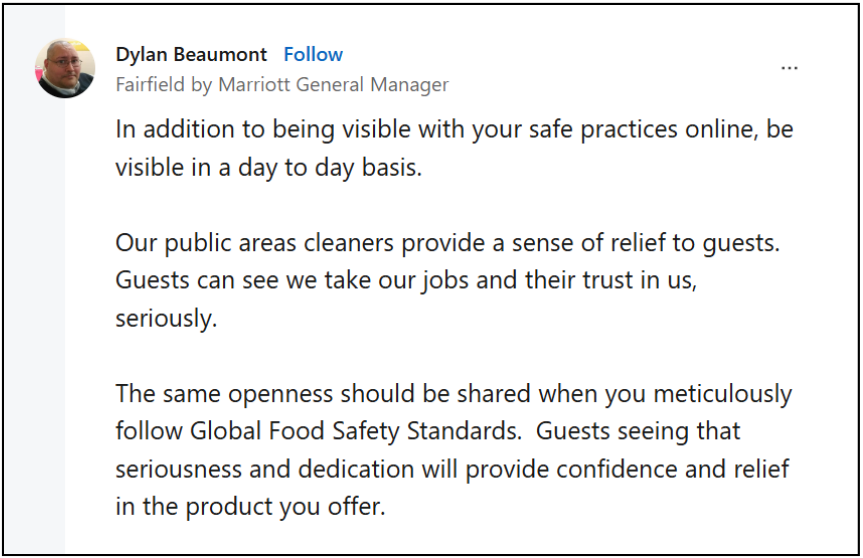
In addition to just following them, it’s also important to showcase your food hygiene practices. As Dylan Beaumont, General Manager at Fairfield Inn & Suites by Marriott, explained, visible dedication to meticulous Global Food Safety Standards provides guests with confidence and relief in the product you offer:
HACCP Food Hygiene Standard
The Hazard Analysis and Critical Control Point (HACCP) system is an internationally recognized, systematic, and preventive approach to food safety. It proactively identifies, evaluates, and controls potential biological, chemical, or physical hazards at every stage of the food process, from raw material sourcing and handling to preparation, cooking, and serving.
Applying HACCP principles allows hotels and restaurants to systematically pinpoint risks, monitor procedures, and define corrective actions in case of noncompliance. Explore our complete guide on HACCP audits to learn more about its types, principles, and certifications.
Here are free HACCP templates to audit food services and ensure food safety compliance:
- HACCP Plan Self-Assessment Checklist
- HACCP Food Safety Checklist
- HACCP Audit Checklist
- HACCP-Based SOPs
Essential Day-to-Day Hotel Food and Kitchen Hygiene Practices
Maintaining hotel kitchen hygiene standards requires daily discipline across five core practices. Here are key practices for food hygiene and sanitation in the hospitality industry that you must implement:
- Safe Food Handling: Staff must adhere to strict protocols for washing hands, wearing gloves, and handling raw and cooked ingredients separately to prevent cross-contamination.
- Critical Temperature Control: Foods must be stored, cooked, and reheated at precise temperatures to inhibit bacterial growth and destroy pathogens.
- Rigorous Cleaning and Sanitization Schedules: All kitchen surfaces, equipment, and utensils must be regularly cleaned and sanitized to eliminate bacteria.
- Allergen Management and Communication: Clear procedures are needed to identify, separate, and communicate common food allergens.
- Effective Pest Control Strategies: It is vital to keep kitchens and food storage areas free from rodents and insects.
- QR Codes to Access the Menus: It reduces physical contact points, contributing to overall hygiene while offering convenient access to dining options.
👉 Useful Resource: Free Food Hygiene Checklists
Use these free food checklists to evaluate hygiene standards:
→ Rodent Prevention Checklist for Food Establishments
→ Self-Inspection Checklist for Food Premises
→ Cleaning Food Contact Surfaces Checklist
→ Hotel Kitchen Cleaning Checklist
→ Food Safety & Hygiene Checklist
→ Canteen Hygiene Inspection
→ Bar Cleaning Checklist
→ Allergen Checks
» Food Safety Audit Checklist Templates: Streamline F&B quality standards at your hotel with our library of FREE food hygiene templates.
What Common Mistakes Do Hotels Make with Cleaning Protocols?
Even well-run hotels repeat the same cleaning protocol mistakes. Most aren’t caused by negligence — they’re caused by unclear SOPs, time pressure, or staff turnover that leaves gaps in training. Knowing what they are is the first step to preventing them.
The most common hotel cleaning protocol mistakes are:
- Skipping the clean-before-disinfect sequence. Disinfectants work on clean surfaces. Applying them to surfaces with visible dirt or residue dramatically reduces their effectiveness. The correct sequence is always: clean first to remove debris, then disinfect to eliminate pathogens.
- Inconsistent high-touch surface coverage. Remote controls, light switches, door handles, bedside phone handsets, and bathroom taps are among the highest-risk contact points in any guest room. They’re also the surfaces most likely to be missed when housekeeping is under time pressure. Hotel room cleaning standards procedures should list every high-touch surface explicitly, with a checkbox for each one.
- Using the same cleaning cloths across areas. A cloth used on a bathroom surface and then on a bedside table is a cross-contamination risk. Colour-coded cloths by area (red for toilets, blue for surfaces, green for glass) are a simple, low-cost control that many hotels don’t implement consistently.
- Inadequate dwell time for disinfectants. Most EPA-registered disinfectants require a contact time of 30 seconds to 10 minutes to be effective. Spraying and immediately wiping leaves the disinfectant on the surface for far less time than the product requires. This is one of the most overlooked hygiene hazards in hospitality operations.
- No formal sign-off after room cleaning. Without a documented post-clean inspection, there is no accountability layer between the housekeeper’s work and the guest’s arrival. A digital inspection app with a sign-off step creates a verifiable record and gives supervisors a simple way to spot recurring misses before they become complaints.
Use GoAudits’ Hotel Room Inspection Checklist to add a structured sign-off step to every room turnover. It takes less than 5 minutes per room and creates a timestamped record of every completed check.
Best Practices for Implementing Hygiene Procedures in Hospitality
Now that we have seen the areas that you need to focus on to improve hospitality hygiene, let’s look at some tips and best practices that can further solidify your efforts:
Develop Clear SOPs for Cleaning and Housekeeping
Everyone in the housekeeping team knows that they need to ensure the property remains clean 24×7. However, the level of cleanliness expected from them can sometimes remain unclear. As a hotelier or manager, translate these expectations into simple, actionable steps.
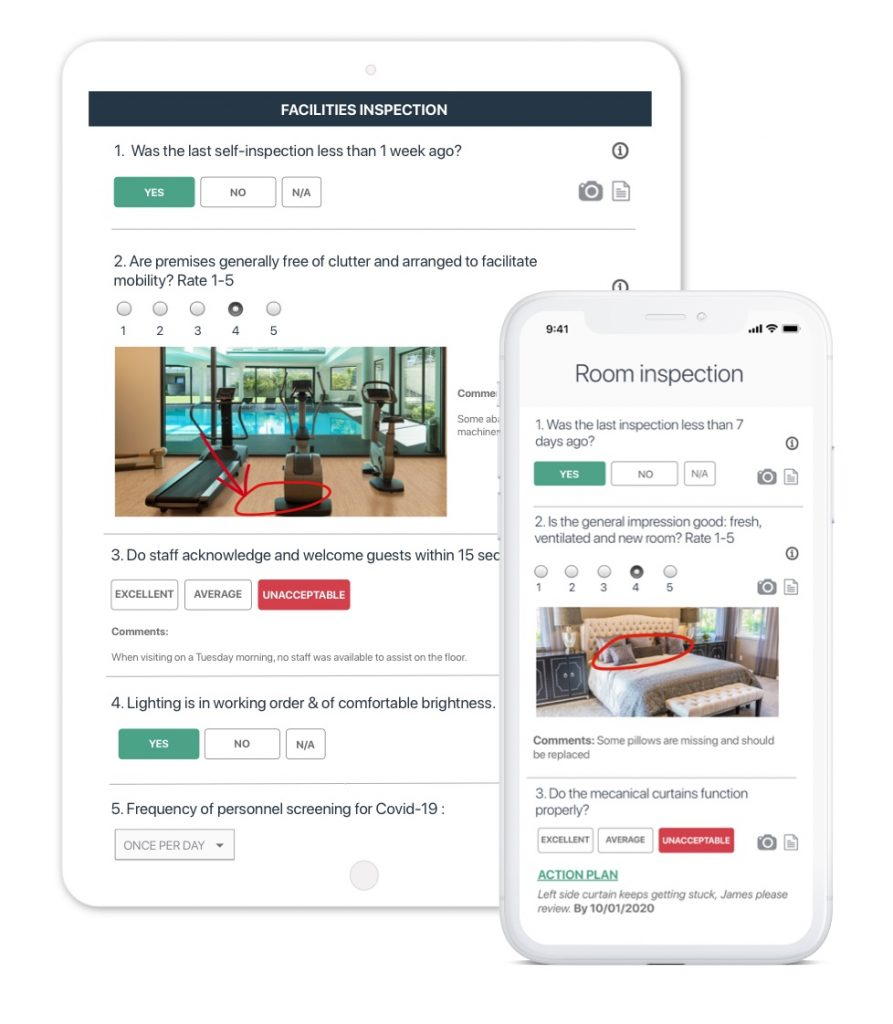
Create housekeeping SOPs in the form of checklists, listing down every step of the cleaning process. Use hotel audit software like GoAudits to make housekeeping SOP checklists that can be easily accessed by your staff on their mobile devices to complete their housekeeping tasks.
Free Resource: Explore our guide on creating housekeeping SOPs and leverage this free housekeeping SOP template to get started.
Follow Sustainable Hygiene and Cleanliness Practices
Modern guests and regulatory bodies are increasingly focused on environmental responsibility. Your cleaning protocols must extend beyond germ eradication to include sustainable practices and responsible chemical use.
- Prioritize Green Cleaning: Where feasible, transition to EPA-certified, eco-friendly, and non-toxic disinfectants and cleaning agents. This appeals to environmentally conscious travelers and creates a safer working environment for your staff by reducing exposure to harsh fumes.
- Chemical Management Protocols: Implement stringent protocols for the storage, dilution, and disposal of all cleaning chemicals. Ensure staff are trained on proper dilution ratios; using too much product is wasteful and often ineffective, while improper storage is a significant safety and compliance risk.
- Waste and Water Stewardship: Integrate sustainable waste management protocols into cleaning checklists, focusing on recycling compliance in both public and back-of-house areas. Also, train staff on water-efficient cleaning methods to reduce environmental impact.
Establish Frequent Cleaning and Disinfection Schedules
A strategic approach to when and how frequently surfaces are disinfected is crucial. High-traffic areas and commonly touched objects accumulate germs quickly, necessitating a more rigorous schedule.
Developing detailed timetables for cleaning and disinfection across all hotel zones ensures that no area is overlooked and that hygiene standards are consistently maintained throughout the day.
Implement an Inspection App to Quantify and Track Hotel Hygiene Standards
The hotel management also needs to provide the right tools and resources to the employees to implement and follow the proper standards, including cleanliness, safety, and hygiene guidelines. Manually tracking these complex protocols can be time-consuming and prone to human error, making consistent adherence a challenge.
A leading 5-star hospitality group successfully leveraged GoAudits, with their talent manager noting its impact. They found that the GoAudits hotel inspection app not only helped in auditing and streamlining cleanliness, safety, and hygiene standards across their properties but also enabled them to quantify these standards. This approach turned all feedback into performance metrics, helping them achieve the highest compliance scores in line with international hotel standards.

Perform Regular Audits and Inspections
While daily cleaning is essential, periodic, comprehensive inspections are indispensable for identifying systemic issues and gaps in hygiene protocols. These scheduled checks go beyond routine oversight, digging deeper into compliance with SOPs, staff adherence, and the effectiveness of cleaning products and equipment.
Regular audits provide management with critical insights, pinpointing areas that need improvement and making sure the hotel consistently meets and exceeds both internal benchmarks and external health regulations.
How Do Hotels Maintain Consistent Hygiene Standards Across Multiple Properties?
Effective hygiene management in hotels with multiple sites requires more than good intentions; it requires systems. And the challenge is variance. When each location interprets cleaning protocols differently, the property with the weakest hygiene management defines the brand’s reputation.
Multi-property hotel groups address this through three operational mechanisms.
- Centralised hygiene procedures with local accountability. A group-level standard defines what “clean” means across all properties. Hygiene officers at department level in each property are responsible for translating those procedures into their local team’s daily workflow.
- Cross-property audit benchmarking. Audit data becomes most useful when reviewed across locations rather than within them. A digital inspection platform like GoAudits allows regional managers to compare hotel hygiene inspection scores by property, department, and time period, producing a hotel cleanliness report that surfaces which sites are consistently underperforming and which are setting the standard.
- Standardised training with verified completion. Group-level hygiene training should be version-controlled and completion-trackable. When a new protocol is introduced, the training record should confirm which staff at which properties completed it. This creates a defensible compliance trail for internal hygiene management reviews and external regulatory inspections.
LaTour Hotels, which manages 30+ locations, uses GoAudits to maintain consistent quality and hygiene standards across its portfolio. Read the LaTour Hotels case study to see how cross-property inspection benchmarking works in practice.
Impart High-Impact Training
High staff turnover and language barriers are constant challenges in hospitality. To ensure hygiene protocols are consistently followed by every team member, your approach must be simple, inclusive, and motivational.
- Focus on Visual, Multi-Lingual SOPs: Complex written instructions are inefficient. Translate hygiene SOPs and checklists into simple, visual, picture-based guides that bypass language barriers. Ensure digital checklists are available in the most common staff languages. This speeds up training and reduces errors instantly.
- Mandatory “Why”: Training should not just cover what to do, but why it matters. Explain the real-world impact of their job, how their attention to detail protects the guest, the brand, and their own team.
Improve Hygiene Standards With Performance-based Recognition for Associates
Motivating staff is key to consistent, high hotel standards. Recognizing employee achievements in cleanliness not only boosts individual morale but also encourages a collective commitment towards it.
Digital inspection tools, like GoAudits, play a crucial role here. With its dynamic dashboards, it is a very powerful tool to spot the commonly missed standards for a specific employee, department, or even a hotel. This helps to set a suitable action plan in order to rectify performance and processes where needed.
Recognize your highest performing associates based on the audit results and follow-up. Using the app enables you to initiate and create a fun and competitive environment within your property, for example, by establishing inter-department competitions on audit results.
For us, GoAudits has been a phenomenal resource to develop a performance-based recognition program for associates and departments. These and other measures, as well as frequent hygiene inspections with GoAudits, have become part of our ways of working and are here to stay in the medium to long term.
Regional Talent Development Manager, 5-Star Hotel
Ensure Hotel Hygiene and Sanitation With GoAudits
GoAudits hotel audit software is a digital tool that offers fully customizable features for hospitality businesses to operate effectively and efficiently. It allows managers to simplify and streamline intricate and repetitive hotel operations that directly impact the customer experience.
With GoAudits, you can:
- Create custom hotel checklists or access ready-to-use templates.
- Allow hotel teams to coordinate with each other to deliver an exceptional guest experience.
- Make sure SOPs are always accessible to staff through the GoAudits mobile app.
- Perform regular hotel audits for consistency, efficiency, and safety.
- Flag issues in real-time, initiate prompt corrective actions, and monitor their resolution.
With a rating of 4.8 stars on Capterra, GoAudits is trusted by some of the biggest brands like Hilton, Marriott, and Choice Hotels in the hospitality industry.
» GoAudits Reviews: Read how companies leverage GoAudits to meet standards and deliver consistent services across locations.
FAQs
In-house laundry must prioritize separating soiled linens immediately using PPE. Linens should be washed using commercial-grade chemicals and high heat (often exceeding 140 degrees Fahrenheit) for complete disinfection. Clean linens must be stored covered in a dedicated, sanitized area, entirely separate from soiled items, to prevent cross-contamination.
Hotels maintain high safety standards through regular risk assessments in all areas. Key strategies include rigorous Preventive Maintenance (PM) for systems such as fire and HVAC, clear emergency preparedness protocols, and robust security measures. Continuous auditing using digital platforms ensures daily hotel compliance and immediate hazard mitigation across the property.
There are five main types of hygiene in the hotel industry. Personal hygiene covers staff cleanliness, grooming, and health standards. Food hygiene covers the safe handling, storage, preparation, and service of all food and beverages. Environmental hygiene covers the cleanliness of guest rooms, public areas, recreational facilities, and back-of-house zones. Water hygiene covers drinking water safety, pool and spa water treatment, and Legionella prevention in plumbing and water distribution systems. Waste hygiene covers the correct disposal of food waste, soiled linen, and chemical waste.
High-touch surfaces are the most likely points of pathogen transfer between guests. A guest who picks up an illness at a hotel is far more likely to have contracted it from a repeatedly touched surface than from bedding or flooring. Standard room cleaning addresses visible dirt; deliberate disinfection of high-touch areas addresses microbial contamination that isn’t visible. Most hotel room hygiene protocols now list each high-touch surface explicitly and require a separate disinfection step, rather than including them in a general wipe-down routine.
Hotels can enhance hygiene for guests with disabilities by explicitly including all accessible features, like grab bars, shower chairs, and transfer areas, in deep cleaning checklists. Use low-odor, scent-free products to accommodate chemical sensitivities. Maintaining a clear, clutter-free path is also critical, integrating safety and cleanliness for guests using mobility aids.

