Key Takeaways
- Cleanliness and housekeeping are the foremost factors that impact guest satisfaction and hotel selection, directly influencing brand reputation and the bottom line.
- Maintaining consistent standards, managing high staff turnover, and tracking compliance are some of the key hotel housekeeping challenges.
- Hotel audit software help tackle these challenges using digital checklists, automated workflows, corrective actions, and compliance monitoring.
Effective housekeeping management is fundamental to presenting your hotel’s best image and delivering a memorable guest experience. While its primary role involves providing clean, tidy, and well-maintained facilities, optimizing housekeeping operations directly impacts operational efficiency and the bottom line.
A Hospitality Tech Report indicates streamlining housekeeping using checklists and other digital tools can significantly reduce room turnover time by 15-20%, leading to reduced labor costs and potentially higher occupancy.
Read on to explore practical tips, tricks, and essential checklists to help you optimize hotel housekeeping operations and management at your facility.
- What is Hotel Housekeeping Management?
- Duties and Responsibilities of the Housekeeping Department in Hotels
- What are the Biggest Challenges in Hotel Housekeeping?
- How to Structure a Housekeeping Operations Team: Duties and Responsibilities
- How to Measure and Improve Hotel Housekeeping Performance
- How to Improve the Housekeeping Department in Your Hotel: Tips and Tricks
- Streamline Housekeeping in the Hotel Industry With GoAudits
- FAQs
What is Hotel Housekeeping Management?
Hotel housekeeping is all about ensuring rooms and common areas are clean, orderly, and well-maintained for guests, any time, day or night. It’s a vital part of hotel management that plays a key role in upholding your brand’s reputation and creating great first impressions.
Importance of Housekeeping in the Hospitality Industry
Hotel housekeeping management is the single biggest driver of guest satisfaction. According to an Ecolab study cited by AHLA, room cleanliness ranks above price, location, and food quality in guest decision-making.
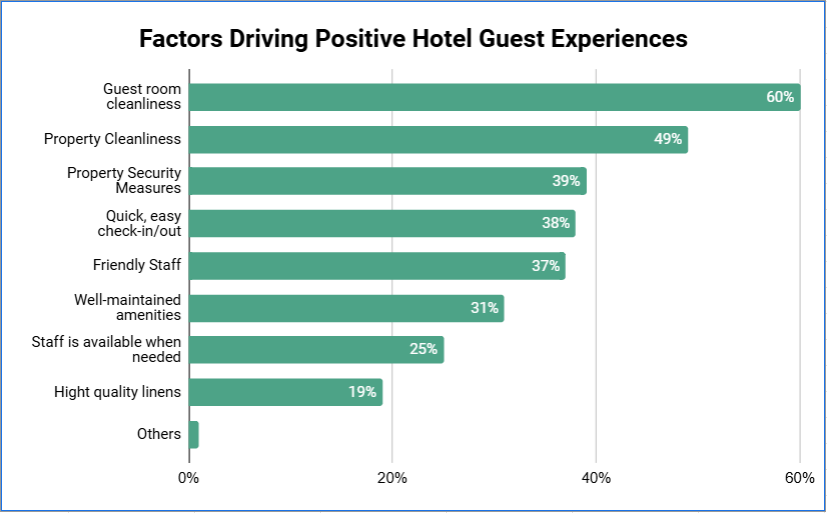
The report also found that after location and pricing, cleanliness is the most important factor influencing hotel selection and guest experience. Thus, an effective housekeeping program can give your hotel a competitive edge against other properties with the same location and price point and directly impact the bottom line.
Guests are most prompted to leave a positive or a negative review based on a hotel’s cleanliness. In fact, room cleanliness drives 72% of guests to give a positive review on popular review sites like Yelp and Google Reviews, directly impacting your hotel’s reputation and likelihood of future bookings.

Duties and Responsibilities of the Housekeeping Department in Hotels
The housekeeping department is the backbone of hotel operations, which requires it to fulfill various duties in order to maintain cleanliness, organization, and guest comfort. Here are the key functions of the housekeeping department in the hotel industry:
- Getting Rooms Ready for Check-In: Room attendants play a vital role in preparing rooms for guests. This includes ensuring the room is cleaned, sanitized, and stocked with amenities, making a positive impression from the initial touchpoints.
- Handling Cleaning Procedures: Housekeeping staff perform cleaning tasks like dusting, mopping, vacuuming, disinfecting, and sanitizing surface areas in the entire hotel. Thus, housekeeping tasks include not only cleaning guest rooms but also ensuring common areas such as lobbies, hallways, and restrooms are always neat.
- Maintaining Guest Supplies: The hotel housekeeping staff must ensure guest rooms are replenished with amenities such as toiletries, towels, and linens. The housekeeping team is also responsible for monitoring the inventory levels and restocking supplies as needed.
- Managing Laundry Services: This includes collecting, sorting, washing, drying, folding, and delivering hotel laundry. The staff must ensure all hotel rooms have fresh linens and that their laundry is delivered on time every morning.
- Managing Lost and Found Procedures: The housekeeping attendants must report, document, store, and facilitate conversations with guests for the recovery of items found in guest rooms.
This is what a hotel’s housekeeping daily task list generally looks like:
- Make beds and change linens before the guests arrive and as part of turndown services.
- Clean and sanitize bathrooms, including toilets, showers, and sinks.
- Dust the furniture, fixtures, and surfaces throughout the room.
- Vacuum carpets or mop hard floors.
- Replenish guest supplies like toiletries, towels, coffee, and stationery.
- Empty trash bins and remove any used service items.
Free Hotel Housekeeping Training Manual PDFs
Here are three very popular hotel housekeeping training manuals available online:
- Housekeeping Manual for Municipally Operated Shelters
- Trainee Competency Manual: Housekeeping
- Good Housekeeping Manual
Written by experts, these traditional housekeeping staff training manuals are a great resource. However, the PDF format makes it harder to access and apply on the job. A digital checklist that can be accessed using a simple mobile app can be an effective alternative.
A hospitality audit software like GoAudits allows managers to create custom templates that act as microlearning courses. Staff can complete these courses anywhere, anytime, on their mobile devices. Managers can also monitor completion status through Dashboards.
Besides being an excellent training tool, checklists help translate expectations and brand standards into clear, actionable steps for the staff.
Using checklists adapted for the position that you’re training for, can be a great ‘textbook digital tool.’ Checklists can outline the daily routines, how to go through the process step by step. It’s a great tool to document those steps, and especially convenient since you can modify the digital checklists anytime.
Kristin Ingram, A Senior Executive in the Hospitality Industry
Important Hotel Housekeeping Management Checklists
Here are some free hotel housekeeping templates that you can deploy for housekeeping staff at your facility:
- Hotel Room Cleaning Checklist
- Hotel Room Inspection Checklist
- Hotel Room Amenities Checklist
- Hotel Room Maintenance Checklist
- Bathroom Cleaning SOP Checks
- Hotel Lobby Cleaning Checklist

What are the Biggest Challenges in Hotel Housekeeping?
Hotel housekeeping managers deal with a predictable set of problems. Here is what causes them and what actually fixes them.
- Inconsistent Standards Across Shifts: The same room can be cleaned to very different standards depending on who is working and when. Fix it with documented SOPs that break brand standards into step-by-step checklists on staff mobile devices, backed by regular inspections tracked in a digital system.
- High Staff Turnover: The hospitality sector sees annual separation rates of 70-80% in the U.S. Bureau of Labor Statistics, which means near-constant onboarding. Competitive wages help, but so do recognition programs, clear career paths, and digital checklists that cut ramp time for new hires from day one.
- Room Turnover Speed: Peak check-out windows put real pressure on teams to move fast without cutting corners. Smart scheduling based on occupancy data and room type cuts unnecessary walking time between rooms. Properties using AI-assisted scheduling report 10-15% productivity gains from better assignment sequences alone.
- Compliance Across Multiple Properties: Paper checklists make it almost impossible to benchmark performance across locations. A cloud-based inspection platform centralizes all data so managers can compare scores, spot outliers, and direct training where it is needed most.
- Maintenance Reporting: Problems found during cleaning go unresolved for days without a clear reporting channel. A digital housekeeping app lets attendants flag issues with photos, route them to the right maintenance team member automatically, and lets managers track resolution from the dashboard.
- Inventory and Cost Control: Linen loss, excess supply consumption, and untracked amenity usage add up fast. Regular stock-taking, par-level alerts, and discard-rate tracking keep costs under control. A digital inventory checklist makes the process consistent and auditable.
How to Structure a Housekeeping Operations Team: Duties and Responsibilities
The exact structure of a hotel’s housekeeping management and operations team will depend on the size and leadership hierarchy of the organization. Typically, a hotel housekeeping team has three tiers: a Housekeeping Manager at the top, Supervisors who oversee specific areas (floors, public spaces, laundry), and Attendants who carry out daily cleaning tasks.
Here’s what a hotel housekeeping management team structure looks like:
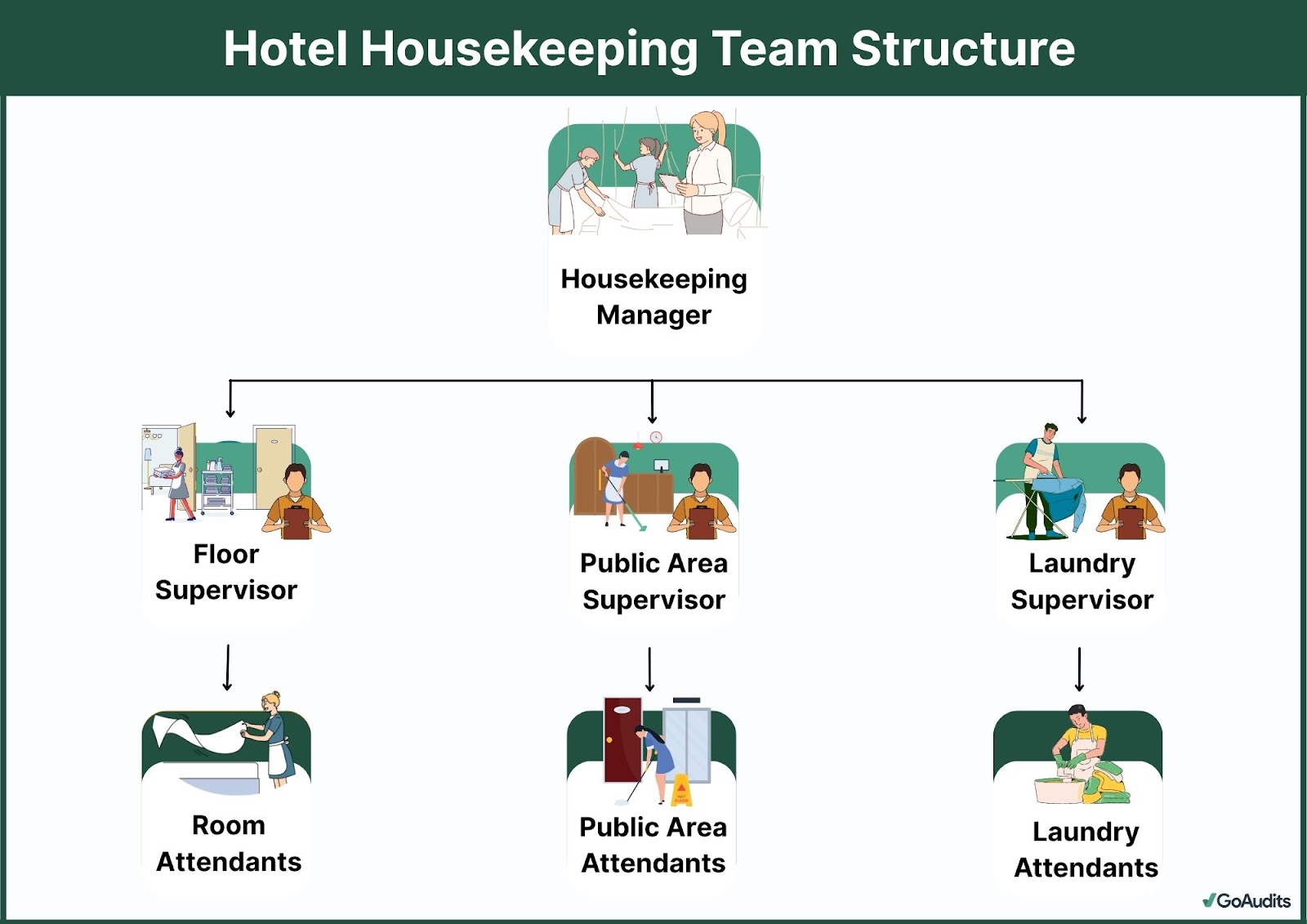
Let’s look at the roles and responsibilities of each of them:
Housekeeping Manager Job Responsibilities
As you might have guessed, a Housekeeping Manager oversees the overall operations of the housekeeping department. They set standards, manage staff, and ensure operations run smoothly. Besides making strategies for efficient housekeeping and coordinating with other departments, the key responsibilities of a Housekeeping Manager include:
- Hiring, firing, and managing staff within the housekeeping department.
- Ensuring the staff have the right tools and cleaning equipment.
- Delegating and tracking tasks and responsibilities to Supervisors and Attendants.
Duties and Responsibilities of a Housekeeping Supervisor in Hotels
Housekeeping Supervisors monitor the attendants performing their daily tasks. They oversee specific areas within the department for smooth operations and compliance with hotel standards.
- Floor Supervisor: They oversee the cleanliness and readiness of guest rooms and corridors on assigned floors. They inspect rooms post-cleaning to ensure they meet hotel standards before guest arrival and supervise the Room Attendants performing these tasks. Key duties include guiding staff, managing floor linen/supply closets, and reporting maintenance defects promptly.
- Public Area Supervisors are responsible for maintaining the cleanliness and presentation of all hotel common areas, such as the lobby, restrooms, restaurants, and event spaces. They conduct inspections to ensure these public spaces are consistently welcoming and well-maintained. Reporting maintenance issues and managing cleaning supplies for these zones are also vital parts of their role.
- Laundry Supervisor: Manages the hotel’s laundry facility for a continuous supply of clean linen, towels, and uniforms. They oversee the laundry staff and the entire process from sorting and washing to pressing and folding, maintaining quality control throughout. Responsibilities further include managing linen inventory, overseeing chemical usage, and ensuring laundry equipment is well-maintained and operational.
Regardless of their areas of specialization, Housekeeping Supervisors’ roles often involve inspection, reporting, and maintenance. Hotel housekeeping software like GoAudits can help Supervisors automate and streamline all these processes.
The Supervisor can create custom inspection checklists, schedule inspections, perform mobile inspections, generate instant reports, and share them with their Housekeeping Manager. To be on top of maintenance activities, Supervisors can assign corrective measures within the app and monitor their completion through the Dashboard.
Duties and Responsibilities of Housekeeping Attendants
Housekeeping attendants are the ones who actually perform all the operational tasks and are the face of the department. In most cases, they report to their respective Supervisors, unless workflow requires them to report to the Manager (in the case of small establishments).
- Room Attendants are the most important members of the housekeeping team as they are directly responsible for the actual cleaning and maintenance tasks of the guest rooms. They make sure hotel rooms are well-sanitized, thoroughly cleaned, and equipped with all the necessary amenities.
- Public Area Attendants: They are responsible for the cleanliness and upkeep of all shared spaces within the hotel, such as lobbies, corridors, public restrooms, restaurants, and lounges. Their work ensures these high-traffic zones are consistently clean, presentable, and welcoming to guests throughout the day.
- Laundry Attendants: As the job title suggests, a Laundry Attendant manages the hotel laundry, which includes towels, linens, guest clothes, and staff uniforms. They are responsible for everything that happens between collecting the used laundry and delivering the fresh set every morning.
How Does Housekeeping Coordinate with Other Hotel Departments?
Housekeeping does not operate in isolation. Every department a guest touches depends on the housekeeping team doing its job at the right time. When coordination breaks down, the impact is immediate: guests arrive in rooms that are not ready, maintenance issues sit unresolved for days, and the front desk is left fielding complaints it has no good answer to.
- Housekeeping and the Front Desk: Room status updates flow in real time through a shared PMS. When an attendant marks a room clean on their mobile device, the front desk sees it instantly and can assign it to the next guest without radio calls or delays.
- Housekeeping and Maintenance: Room attendants are usually the first to spot problems. A digital housekeeping app lets them flag issues, attach photos, and route the task to the right maintenance team member automatically, so problems get resolved without anyone chasing updates by phone.
- Housekeeping and Security: The two departments coordinate on master key protocols, guest lockouts, and items found in rooms. Clear SOPs backed by documentation protect both guests and staff.
- Housekeeping and F&B: In hotels with in-room dining, attendants collect used service items during their rounds. Timely handoffs between the two departments keep corridors clear and public areas presentable, which feeds directly into cleanliness scores on review sites.
How to Measure and Improve Hotel Housekeeping Performance
There are a variety of ways to analyze the performance of housekeeping operations at your hotel. First and foremost, and probably the most efficient way, is using standardized hotel housekeeping checklists.
Create housekeeping operation management SOPs and maintain their adherence using accessible checklists. Checklists ensure everyone knows what’s expected of them and create a trail of logs that can be used to understand what’s working, areas for improvement, and how to optimize further. To get quantifiable results, you can implement critical hotel industry KPIs such as room cleanliness scores from inspections/guest feedback, cleaning time per room, etc.
However, implementing hotel SOPs and KPIs using paper or spreadsheet-based checklists poses logistical and human resource challenges, especially for big hotel chains with properties spread across multiple locations.
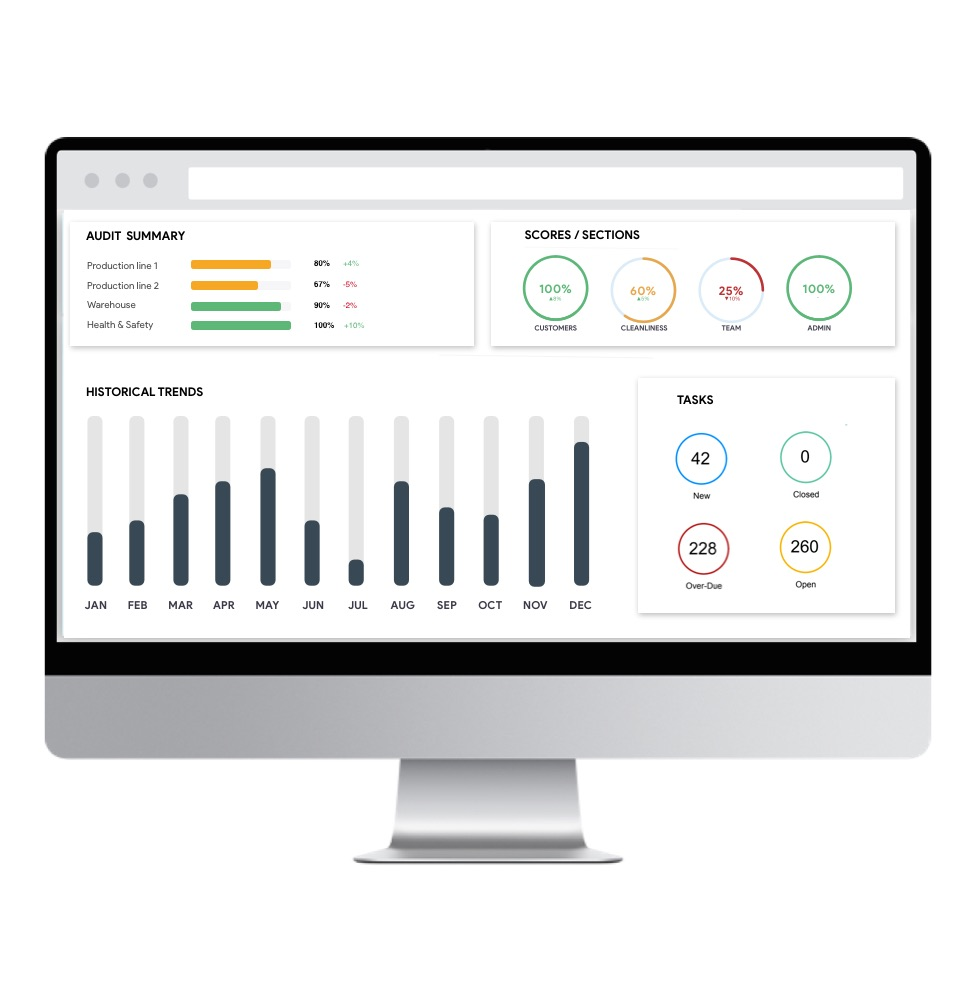
Tackle this challenge with a digital housekeeping solution like GoAudits. Create digital checklists, with each item on the list having a score.
Your staff can access and complete these checklists on their mobile devices. Once completed, the checklists automatically get logged into the GoAudits system. You can view individual checklists and reports, analyze trends, and track SOP adherence.
In essence, GoAudits allows you to objectively measure and improve the performance of your hotel’s housekeeping operations.
Case Study: How LaTour Hotels leverages GoAudits to manage operational standards across 30+ locations.
Key Hotel Housekeeping Performance Metrics You Should Track
Tracking the right metrics is what separates a housekeeping improvement plan from a guess. These are the KPIs every housekeeping manager should monitor.
- Room Cleanliness Score: The inspection score assigned to each room after cleaning, usually expressed as a percentage. This is the most direct measure of cleaning quality and is captured through supervisor inspections using a standardized checklist. Target: consistently above 90%.
- Room Turnover Time: The average time a room attendant takes to clean and prepare a room for the next guest. A standard room takes 25-30 minutes. Properties using digital checklists and structured room assignment often bring this closer to 20 minutes. A 10-minute delay per room compounds across an entire floor and directly reduces occupancy potential.
- Rooms Cleaned Per Attendant Per Shift: A measure of housekeeping productivity. The standard benchmark is 12-16 rooms per attendant per eight-hour shift, though this varies by property size and room type.
- Re-clean Rate: The percentage of rooms that fail inspection and need a second clean before being marked available. A high re-clean rate signals training gaps or insufficient time allocation. Target: under 5%.
- Guest Cleanliness Rating: The specific cleanliness score from post-stay surveys and OTA reviews. Because room cleanliness drives 72% of positive reviews (AHLA, 2025), this is the metric most directly tied to revenue.
- Housekeeping DOL (Direct Operations Labor) measures labor cost as a share of department revenue and is one of the most-watched efficiency metrics in hotel operations. Improving scheduling, reducing re-clean rates, and cutting wasted walking time between rooms all reduce DOL.
- Preventive Maintenance Compliance: The percentage of scheduled maintenance checks completed on time. This connects housekeeping performance to the broader operational health of the property.
- Staff Turnover Rate Given that hospitality sees annual separation rates of 70-80% (U.S. Bureau of Labor Statistics), tracking turnover specifically within housekeeping helps managers spot retention problems before they affect service quality.
| KPI | What It Measures | Target |
|---|---|---|
| Room Cleanliness Score | Quality per clean | Above 90% |
| Room Turnover Time | Operational speed | Under 25 minutes |
| Rooms Cleaned Per Attendant | Productivity | 12-16 per shift |
| Re-clean Rate | First-time quality | Under 5% |
| Guest Cleanliness Rating | Guest perception | OTA score above 4.5 |
| Housekeeping DOL | Labor cost efficiency | Track vs. prior period |
| Maintenance Compliance | Preventive upkeep | 100% of scheduled checks |
| Staff Turnover Rate | Team stability | Below industry average |
GoAudits captures cleanliness scores and inspection data automatically with each completed checklist. Managers can view trends by attendant, floor, room type, or property, turning raw inspection data into a concrete housekeeping improvement plan.
How to Improve the Housekeeping Department in Your Hotel: Tips and Tricks
Housekeeping in hotels has a direct impact on the revenue and brand image. Thus, it becomes essential to have a housekeeping improvement plan in place that helps you streamline and optimize your operations.
Here are housekeeping tips and tricks for hotels that we have seen work for most hospitality businesses:
1. Master Consistent Cleanliness with Clear Standards
Everyone in the housekeeping team knows that they need to ensure the property remains clean 24×7. However, the level of cleanliness expected from them can sometimes remain unclear. As a hotelier or manager, it is your responsibility to translate these expectations into simple, actionable steps.
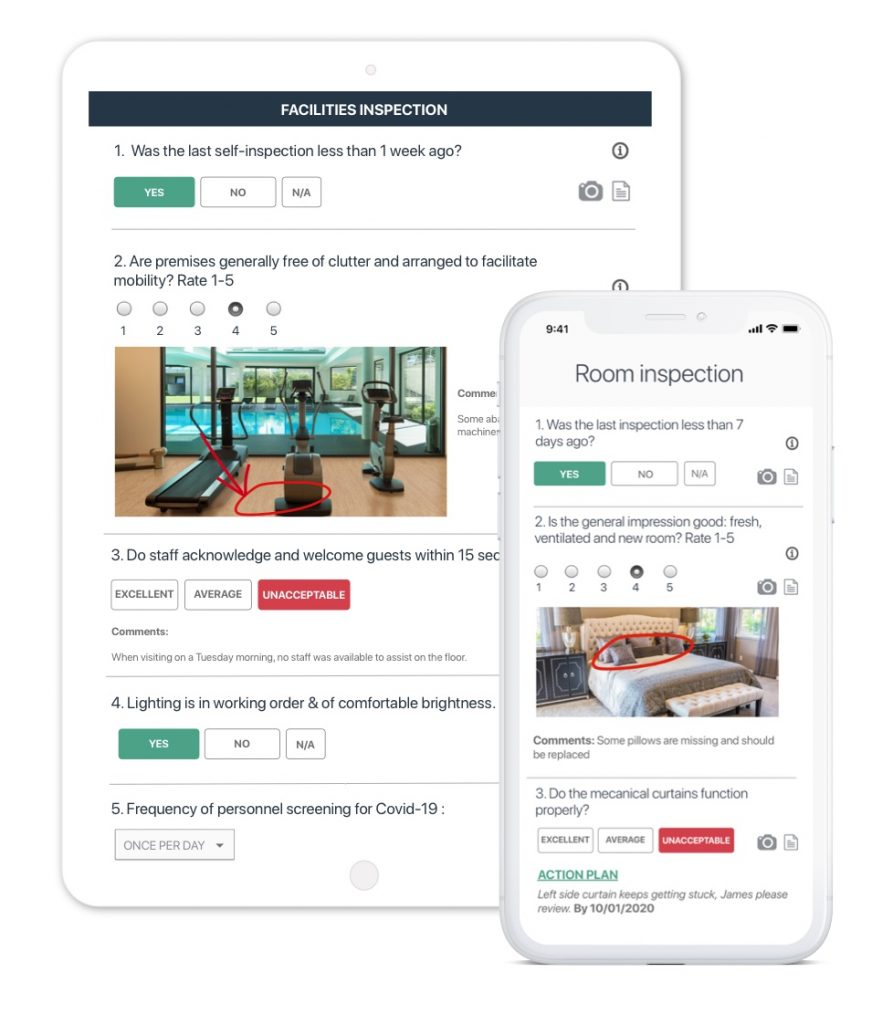
Create housekeeping SOPs in the form of checklists listing every step of the cleaning process. Use hotel audit software like GoAudits to make housekeeping SOP checklists that can be easily accessed by your staff on their mobile devices to complete their housekeeping tasks.
Conduct frequent inspections to identify non-compliances and areas where your Attendants might require additional training. Schedule regular inspections and require your Supervisors to complete them on time. Use inspection scores, historical data, and Advanced Analytics to pinpoint recurring issues and areas of improvement.
Free Resource: Explore our guide on creating housekeeping SOPs and leverage this free housekeeping SOP template to get started.
2. Build and Retain a Stellar Housekeeping Team
According to the U.S. Bureau of Labor Statistics, the hospitality and leisure industry has one of the highest separation rates. In fact, it hovers around 70-80% annually. Although some factors, like workers going back to school and their contracts ending, are out of your control, most other things are.
As a Housekeeping Manager, you must devise strategies to build and maintain a strong team. First and foremost, make sure they receive competitive wages and benefits like health insurance. Provide them with comprehensive staff training so they know exactly what needs to be done and how. Conduct regular team meetings to review inspection scores and share feedback are a standard part of effective housekeeping management
Use accessible digital hotel checklists to train them on standard housekeeping procedures and to communicate the expectations from the start. Implement staff recognition programs and offer incentives and growth opportunities.
Hotel Inspection Checklists: Explore our library of free hotel checklists to train your staff.
3. Manage Inventory and Control Costs Efficiently
Effective inventory management in hotel housekeeping ensures that cleaning equipment, guest amenities, and linens are readily available. Regularly track inventory levels by stocktaking. Keep a close eye on discard rates for linens and room amenities. Establish proper storage protocols for surplus. Implement automated recording systems that notify you when you’re out of something.
Hotel Inventory Template: Use this checklist to track supplies and equipment in different areas, ensuring efficient management and timely restocking of essential items.
4. Implement Robust Safety & Security Protocols
Protect your staff by prioritizing clear safety and security protocols. Essential training should cover safe chemical handling, correct lifting techniques, and ergonomics to prevent common injuries. Regularly conduct safety audits and drills, supported by specific housekeeping SOPs and rules, to proactively manage risks and ensure team preparedness.
Leveraging a hotel inspection app like GoAudits can significantly simplify managing these protocols. Use it to create and implement safety checklists for consistent compliance documentation, providing vital audit trails. This also allows for efficient tracking and confirmation of corrective actions when hazards are identified.
Here are free safety checklists for hotel safety and security:
- Hotel Safety Checklist
- OSHA Hotel Safety Checklist
- Hotel Fire Safety Checklist
- Hotel Room Safety Checklist
5. Ensure Timely Reporting and Resolution of Room Maintenance Issues
Establish clear communication channels to convey and address maintenance issues. Train your employees on how to tackle maintenance issues, which include documenting the problem, prioritizing it based on urgency, knowing whom to communicate it to, and ensuring its timely resolution.
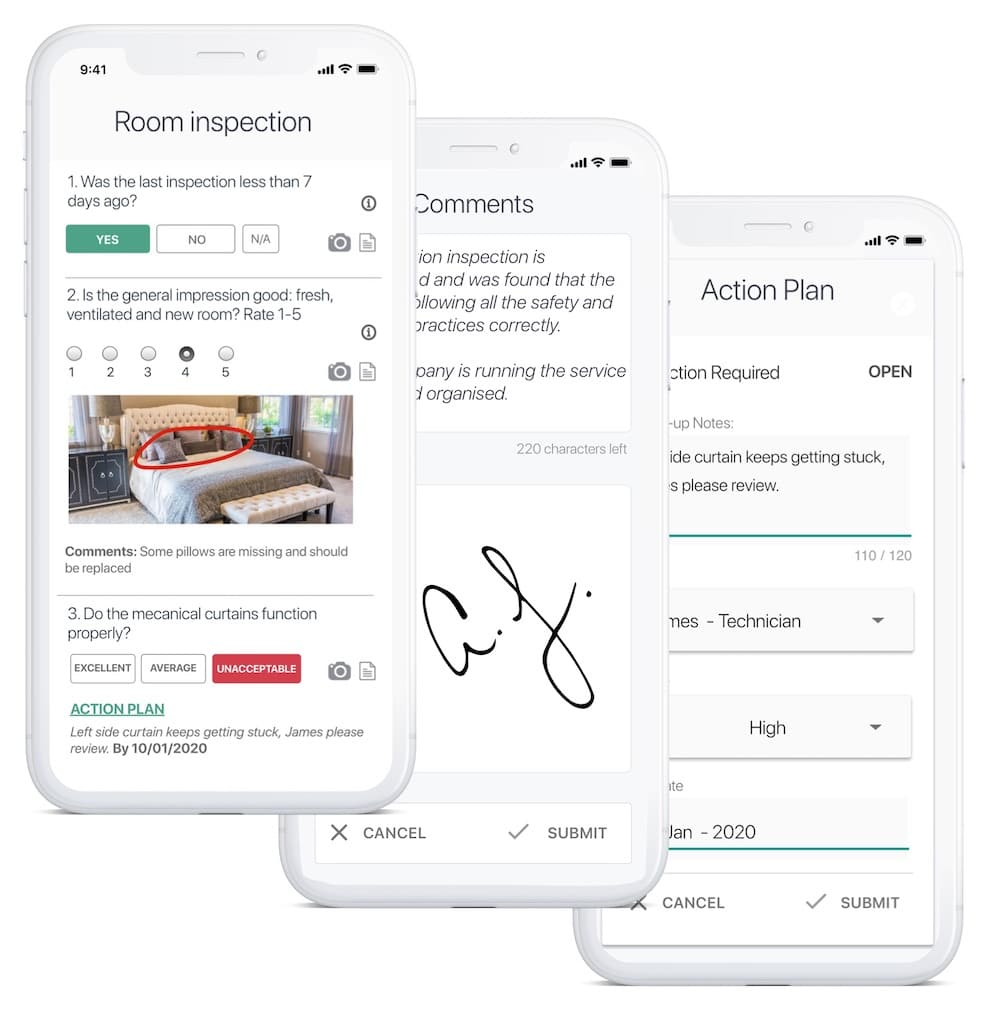
Implement a housekeeping app like GoAudits. It allows your staff to perform regular maintenance checks, note down issues, attach photos, notify designated maintenance personnel, and generate and share instant maintenance reports with all the stakeholders.
Set up custom workflows for the maintenance teams. Permit your Supervisors to initiate repairs within the app, or assign corrective actions yourself through the Admin Dashboard. As the Manager, you can also use it to monitor the completion of the repairs.
What Technology is Changing Hotel Housekeeping Operations?
Housekeeping technology has changed faster in the last two years than in the previous decade. Here is what is worth paying attention to.
- AI-Assisted Scheduling: AI scheduling tools analyze occupancy data, check-out times, room type, and individual attendant productivity to generate optimized room assignment sequences. Properties using these tools report 10-15% gains in labor productivity through better planning alone (Hospitality Net, 2026).
- PMS Integration: A housekeeping platform connected to the hotel Property Management System creates a real-time information loop across departments. When a guest checks out, the PMS flags the room automatically. When the clean is done, the front desk sees it instantly, removing the coordination delays that cause check-in bottlenecks.
- Mobile Inspection and Reporting: Staff complete inspections on smartphones, attach photos, log issues, and submit reports in seconds. Managers get instant alerts for failed inspections and can assign corrective actions from the dashboard. Every checklist is automatically logged, creating an audit trail paper cannot match.
- Robotics in Public Areas: Hotels are deploying robotic cleaning systems in lobbies, corridors, and event spaces to handle repetitive floor-cleaning tasks. This frees staff for guest rooms and the detail-oriented work that requires human judgment.
- UV-C Sanitization: UV-C light tools sanitize high-touch surfaces like remote controls, door handles, and bathroom fixtures. They add a documented layer of sanitization beyond chemical cleaning, which increasingly matters to health-conscious guests.
What Is Coming Next: According to the Mews 2026 Hospitality Industry Outlook, the first major wins from agentic AI will come in back-office operations and housekeeping. The properties that benefit most will be those that get their data and digital workflows in order now, before these tools become standard across the industry.
How to Build a Sustainable Hotel Housekeeping Program
Sustainability in hotel housekeeping is no longer a differentiator. For corporate bookers and younger travelers, it is a baseline expectation. Hotels that can document their green housekeeping practices are better positioned for certification programs, corporate travel contracts, and direct bookings from guests who factor environmental practices into their decisions.
- Linen and Towel Reuse Programs: Give guests the choice to reuse towels and skip daily linen changes. This cuts water and energy consumption in laundry operations without affecting the guest experience. Frame it as a guest choice, not a cost-cutting measure, and make the option visible at check-in and in the room.
- Biodegradable Cleaning Products: Replace standard chemicals with biodegradable, non-toxic alternatives certified under EPA Safer Choice or EU Ecolabel. The upfront cost difference is typically minor. The long-term benefit is cleaner drainage and a documentable practice for sustainability certifications.
- Cutting Single-Use Plastics: Replace individually wrapped amenities with refillable dispensers and reusable alternatives. Several major hotel brands now require this across their portfolios, which means suppliers have made the transition straightforward.
- Waste Disposal and Separation: Train attendants to separate recyclables, organic waste, and general waste at the point of collection rather than consolidating everything into one bag. Use color-coded bins on each floor and track waste volumes over time to measure progress and set reduction targets.
- Occupancy-Based Laundry Scheduling: Run laundry cycles based on actual linen volumes rather than a fixed daily schedule. Batching loads reduces utility costs and machine wear. Pair this with a linen tracking system to monitor discard rates and control one of housekeeping’s largest recurring costs.
- Sustainability Certifications: Green Key, EarthCheck, and LEED all require documented housekeeping practices and regular audits. Corporate travel managers increasingly request these certifications as part of supplier selection. GoAudits inspection templates help document compliance and maintain the audit trail these programs require.
Streamline Housekeeping in the Hotel Industry With GoAudits
GoAudits hotel audit software is a digital tool that offers fully customizable features for hospitality businesses to operate effectively and efficiently. It allows managers to simplify and streamline intricate and repetitive hotel operations that directly impact the customer experience.
With GoAudits, you can:
- Create custom hotel checklists or access ready-to-use templates.
- Allow hotel teams to coordinate with each other to deliver a memorable experience.
- Make sure SOPs are always accessible to staff through the GoAudits mobile app.
- Perform regular hotel audits for consistency, efficiency, and safety.
- Flag issues in real time, initiate prompt corrective actions, and monitor their resolution.
With a rating of 4.8 stars on Capterra, GoAudits is trusted by some of the biggest brands like Hilton, Marriott, and Choice Hotels in the hospitality industry.
» GoAudits Reviews: Read how companies leverage GoAudits to meet standards and deliver consistent services across locations.
FAQs
To be a better housekeeping manager, focus on strong leadership, clear communication, and consistent hotel staff training. Prioritize organization, maintain cleanliness standards through regular inspections, and manage supplies effectively. Building good coordination with other departments and having a keen attention to detail are also crucial.
5S in housekeeping refers to implementing the famous Japanese 5S principles to maintain a clean and efficient workspace. The 5S can be applied in cleaning processes to reduce waste, boost efficiency, and establish protocols for the housekeeping staff.
The 3 Rs in housekeeping usually refer to the waste hierarchy principles promoting environmental sustainability: Reduce, Reuse, and Recycle. This involves reducing the consumption of resources (water, energy, and amenities), reusing items when feasible (like containers or linens appropriately), and ensuring waste materials are properly sorted for recycling.