Food safety management software is an essential tool to ensure compliance with food safety regulations and maintain high standards in food handling. They streamline documentation, automate compliance checks, and reduce the risk of human error. Digitizing food safety processes can improve efficiency, enhance traceability, and help food businesses focus more on delivering quality products. If FoodDocs is not the right fit for your business and you are looking for alternatives, there are several options available that offer different features, pricing models, and user experiences.
This blog will explore the best FoodDocs alternatives and compare their key features to help you choose the one that better aligns with your budget and operational needs.
FoodDocs Reviews: Why Food Businesses Look for Alternatives?
Based on user reviews from platforms on G2, Software Advice, Capterra, and GetApp, here are some reasons why companies may look for FoodDocs alternatives.
- Usability and learning curve: The platform can feel complex initially, especially when trying to understand how different modules connect or how workflows are structured. First-time users may need onboarding time before navigating the system efficiently.
- Pricing concerns for small businesses: The monthly subscription cost can be difficult for very small companies or startups to justify, particularly when budgets are tight.
- Limited integrations and feature gaps: Users occasionally note the lack of clarity around integrations with other software and request more reporting options, automation, or expanded functionality in certain areas.
- Mobile and technical limitations: Weaker mobile usability compared with desktop, missing features in the mobile version, or difficulty viewing logs and tasks on phones or tablets.
- Setup, structure, or implementation friction: Implementation can take longer than expected, particularly for companies unfamiliar with compliance processes or regulatory frameworks.
- Support availability and operational issues: While support is generally praised, there are comments questioning after-hours availability or mentioning occasional subscription or technical issues.
- App stability complaints: Login or registration problems, with a user even calling the app unreliable.
5 Best FoodDocs Alternatives for Food Businesses
Here are our top 5 alternatives to FoodDocs.
| Main features | Free trial | Paid Plan | |
| FoodDocs | Real-time monitoring, customizable checklists, smart notifications, and automated, and traceability systems | ✅ | €199 ($235) per month or €167 ($197) if billed annually |
| GoAudits | Great option for operations of all sizes: user-friendly app & desktop software for efficient inspections, customizable food safety checklists/SOP templates, instant reports, corrective actions, documentation & recordkeeping, offline functionality, etc. | ✅ | $10 per user per month; billed annually |
| Trail | Excellent task management, staff accountability, and operational workflows built for daily routines | ✅ | £38 (or $50) per month per site |
| Jolt | Combines checklists, labeling, training, scheduling, and monitoring in one system | ❌ | $89.99 per month |
| Crunchtime | Advanced forecasting, purchasing, inventory, labor, and enterprise-level analytics | ❌ | Available upon request |
| FoodReady | Strong compliance tools, traceability, and consulting support for regulated environments | ✅ | Request quote |
1. GoAudits
GoAudits is an all-in-one food safety software designed to help businesses of all sizes, from small restaurants to large food manufacturers. It combines ease of use, advanced reporting & analytics, workflow automation, real-time insights, etc., to streamline food safety inspections & audits, maintain compliance, improve operational efficiency, and ensure the safety of products and customers.
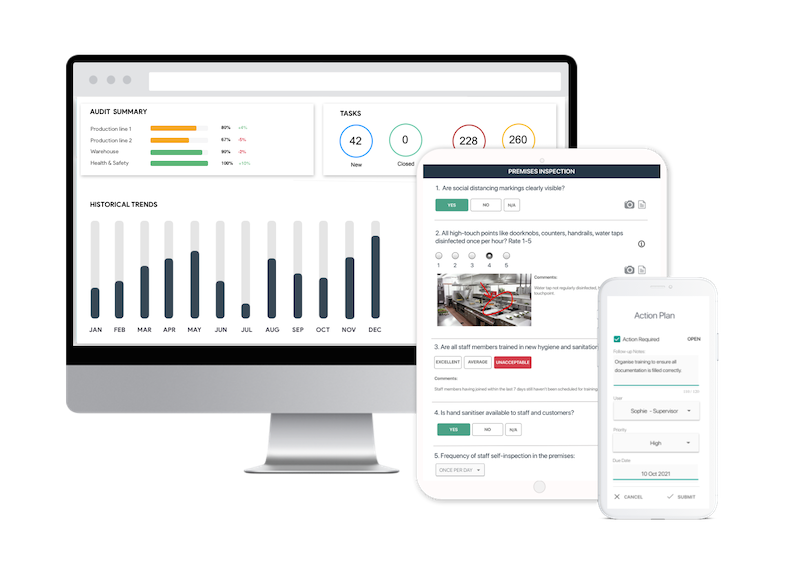
Key features and benefits of GoAudits:
- Conduct inspections in real-time, even in areas with limited internet connectivity. Capture evidence of food safety violations with photos and annotations.
- Inspect food handling practices, storage conditions, equipment cleanliness, and temperature control.
- Share inspection findings with relevant stakeholders immediately. Generate reports that comply with HACCP and other food safety standards. Identify areas for improvement and take corrective action quickly.
- Document food safety incidents, track corrective actions, and generate reports for audits and regulatory compliance.
- Assign corrective actions to responsible individuals and track their completion. Set deadlines and reminders to ensure timely resolution of issues.
- Automate workflows for routine tasks and identify trends and patterns to predict and prevent potential issues related to food safety.
- Use pre-built food SOPs for bars, restaurants, etc., and templates for common food safety inspections, such as sanitation, food handling procedures, and cleaning protocols. Customize templates to meet specific business needs and industry standards.
- Conduct HACCP audits, BRC audits, IFS Audits, GMP audits, and SQF audits to assess and verify compliance with food safety best practices and standards.

GoAudits offers a wide range of free and customizable food safety checklists:
- Food Safety Audit Templates
- HACCP-Based SOP Templates
- Food Safety & Hygiene Checklist
- ISO 22000 Food Safety Checklist (FSMS)
- Food Safety Self-Inspection Checklist
- Brewery Safety Inspection Checklist
- Restaurant Safety Checklist
- Food Safety Inspection Checklist
- Canteen Hygiene Inspection
- Food Manufacturing Hygiene Audit
- Restaurant Inspection Checklist
- Bar Health Inspection Checklist
- Pest Control Checklist
- GMP Audit Templates
👉 Renowned for its instant ramen and Cup Noodles, Nissin Foods’ manufacturing facilities demand rigorous food quality and safety controls. Traditionally, parts of their inspection processes were manual, involving paperwork and scanning, which led to delays in filing and implementing corrective actions.
Nissin Foods digitized their quality checks and good manufacturing practice (GMP) audits with GoAudits, achieving over a 96% completion rate for GMP audits. Real-time reporting enabled them to take corrective actions quickly, maintaining their commitment to high standards in food quality and safety.
Using GoAudits as part of our GMP inspections, we’ve seen a higher completion ratio – without the nagging that sometimes used to be needed to get certain items completed! We are now averaging over 96% completion ratios for just one of our GMP audits. The team enjoys having the information on their computer, not looking for a PowerPoint document to fill out and allowing them to expedite some of the corrective actions. – Eddie Odie, Quality Control Manager at Nissin Foods USA
How GoAudits compares with FoodDocs
GoAudits focuses on flexible inspections and operational audits across industries, whereas FoodDocs is more specialized in automated food safety management and compliance workflows. GoAudits is typically far more budget-friendly, making it attractive for smaller teams that need inspections without FoodDocs’ deeper compliance automation.
2. Trail App
Trail is a work management app designed specifically for the hospitality and food industry. It helps businesses of all sizes, from independent restaurants to large franchises, manage their daily operations, comply with regulations, and improve their customer experience.
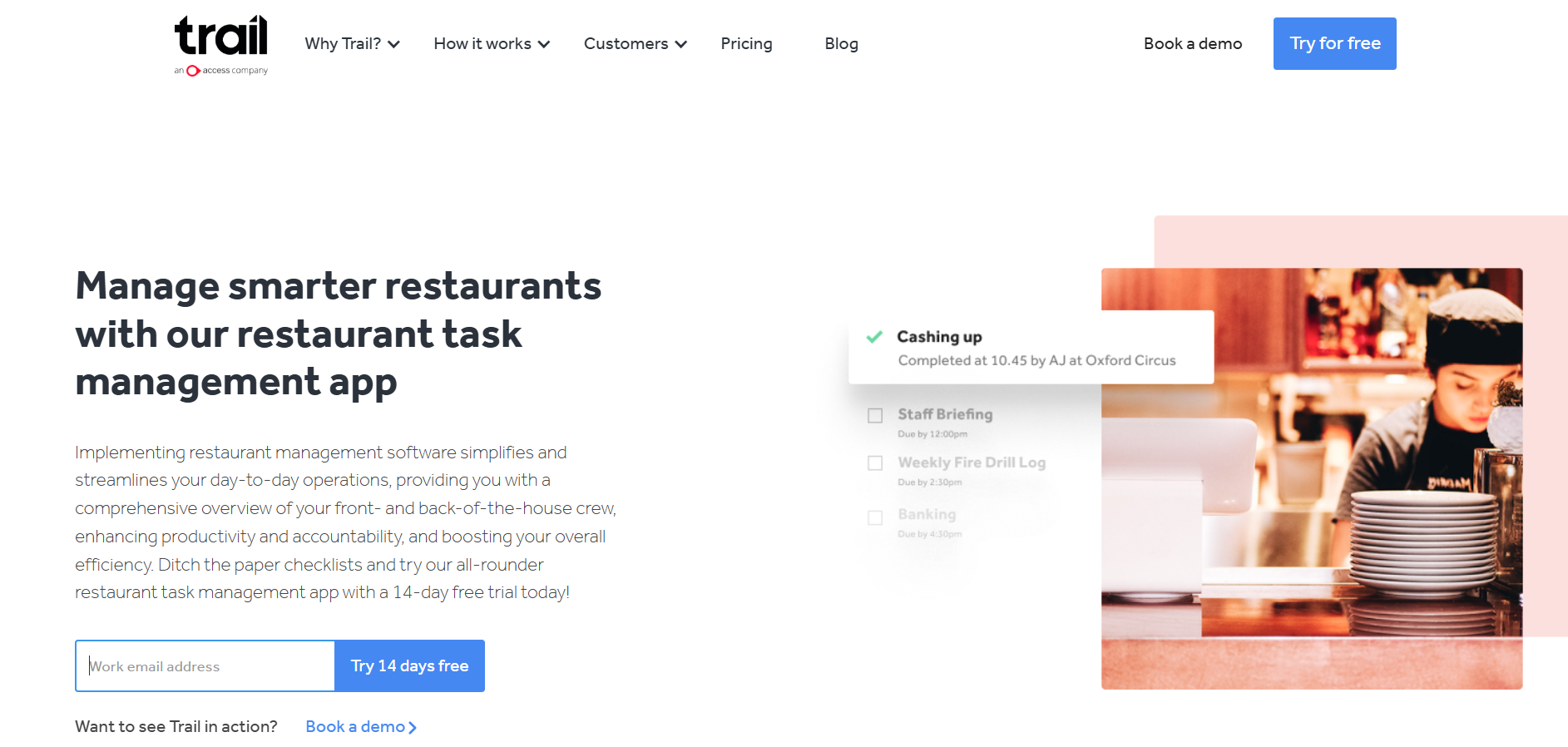
Key features of Trail:
- Create, assign, and track daily tasks with priorities, deadlines, and accountability
- Monitor completion for compliance, performance, and operational consistency
- Build and distribute training resources for onboarding and development
- Generate reports on tasks, compliance, and efficiency
- Customize workflows, permissions, and branding to fit your business
- Use the mobile app (iOS/Android) with offline access
How it compares with FoodDocs
Trail emphasizes daily operational checklists and task execution in hospitality environments, while FoodDocs centers more on structured food safety systems and HACCP compliance automation. Trail works well for frontline task consistency; FoodDocs tends to be stronger for audit-ready documentation and compliance workflows.
3. Jolt
Jolt is a cloud-based operations management software designed for businesses in various industries, including restaurants, retail, hospitality, and more. It helps businesses improve their efficiency, productivity, compliance, and customer satisfaction.
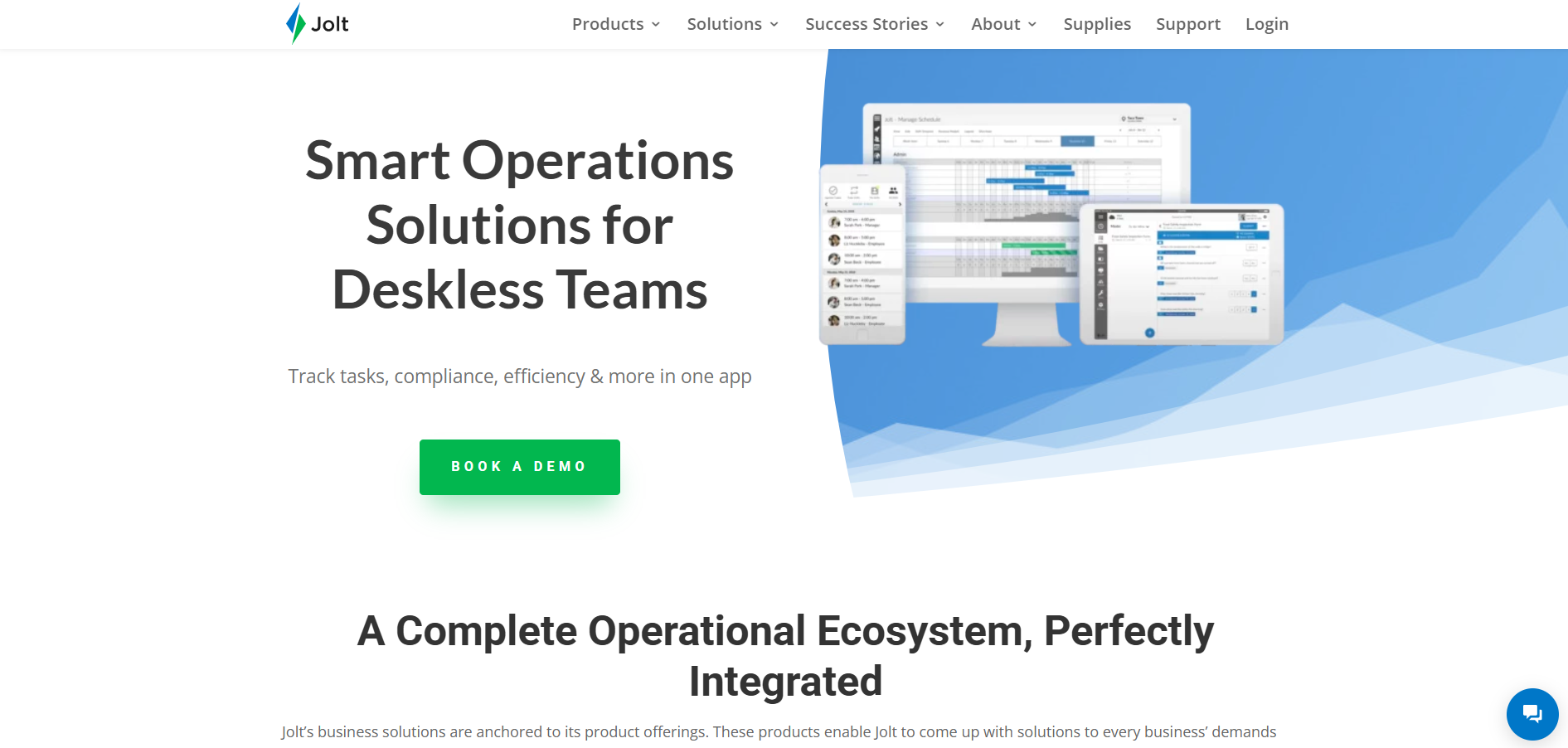
Key features of Jolt:
- Assign tasks, track progress, and ensure team accountability
- Record food and equipment temperatures with automated alerts
- Manage labels, documents, and training materials centrally
- Simplify staff scheduling, time tracking, and payroll workflows
- Reduce errors and improve operational visibility across locations
How it compares with FoodDocs
Jolt combines food safety with workforce tools like scheduling and training, while FoodDocs is more compliance-driven with automation around HACCP documentation and monitoring. Jolt suits operators wanting an all-in-one restaurant ops platform, while FoodDocs is better for businesses prioritizing structured compliance and audit preparation.
Also Read: 5 Affordable Jolt Alternatives & Competitors
4. Crunchtime
Crunchtime is a cloud-based restaurant operations management software designed to help multi-unit restaurant brands achieve operational excellence.
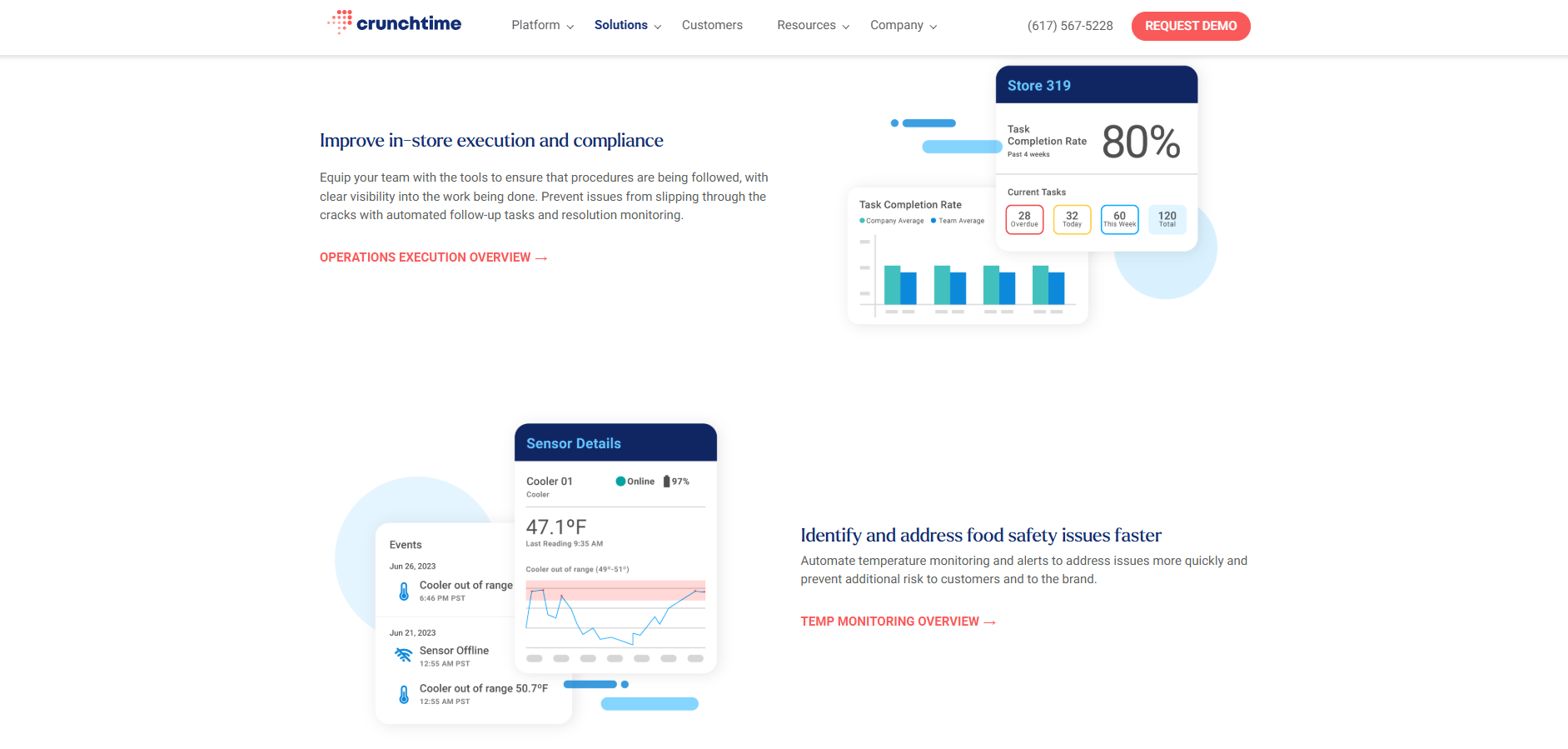
Key features of Crunchtime:
- Cut food costs and save time with automated forecasting, purchasing, and inventory control
- Optimize labor with AI-driven scheduling and mobile employee access
- Improve execution with recurring tasks, alerts, and real-time visibility
- Standardize operations across sites with centralized task management
- Strengthen training, compliance tracking, and decision-making through analytics
How it compares with FoodDocs
Crunchtime targets enterprise restaurant chains with forecasting, labor, and inventory control alongside food safety. FoodDocs focuses more narrowly on digital food safety management and regulatory compliance rather than full operational optimization.
5. FoodReady
FoodReady is a comprehensive food safety management platform that combines automation with expert consulting services to help businesses achieve and maintain compliance with various food safety standards and regulations. You can access all features and functionalities on the go with the FoodReady mobile app.
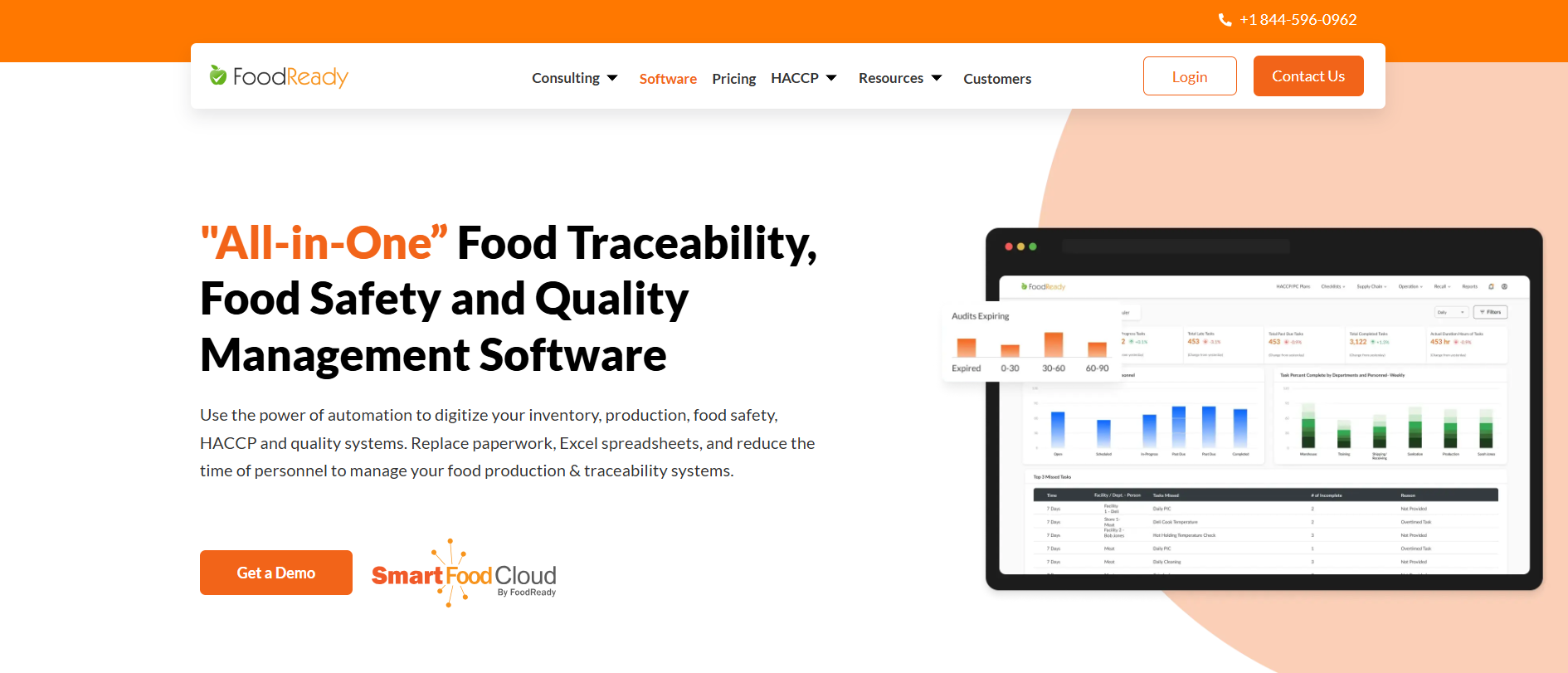
Key features of FoodReady:
- Build HACCP plans quickly using templates and drag-and-drop tools
- Run operations with customizable safety and sanitation checklists
- Maintain lot traceability and streamline recalls when needed
- Store supplier documentation to protect supply chain safety
- Monitor CCPs and compliance data in real time
How it compares with FoodDocs
FoodReady provides an end-to-end platform covering supplier management, traceability, and AI-assisted SOP creation, whereas FoodDocs is simpler and faster to deploy for HACCP automation. FoodReady may appeal to manufacturers needing broader supply-chain controls, while FoodDocs is frequently chosen for streamlined compliance management.
How to Choose the Best FoodDocs Alternative?
We used the following factors to evaluate and list the alternatives to FoodDocs.
- Cost-Effectiveness: Evaluate the software’s pricing structure to determine its value relative to the features offered. Consider both initial costs and long-term expenses to ensure it fits within your budget.
- User-Friendliness: It should have an intuitive interface that facilitates easy navigation and operation. A user-friendly design minimizes training time and enhances efficiency.
- Compliance with Industry Standards: Ensure it helps you comply with relevant food safety standards and regulations, such as ISO 22000 or HACCP. It is essential for maintaining certification and avoiding legal issues.
- Customizable Checklists and Templates: The ability to tailor checklists and templates to your specific processes allows for more effective monitoring and control of food safety practices.
- Inspections and Audits Management: Look for features that facilitate scheduling, conducting, and documenting inspections and audits. Efficient management of these activities ensures ongoing compliance and identifies areas for improvement.
- Quality Control: It should support robust quality control measures, enabling you to monitor product standards and implement corrective actions when necessary.
- Free Trials and Demos: Access to a trial period or demo version allows you to assess the software’s suitability before making a commitment.
- Corrective and Preventive Actions (CAPA): Effective CAPA features help identify non-conformities, determine their causes, and implement measures to prevent recurrence.
- Tasks and Workflow Automation: Automation capabilities streamline routine tasks, reduce manual effort, and enhance consistency in food safety management processes.
- Instant Reporting: The ability to generate real-time reports provides valuable insights into operations, facilitating informed decision-making.
- Comprehensive Performance Dashboards: Smart dashboards offer a holistic view of key performance indicators, audit scores, and compliance status, aiding in strategic planning and continuous improvement.
- Customer Reviews and Testimonials: Reviewing feedback from current users can provide practical insights into the software’s performance, reliability, and support services.
Which FoodDocs Alternative is Right for Your Food Business?
Let’s help you quickly decide which FoodDocs alternative is the right one for you.
| Tool | Best for | Verdict |
| GoAudits | Restaurants, chains, hospitality groups looking for affordable compliance software | Best budget-friendly alternative if you want powerful inspections without enterprise pricing |
| Trail | Hospitality, pubs, multi-site restaurants focused on task execution | Best for operations execution, not full HACCP automation |
| Jolt | Restaurants needing temperature logs and staff management | Best all-in-one restaurant ops platform, but higher cost and complexity |
| Crunchtime | Large restaurant brands and franchises | Best enterprise solution for multi-unit restaurant groups |
| FoodReady | Food producers, manufacturers, or facilities needing regulatory workflows | Best for compliance-heavy operations beyond restaurants |
FAQs
The standard plan costs €199 ($235) per month or €167 ($197) if billed annually. The professional plan costs €299 (over $350) per month or €250 ($295) if billed annually. Both plan supports up to 5 users. FoodDocs also offers a custom plan based on your needs. If you’re looking for a more affordable solution, GoAudits is the best option. Its starter plan costs $10 per user per month when billed annually.
For small teams, usability and automation matter most. GoAudits is often preferred because it simplifies inspections, corrective actions, and reporting without needing dedicated compliance staff, making it suitable for independent restaurants or growing food businesses.
Yes. Several platforms provide structured HACCP checklists & templates at lower operational cost than manual systems. Tools like GoAudits and FoodReady reduce paperwork, automate monitoring, and centralize records, helping businesses maintain compliance without hiring additional compliance personnel.
Operational compliance improves when daily tasks are automated and trackable. Apps like GoAudits and Trail help restaurants manage checklists, staff accountability, and training records, ensuring routine food safety procedures are consistently followed.
If onboarding feels complex or reporting is limited, it may be time to reassess FoodDocs. Businesses often switch when they need faster implementation, stronger automation, or better mobile usability aligned with scaling operations.