Dairy farms have to manage food safety, animal welfare, regulatory compliance, and commercial viability simultaneously. A single weak link can compromise milk quality, trigger enforcement action, or erode buyer trust. As standards tighten and audits become more data-driven, understanding how dairy inspections work is no longer optional for farm owners and quality teams.
This article breaks down different types of dairy audits, key areas inspected, steps to perform internal audits, and free audit checklists.
What are Dairy Inspections in Farms?
Dairy inspections on farms are systematic evaluations of dairy operations to ensure milk production meets established safety, animal welfare, and quality standards. Inspectors assess facilities, processes, and records to verify compliance with food safety regulations and industry best practices. They protect public health by preventing contamination, ensuring humane treatment of animals, and maintaining traceability throughout the milk production chain.
These inspections typically cover animal health, milking procedures, equipment sanitation, storage of chemicals, and record-keeping. Regulatory agencies, cooperative quality assurance programs, or third-party auditors can conduct them. The outcome determines whether the dairy farm can supply milk that is safe and marketable.
Common Issues Identified During Dairy Audits
These issues are among the most common causes of failed dairy inspections and rejected milk loads:
- Poor milking hygiene leading to elevated SCC: Milking without proper sanitation increases somatic cell counts (SCC), indicating infection or stress in cows and risking lower milk quality.
- Inadequate cleaning of milking equipment: Residue and biofilm in pipelines or clusters can harbor bacteria, contaminating milk and breaching food safety standards.
- Unsafe chemical storage: Improperly stored sanitizers, pesticides, or fuels can lead to accidental contamination of milk or animal exposure to harmful substances.
- Incomplete animal health records: Missing vaccination, treatment, or illness logs undermine traceability and complicate disease control efforts during inspections.
- Water contamination risks: Unprotected wells, stagnant water, or poor drainage can introduce microbial or chemical contaminants into the dairy system, affecting both cows and final product quality.
Difference Between Dairy Farm Inspections & Milk Inspections
| Aspect | Dairy Farm Inspections | Milk Inspections/Audits |
| Primary Focus | Evaluation of on-farm practices, infrastructure, animal welfare, and overall safety of the dairy operation. | Assessment of milk quality, hygiene during handling, laboratory testing, and product compliance. |
| Scope of Review | Includes animal health checks, milking procedures, cleanliness of facilities, equipment sanitation, and regulatory compliance at the farm level. | Involves sampling milk and dairy products, testing for bacteria, adulterants, antibiotic residues, and ensuring adherence to quality standards. |
| Objective | Ensure safe production environment, healthy animals, properly maintained equipment, and adherence to animal care standards before milk enters the supply chain. | Confirm that raw and processed milk meet defined quality and safety criteria before distribution and sale to consumers. |
| Where It Occurs | Conducted directly on the farm premises covering barns, milking parlors, storage, and animal housing. | Performed at multiple points—including on-farm bulk tank sampling, during transport, and at processing facilities or laboratories. |
| Who Performs It | Farm inspectors from regulatory bodies or third-party auditors evaluate operational practices and compliance. | Certified milk inspectors, dairy specialists, and laboratory analysts measure quality metrics and regulatory conformity. |
| Outcome Indicators | Pass/fail for hygiene, animal welfare, equipment condition, and record accuracy; may affect farm licensing status. | Quality scores, lab results, rejection of contaminated batches, and compliance reports for milk safety standards. |
Types of Dairy Audits
Different types of dairy audits include:
1. Internal Dairy Audits
Internal dairy audits are self-evaluations conducted by farm teams or internal quality managers. They assess existing processes, hygiene practices, record accuracy, and compliance with internal food safety and quality standards before any external review. By identifying weaknesses early, farms can correct issues and strengthen systems proactively.

2. Second-Party (Customer) Audits
Second-party audits, often referred to as customer audits, are supplier assessments performed by buyers (e.g., food manufacturers, retailers, etc.) or representatives of organizations that contract with the dairy farm. These audits verify that the farm’s practices meet specific requirements set by the customer or processor. This audit supports supply chain assurance and helps maintain ongoing commercial relationships.
3. Regulatory Compliance Inspections (State/Federal)
Regulatory compliance inspections are formal audits conducted by government agencies at the state or federal level. These reviews check whether the dairy operation complies with legal standards related to food safety, animal welfare, milk quality, environmental practices, and public health. Successful outcomes are essential for licensing, continued operation, and legal compliance.
4. Specialized Audits
Specialized audits focus on specific aspects beyond general quality and compliance. Common types include:
- Animal Welfare Audits: Evaluate livestock care and welfare standards, often against established animal care programs and certification schemes.
- Organic Certification Audits: Assess compliance with organic farming standards, including feed sources, chemical use restrictions, and animal husbandry practices.
- Sustainability Audits: Measure environmental performance indicators, resource use efficiency, and sustainable farm management practices, which can support premium market claims.
👉 Free Resources
These audits help farms demonstrate ethical practices and meet the requirements of niche markets and certification bodies.
Key Areas Assessed During Dairy Inspections
Inspectors focus on the following areas during dairy inspections:
Food Safety Management Systems
Inspectors verify that a structured food safety management system (FSMS) is in place. This includes documented hazard analyses, control measures, monitoring procedures, corrective actions, and evidence that preventive controls are implemented consistently.
Hygiene and Sanitation
Hygiene measurements cover both general facility cleanliness and focused cleaning of milking and storage equipment. Effective sanitation reduces microbial contamination risks and supports high milk quality.
👉 Free Resources
Use these free hygiene checklists to perform effective and faster hygiene inspections.
→ Hygiene Standard
→ Food Manufacturing Hygiene Audit
→ Hygiene Checklist for the Food Industry
→ Personal Hygiene Checklist
→ Food Hygiene Inspection Checklist
→ Food Safety & Hygiene Checklist
→ General Cleaning Checklist
Good Manufacturing Practices (GMP)
GMP checks ensure that processes, infrastructure, and personnel practices are designed to prevent contamination. This includes facility layout, pest control, equipment maintenance, and workflow protocols that meet regulatory standards.
👉 Also Read
Animal Health and Welfare on Farms
Animal health assessments look for signs of disease, proper veterinary care, and appropriate treatment records. Welfare evaluations include clean, safe housing, humane handling, and practices that prevent animal stress or injury.
Milk Handling and Processing Controls
Inspectors observe the entire milking process, from udder preparation through handling, transfer, and chilled storage. Proper procedures ensure that milk is collected and stored under hygienic conditions that minimize contamination.
Product Quality Control and Tests
Quality inspections include review of laboratory test results such as somatic cell counts, bacterial counts, antibiotic residues, and other quality indicators. Consistency with accepted limits confirms that milk is safe and marketable.
Water Quality
Safe water is essential for animal consumption, equipment cleaning, and facility sanitation. Inspectors verify that water used in dairy operations meets quality criteria and does not introduce contaminants into the milk or the environment.
Worker Health & Safety (HSE Farm Inspections)
Inspections include evaluation of worker practices and conditions to prevent accidents and exposure to hazards. Key areas are slip prevention, safe handling of chemicals, confined space safety, machinery operation, and overall workplace health protocols.
Documentation & Traceability
Accurate and complete records are fundamental. Inspectors review treatment histories, cleaning logs, training documentation, equipment maintenance records, and traceability systems that connect milk batches to their origin.
Steps to Perform Internal Dairy Inspections
Internal dairy audits are systematic evaluations designed to measure compliance with safety, quality, welfare, and traceability requirements before external scrutiny. A structured approach ensures gaps are identified early and corrected promptly.
1. Understand Standards Governing Dairy Inspections
Before auditing begins, familiarize yourself with key dairy standards that form the basis for audit criteria:
International Dairy Federation (IDF) develops science-based dairy standards and codes of practice that guide global best practices for milk safety, quality, and animal health.
Hazard Analysis and Critical Control Points (HACCP) is a preventive system that identifies biological, chemical, and physical hazards in production and establishes controls at critical points to protect food safety.
👉 Free Resources
GoAudits HACCP software offers the following HACCP checklists. Perform HACCP audits up to 5x faster with these free HACCP-based SOP templates.
→ HACCP Plan Checklist
→ HACCP Audit Checklist
→ HACCP Plan Self-Assessment Checklist
→ HACPP Food Safety Checklist
→ HACCP Internal Audit Checklist
Codex Alimentarius Commission (CAC) for dairy farms and products sets international food safety and hygiene codes that apply across the dairy chain, from primary production through processing and distribution.
ISO 22000 is an international standard for food safety management systems that integrates HACCP principles and prerequisite programs to ensure effective hazard control across the food supply chain.
Good Dairy Farming Practice (GDFP) offers practical farm-level guidance focusing on animal health, nutrition, hygiene, welfare, and environmental management to produce safe and quality milk.
Global Animal Partnership (GAP) for animal welfare in dairy farms is a tiered animal welfare standard that audits and certifies livestock management practices based on welfare outcomes.
👉 Free Resources
For milk inspections, ISO/TC 34/SC 5 develops standards for analysis and sampling of milk products, while the US Pasteurized Milk Ordinance (PMO) provides prescriptive sanitary and inspection requirements for Grade “A” milk production and processing.
Understanding these frameworks helps you set clear audit benchmarks and align farm operations with global and national expectations.
2. Plan the Dairy Audit
Planning transforms an audit from a checklist exercise into a focused evaluation. Define the audit scope, clarify specific objectives, and assemble a qualified team. Establish timelines, roles, and the schedule for interviews, observations, and document reviews. Good planning ensures efficient use of time and minimizes disruption to farm operations.
3. Use Software & Digital Checklists to Conduct the Dairy Audit
Modern audit software and digital checklists streamline data capture, improve accuracy, and enable real-time reporting. Use digital tools to record observations, attach photos, capture corrective actions, and automatically score compliance against standards. This reduces manual errors, accelerates analyses, and creates an auditable record that supports continuous improvement.
👉 Free Resources
GoAudits farm audit app offers the following farm inspection checklists. You can sign up for free and start using these checklists.
→ FSSC 22000 Audit Checklists
→ Food Safety Audit Templates
→ Farm Inspection Checklist
→ Farm Health and Safety Checklist
→ Farm Quality Assurance Checklist
→ Farm Equipment Maintenance Checklist
→ Dairy Barns and Milking Facilities Inspection
→ SQFI Animal Product Manufacturing Checklist

4. Report and Analyze Findings
After gathering data, document the audit results clearly. Identify non-conformances, deviations from standards, and areas at risk. Analyze root causes, whether training gaps, equipment failures, or procedural lapses, so corrective actions can target underlying issues, not just surface symptoms. A thorough report should include evidence, severity levels, and suggestions for prioritizing improvements.
5. Implement Corrective Actions and Monitor Effectiveness
Once findings are documented, assign corrective actions with defined timelines and responsible parties. Track completion and verify that measures actually resolve the issues identified. Monitoring effectiveness over subsequent weeks or audit cycles ensures that improvements are sustained and become part of the farm’s quality culture.
Perform Dairy & Milk Audits Up To 5X Faster with GoAudits
Dairy farms and milk production facilities operate under constant pressure to meet hygiene, food safety, animal welfare, and regulatory standards. Manual inspections, paper checklists, and scattered records slow teams down and increase the risk of missed issues.
GoAudits is an inspection software used by dairy farms and dairy processors to manage on-farm inspections and milk audits in one system. It allows teams to complete inspections on mobile devices while walking the farm or facility, even in low-connectivity environments.
The result is faster inspections, clearer accountability, and full visibility across production operations.
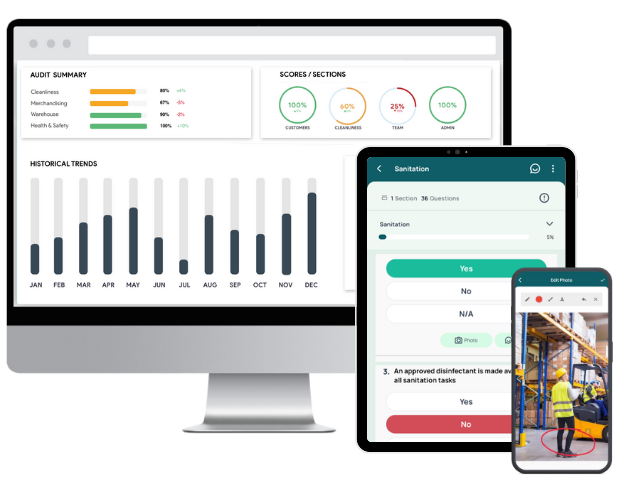
- Conduct dairy inspections on mobile devices, even offline.
- Use ready-made templates or create tailored checklists with drag-and-drop tools. Upload existing paper forms or images and have them digitized quickly at no extra cost.
- Attach and annotate photos, capture e-signatures, and log timestamps and locations to create reliable audit trails for internal reviews and external inspections.
- Ensure every user follows the same process for hygiene, animal welfare, milk handling, equipment sanitation, and safety inspections.
- Automatically generate reports at the end of each audit, complete with photos, scores, timestamps, geolocation, and inspector details, ready to share immediately.
- Assign and track corrective actions so issues don’t get forgotten
- Identify recurring issues, risks, and performance trends before they impact milk quality or compliance.
- Keep the right people informed with automatic alerts, approvals, escalations, and reminders.
- Store all inspection data, reports, photos, and historical results in one secure system, reducing audit stress and preparation time.
How Dairy Audits Support Quality Assurance in the Dairy Industry
Dairy audits create documented evidence of compliance and quality performance, which strengthens transparency across the supply chain and builds trust with processors, retailers, and end consumers. Verified practices also support sustainability and welfare claims that increasingly influence purchasing decisions.
- Ensuring regulatory compliance: Dairy audits systematically check processes against government and industry standards, reducing the risk of violations and supporting ongoing legal compliance throughout the production chain. This safeguards licences and helps avoid fines or penalties.
- Reducing costs and boosting profitability: Regular audits identify operational gaps early, allowing farms to prevent costly quality failures, reduce waste, and optimise efficiency. This supports tighter cost control and stronger financial performance.
- Improving milk quality: Audits focus on hygiene, milking procedures, and equipment maintenance, which directly lowers contamination risks and bacterial counts in milk. Higher milk quality enhances marketability, increases premium returns, and supports herd health.
- Enhancing animal welfare: Assessment of animal care practices as part of audit criteria helps farms adopt better handling, housing, and health management. Better welfare standards contribute to overall herd wellbeing and can reduce disease-related production issues.
FAQs
Milk inspections enforce sanitation and product quality standards. Routine evaluation of hygiene, handling, and laboratory results helps prevent contamination, recalls, and regulatory penalties. Consistent inspection compliance supports product safety, strengthens market access, builds customer trust, and reduces operational disruptions that can negatively affect profitability and brand reputation.
Inspection frequency varies by jurisdiction, product type, and compliance history. Farms producing raw milk for direct consumption may be inspected every six months, while other operations can have longer intervals depending on risk, accreditation, and past performance. Non-compliance or complaints typically trigger more frequent inspections.
Dairy inspections may be scheduled routinely or triggered by past non-compliance, complaints, contamination reports, product failures, or participation in certain accreditation schemes. Local intelligence and investigation needs also influence inspection timing, especially when raw milk safety or public health risks are identified.
Inspections target hazards like bacterial contamination from poor milking practices, inadequate sanitation of equipment, chemical residues, and physical impurities. Detecting off-odors, elevated bacterial counts, visible contamination, and unsafe storage helps prevent unsafe products from entering the market.
HSE farm inspections evaluate workplace health and safety risks on dairy farms and processing sites. They assess hazards such as slips on wet surfaces, manual handling injuries, exposure to chemicals and machinery risks, and other occupational threats to protect employees and maintain compliance with safety regulations.
The best software for conducting dairy inspections is a mobile inspection tool that helps dairy farms and processing facilities run hygiene, milk handling, animal welfare, and safety checks in one place. Good dairy inspection software should work offline, use simple digital checklists, allow photos to be added during inspections, track follow-up actions, and keep inspection records ready for audits. Tools like GoAudits are used by dairy farms, milk processors, and dairy manufacturers to replace paper inspections and stay compliant across day-to-day operations.