

Workplace Inspection Checklist Templates
Template Library > Safety Inspections > Workplace Inspections
Run Consistent Safety Checks with Workplace Inspection Checklists
A workplace inspection checklist gives supervisors and safety officers one standard way to walk a site, record hazards and follow every finding through to a fix. Use these templates as a workplace safety inspection checklist for routine safety walks, pre-shift checks and scheduled monthly inspections, then adapt the sections to your site’s risks. Variants include:
- General workplace inspections covering housekeeping, fire safety, first aid and PPE
- Office inspections focused on ergonomics, electrical safety and trip hazards
- Warehouse and industrial site inspections for racking, forklifts and chemical storage
- Daily and shift-based safety checks for quick, repeatable walk-arounds
- Regulation-aligned OHS inspection checklists for OSHA, WHS and local requirements

With the GoAudits Safety Inspection App, you can:
- Eliminate paperwork: conduct efficient digital audits, add photos from mobile device
- Customize this template or easily create your own
- Save time with instant reports & assign corrective actions
Chemical Hazards
First Aid
Incidents
Information
Records And Statistics
Strains And Sprains
Chemical Hazards
First Aid
Incidents
Information
Records And Statistics
Strains And Sprains
Save Time with Digital Inspections
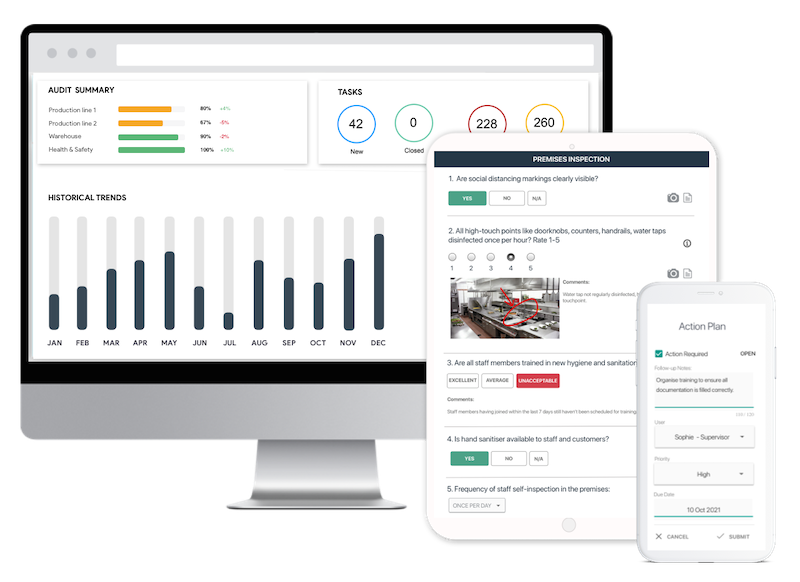
- Easily capture & attach photos, directly on your mobile device.
- Instantly generate and share detailed reports after the inspection.
- Track corrective actions, view historical trends, improve standards.


What is a Workplace Inspection Checklist?
A workplace inspection checklist is a structured list of items an inspector checks, rates and records while walking a work area, so hazards and non-compliance get found and fixed before anyone is hurt. Safety officers, facility managers and supervisors use it to inspect the same zones the same way every time: workstations, storage areas, emergency exits, electrical equipment and machinery.
The checklist does three jobs at once. It sets the standard for what gets checked, it captures evidence of what was found, and it becomes the record that proves each issue was corrected.
What Should a Workplace Inspection Form Include?
A workplace inspection form should include two things: record fields that make each inspection traceable, and inspection areas that cover the hazards on your site. Many printed templates cover the second and skip the first, which is where findings get lost between the walk-around and the fix.
Record Fields Every Inspection Form Needs
- Header details: site, area inspected, date, time and inspector name.
- A rating for each item: pass, fail or not applicable, with space for a comment.
- Photo evidence: an image attached to every failed item.
- Corrective action: what needs fixing, who owns it and the due date.
- Sign-off: the inspector’s signature, plus a manager sign-off once actions close.
Inspection Areas to Cover
Specifics vary by industry, but most workplace safety inspection checklists cover these areas:
- Housekeeping: clear walkways, organized storage, no clutter or trip hazards.
- Emergency equipment: fire extinguishers, alarms, exit signage, first-aid kits and drill records.
- Electrical and equipment safety: wiring, machine guarding and maintenance status.
- Personal protective equipment: availability, correct use and condition. The PPE checklist templates go deeper.
- Hazardous materials: labeling, storage, spill containment and safety data sheets.
- Signage and communication: warning signs, posted procedures and emergency contacts.
- Training and behavior: safe procedures followed and refresher training up to date.
- Records: safety meeting minutes, audit documentation and each workplace incident report or near miss.
How Do You Customize a Workplace Inspection Checklist for Your Site?
Start from a general workplace inspection checklist, then add the hazards specific to your site type and risk level. The core items stay the same everywhere. The depth changes.
- Offices: ergonomics, fire safety, electrical load and trip hazards.
- Construction sites: fall protection, scaffolding and plant. A construction inspection checklist adds site-specific items.
- Manufacturing plants: machine guarding, lockout/tagout procedures, ventilation and chemical handling.
- Warehouses: racking, forklift traffic and emergency exits, covered in detail by the warehouse safety inspection checklist.
Risk level decides how long the checklist is and how often it runs. Sites with chemicals, confined spaces or moving machinery need more items and more frequent checks. A low-risk office can run a shorter checklist less often.
When you adapt a template, keep the general items (exits, lighting, first aid, signage), write every item as a yes/no question anyone on the team can answer, and review the checklist whenever equipment, layout or regulations change.

What Hazards Should a Workplace Inspection Checklist Catch?
A workplace inspection checklist should catch the hazards that build up between inspections: blocked exits, slip risks, unsafe storage, worn equipment, fire risks, missing PPE and poor housekeeping. These are among the most common findings, and each one maps to a specific checklist item.
Blocked Emergency Exits
Fire exits are often partly blocked by boxes, carts or equipment. Even a temporary obstruction is a serious risk in an evacuation. Checklist item: are all exit routes and doors clear and unlocked?
Slips, Trips and Falls
Spilled liquids, loose cables, uneven flooring and poor lighting cause many of the most frequent workplace injuries. Checklist item: are floors dry, walkways clear and cables secured?
Improperly Stored Materials
Unstable stacks and items stored too high can fall on people below. Checklist item: are shelves and racks within their load limits, with heavy items stored low?
Worn or Damaged Equipment
Tools and machinery develop faults when nobody checks them. Checklist item: are cords intact, guards in place and faulty equipment tagged out of service?
Fire Hazards
Overloaded outlets, badly stored flammables and blocked extinguishers are common findings. Checklist item: are extinguishers accessible, inspected and tagged? For deeper coverage, use a dedicated fire inspection checklist.
Missing Signage or PPE
Missing warning signs or unavailable personal protective equipment leave people exposed to avoidable risks. Checklist item: is the required PPE available, in good condition and being worn?
Poor Housekeeping
Cluttered workspaces, overflowing bins and disorganized tools create trip and fire risks. Checklist item: are work areas clean, organized and free of waste buildup?
👉 Close findings faster: In GoAudits, every failed item can become a corrective action with an owner and a due date, tracked until it’s resolved. See how the corrective action software works.
Who Uses a Workplace Inspection Checklist, and How Often?
Supervisors, safety officers, EHS teams and safety committee members all use workplace inspection checklists, at different depths and frequencies. The checklist can stay the same. Who completes it, and how often, depends on the site’s risk.
Roles Involved in Workplace Inspections
Safety officers lead formal inspections. They are trained to spot hazards, check compliance and document risks others might miss.
Supervisors and line managers run informal day-to-day checks in their own areas. They know the operation well enough to notice unsafe behavior quickly, and can log safety observation reports between formal inspections.
EHS teams and internal auditors run structured inspections against corporate or regulatory standards in larger organizations, and compare results across sites.
Joint health and safety committees bring worker and management members into scheduled inspections, where local law requires or encourages them.
Frequency of Inspections
How often a site uses a workplace inspection checklist depends on its risk. OSHA recommends regular inspections of all operations, equipment and work areas, documented so you can later verify that each hazard was corrected. Most sites layer four frequencies:
- Daily or per shift: quick supervisor checks for obvious hazards like blocked exits, wet floors or faulty equipment.
- Weekly or monthly: formal inspections by safety officers or committee members, looking for patterns and recurring issues.
- Quarterly or annually: full audits or third-party reviews of compliance and system-level risk.
- After an incident: targeted inspections after an accident, near miss or equipment failure, feeding the root cause investigation.
Some equipment has its own inspection schedule set by the standard that covers it, so check the rules for fire extinguishers, forklifts and lifting gear separately.

What Should a Workplace Inspection Report Include?
A workplace inspection report should show what was inspected, what failed, the evidence behind each finding and who is fixing it by when. It’s the document you hand to managers, auditors or regulators as proof the inspection happened and the issues were closed.
A good workplace inspection report template includes:
- Summary: site, date, inspector and an overall score or pass rate.
- Findings by area: every failed item with the inspector’s comment.
- Photo evidence: timestamped images attached to each finding.
- Corrective actions: owner, due date and current status for each issue.
- Signatures: inspector and manager sign-off.
Building that report by hand from paper notes or a spreadsheet takes time and loses detail, especially photos and timestamps. With the GoAudits safety inspection app, the report is generated as soon as the checklist is completed, branded and ready to share as a PDF. Open a sample workplace inspection report to see a finished example, or browse more inspection report templates.
How GoAudits Helps with Workplace Inspections
GoAudits gives multi-site safety teams one inspection standard across every office, warehouse and worksite, with the follow-up built in.
- One checklist, every site: update a template once and every inspector gets the new version, with access controlled by site and department.
- Scheduled inspections: set recurring daily, weekly or monthly inspections with reminders, so checks happen on time without chasing.
- Scores and trends across locations: compare sites and spot the areas that keep failing from one inspection dashboard.
- Corrective actions that close: every failed item becomes a task with an owner and a due date, tracked through to resolution.
- Works offline: inspectors complete checklists in basements, plant rooms and remote sites, and results sync when the connection returns.
FAQs
Are Workplace Inspections a Legal Requirement?
In many places, yes, although the rule usually sits inside a broader safety duty rather than a standalone inspection law. In the US, OSHA’s construction standard (29 CFR 1926.20) requires frequent and regular inspections of job sites, materials and equipment by competent persons, and California’s Injury and Illness Prevention Program rule (Title 8 CCR 3203) requires scheduled periodic inspections. In the UK, the Management of Health and Safety at Work Regulations 1999 require employers to monitor and review their safety arrangements. Check the rules for your location and industry, and keep completed checklists as your evidence.
What Is the Difference Between a Workplace Inspection and a Safety Audit?
A workplace inspection checks physical conditions and work practices in one area at one point in time, while a safety audit checks whether the whole safety management system works. An inspection asks whether the fire exit is clear today. An audit asks whether inspections happen on schedule, whether findings get closed, and whether training, policies and records meet the standard. Both can use a workplace safety checklist, but the questions differ, so use a dedicated workplace safety audit checklist for the audit side.
Can I Download a Workplace Inspection Checklist as a PDF or Word File?
You can download the workplace inspection checklist as a free printable PDF. Word and Excel versions aren’t offered, because the usual reason for wanting them is editing, and the GoAudits app handles that directly: rename, add or remove items, then run the checklist on a phone or tablet. If you already have your own checklist in Word, Excel or PDF, the GoAudits team will convert it into a digital checklist at no cost. Every completed inspection then produces a PDF report with timestamps, photos and corrective actions attached. If you’re comparing tools, here’s how to choose workplace safety inspection software.
What Is a WHS Inspection Checklist?
A WHS inspection checklist is a workplace inspection checklist written around Australia’s Work Health and Safety laws, which place the primary duty to manage risks on the person conducting a business or undertaking (PCBU). The items look much like any workplace inspection: housekeeping, emergency equipment, electrical safety, hazardous chemicals and first aid. The difference is the terminology and the regulations each item refers back to. For offices, start with the WHS inspection checklist.

Other Popular Workplace Checklists:

Digitize your Safety Inspections
- Easily perform audits anywhere on the site using a mobile device, even offline
- Attach photos to document issues or prove compliance
- Assign tasks, set deadlines and track progress - all within a single app
- Analyze data from audits to identify trends, pinpoint recurring issues, and assess compliance levels.