According to a report, 71% of countries have an active infection prevention & control (IPC) program, while only 6% met all WHO minimum IPC requirements in 2023-2024. This falls short of the WHO Global Action Plan target of over 90% compliance by 2030. The shortfall is not due to a lack of standards. Healthcare systems must navigate fragmented regulatory frameworks, from CDC guidance and Joint Commission accreditation in the US, to the CQC Code of Practice in the UK, and ECDC-led guidance across the EU.
Healthcare facilities struggle with manual infection control audits, limited staffing, inconsistent documentation, and delayed reporting, all of which weaken audit effectiveness and slow corrective action. These gaps reduce visibility into real infection risks and make sustained improvement hard to achieve. Digitizing IPC audits addresses these challenges directly. This article will cover IPC audits, including areas assessed, steps to perform internal audits, free audit checklists, and more.
- What is an Infection Prevention & Control (IPC) Audit?
- How Infection Prevention and Infection Control Audits Fit Together
- Key Components of Infection Prevention & Control Audits
- Steps to Perform Internal Infection Control Audits
- Cut Infection Control Audit Time by Up to 5X with GoAudits
- How to Improve IPC Audit Performance & Outcomes?
- FAQs
What is an Infection Prevention & Control (IPC) Audit?
Infection prevention and control (IPC) audits, often called infection control audits or IPC self-assessments, are structured, evidence-based reviews of how well a facility’s practices align with accepted IPC standards, guidelines, and legal requirements, to reduce healthcare‑associated infections (HAIs) and keep patients, staff, and visitors safe.
It systematically checks real‑life practices such as hand hygiene, use of personal protective equipment (PPE), reprocessing of instruments, environmental cleaning, and isolation/precautions against written policies and recognized standards. It identifies strengths and non‑conformities, quantifies compliance (often as a percentage), and produces an action plan for improvement and follow‑up.
Common non‑conformities identified during IPC audits include gaps in basic precautions, process failures, and documentation weaknesses. Typical examples are:
| Non conformity | Examples |
| Hand hygiene | Missed moments before/after patient contact, inadequate technique or duration, poor availability/placement of alcohol rub, low compliance during invasive procedures |
| PPE | Incorrect selection (eg, wrong mask for aerosol‑generating procedures), poor donning/doffing technique, inconsistent use of standard precautions |
| Reprocessing/sterilization | Inadequate cleaning before disinfection, incorrect contact times or temperatures, missing traceability records, mixing clean and dirty flows, and use of damaged or expired packs |
| Environmental cleaning | Incomplete checklists, infrequent high‑touch surface cleaning, incorrect disinfectant dilution/contact time, poorly segregated clean/dirty equipment or waste |
| Safe injection/sharps | Re‑use of single‑use items, overfilled sharps containers, unsafe passing or disposal practices |
| Governance | Missing or outdated IPC policies, lack of staff training records, limited audit feedback to staff, and incomplete documentation of corrective actions |
Who Needs to Perform Infection Control Audits?
Healthcare facilities worldwide, including hospitals and clinics, must perform IPC audits as mandated by regulations like those from the WHO, CDC, and national bodies (eg, the UK’s CQC or equivalent). Most regulators and accreditation bodies expect facilities to demonstrate regular IPC audits (often at least annually) as part of ongoing governance and quality improvement.
Who is Responsible for IPC Audits in Healthcare Settings?
Responsibility to perform these audits is usually shared between the facility’s IPC team and operational managers.
- In hospitals, audits are often led by infection control nurses, IPC physicians, quality/risk management teams, and ward/unit managers, with front‑line staff participating in data collection.
- In primary care and nursing homes, a nominated clinical staff member (e.g., GP, nurse, healthcare assistant) may complete structured IPC self‑audits, sometimes reviewed by regional IPC specialists or external consultants.
- External regulators, accreditation bodies, or independent consultants may perform additional audits for regulatory compliance.
When & How Often are IPC Audits Performed
Frequency is risk‑based and dictated by regulation, accreditation, and the facility’s IPC programme.
- At least an annual, organization‑wide IPC audit or self‑assessment, often linked to governance or business review cycles.
- High‑risk processes (such as hand hygiene, device insertion care, sterilization, and environmental cleaning of critical areas) are often audited more frequently (monthly or quarterly) and intensively during outbreaks or after serious incidents.
Why are IPC Audits Performed
IPC audits are performed because gaps in basic infection safety practices continue to cause preventable harm at scale.
👉 Patients in low- and middle-income countries face up to 20 times higher risk of healthcare-associated infections (HAIs) than those in high-income settings.
IPC audits verify whether practices such as hand hygiene, environmental cleaning, device handling, and isolation protocols are actually followed at the point of care, rather than assumed to be in place.
👉 The WHO estimates that without urgent action, HAIs could contribute to up to 3.5 million deaths annually. At the same time, targeted IPC interventions could prevent approximately 821,000 deaths each year by 2050 while saving US$112 billion in healthcare costs.
IPC audits enable this impact by identifying where processes fail, directing resources to high-risk areas, and ensuring improvements are measured and sustained. They shift infection prevention from a reactive response to a data-driven operational priority.

How Infection Prevention and Infection Control Audits Fit Together
IPC frameworks combine proactive infection prevention audits with reactive infection control audits. Prevention audits focus on everyday routines that stop pathogens from spreading. Control audits focus on how effectively you contain and manage risks once they are identified (for example, during an outbreak).
Infection Prevention Audits
Infection prevention audits focus on proactive practices that reduce the likelihood of pathogens spreading in the first place. They examine how consistently teams follow hand hygiene protocols, prepare patient-care equipment, maintain aseptic technique, and apply standard precautions. Their objective is to verify whether daily routines are designed and executed in a way that keeps transmission risk low.
Infection Control Audits
These audits address what happens once a potential threat is identified. They evaluate isolation workflows, transmission-based precautions, cleaning and disinfection of high-risk areas, and the handling of contaminated materials. They ensure that containment measures are applied correctly and quickly whenever exposure occurs.
Infection Prevention and Infection Control Audits: Key Differences
Together, both audit types create a safety system, but each has a distinct operational purpose.
| Dimension | Infection Prevention Audits | Infection Control Audits |
| Primary focus | Reducing the chance of pathogen transmission | Containing and managing identified risks |
| Typical scope | Hand hygiene, aseptic technique, equipment preparation, and environmental readiness | Isolation practices, contact/droplet/airborne precautions, high-risk room decontamination |
| Timing | Routine, proactive assessments | Triggered by events, risks, or periodic compliance checks |
| Operational goal | Strengthen daily habits that reduce infection opportunities | Ensure rapid and correct response when exposure or contamination occurs |
| Key outcome | Lower baseline infection risk | Controlled the spread and minimized the impact of detected threats |
Key Components of Infection Prevention & Control Audits
Each component below targets essential behaviors and conditions that directly influence patient and staff safety.
1. Clinical Practices
- Hand hygiene: Audits evaluate how consistently staff perform hand hygiene at the appropriate moments, whether products are accessible, and whether the technique aligns with WHO or CDC guidance. Observers look for missed opportunities, improper duration, or workflow barriers that discourage compliance.
- Standard precautions: These include routine measures such as respiratory etiquette, safe handling of sharps, and appropriate use of barriers. Audits verify that these precautions are integrated into every patient interaction, not limited to high-risk situations.
- Personal protective equipment (PPE): Assessment focuses on correct selection, donning, and doffing technique, and availability. Reviewers also check storage practices and whether staff adjust PPE use based on patient risk categories.
- Aseptic and injection safety: Audits confirm that aseptic technique is followed during wound care, invasive procedures, and medication administration. Areas of scrutiny include single-use vial handling, syringe reuse risks, and maintenance of sterile fields.
- Device management and equipment maintenance: This includes adherence to safe insertion and maintenance bundles for catheters, ventilators, and other devices. Inspectors check documentation, timely removal practices, and whether patient-care equipment is cleaned and stored appropriately.
👉 Free Checklists
2. Environmental Controls
- Environmental cleaning: Audits measure the thoroughness and frequency of cleaning routines, especially in high-touch and high-transmission areas. They confirm that cleaning agents meet required standards and that staff follow established workflows.
- Disinfection and sterilization: Reviewers examine reprocessing steps for reusable instruments, from pre-cleaning to packaging and sterilization. Compliance with biological and chemical indicator monitoring is also reviewed to ensure that sterilization systems function reliably.
- Biomedical waste management: This includes segregation of waste streams, container placement, labeling accuracy, and transport procedures. Audits validate that biomedical waste is handled securely, minimizing exposure to infectious materials.
3. Administrative and Surveillance Controls
- Patient placement and infection-risk assessment: Audits check whether the facility triages patients appropriately and applies isolation precautions when indicated. Documentation practices and communication between departments are central to this review.
- Infection surveillance: Auditors evaluate surveillance systems to ensure that data collection, case definitions, and reporting mechanisms are consistent and timely. They assess how surveillance data informs interventions and whether feedback loops exist for frontline staff.
- Risk assessment: Facilities should maintain ongoing assessments that identify vulnerabilities such as overcrowding, workflow bottlenecks, or supply shortages. Auditors review these assessments to confirm that mitigation strategies are current and actionable.
👉 Free Checklists
4. Staff Knowledge, Training & Policies
- Staff knowledge and training: An audit verifies that competency assessments are performed regularly and that staff understand core IPC principles. Healthcare employee training records, post-training evaluations, and compliance monitoring are reviewed for completeness.
- Policies and protocols: Auditors compare written policies with current guidelines to ensure they are up to date, accessible, and implemented consistently across units. They check whether policies translate into measurable practice.
- Antibiotic stewardship: This evaluates prescribing patterns, documentation, and interdisciplinary collaboration. Audits focus on whether stewardship protocols are followed, including review of cultures, de-escalation decisions, and duration of therapy.
Steps to Perform Internal Infection Control Audits
The steps below outline a practical workflow that supports accuracy, transparency, and rapid corrective action.
1. Define Audit Scope and Objectives
Determine which units, processes, or risk domains will be assessed, with a specific objective to measure adherence or evaluate IPC effectiveness. Target high-risk areas such as isolation rooms, device-related procedures, sterilization workflows, or hand hygiene compliance.
2. Train and Brief the Audit Team
Audit team members need a unified understanding of tools, evaluation criteria, and scoring rules to ensure data is reliable and reduce subjective interpretation. Conduct a short briefing covering the audit plan, relevant regulations, and how to handle staff interactions during observations.
3. Use Digital Checklists and Audit Templates
Digital checklists standardize evaluations and reduce documentation errors. Checklists should map to recognized IPC standards and facility policies, ensuring nothing critical is overlooked. Using mobile templates enables real-time scoring, photo documentation, and automated timestamping.
👉 Free Checklists

4. Review Documentation and Records
Before observing practices, assess records such as sterilization logs, surveillance reports, training files, environmental cleaning schedules, and device maintenance sheets. Gaps in documentation often signal vulnerabilities in practice or oversight.
5. Interview Staff for Process Insight
Short, focused interviews help auditors understand why certain processes succeed or fail. Staff can highlight workflow barriers, unclear policies, or resource shortages that may not be visible during direct observation. These insights are essential for root-cause analysis.
6. Analyze Findings and Score Performance
Consolidate observational data, document reviews, and interviews into a structured scoring model. Evaluate compliance levels, identify deviations, and categorize issues by severity, frequency, and potential impact on patient or staff safety. Scoring helps prioritize high-risk deficiencies that require immediate action.
7. Prepare a Clear IPC Audit Report
The report should connect each finding to:
- Associated risk level (low, moderate, high, critical)
- Impacted laws, standards, or guidelines
- Evidence from observations or records
Use plain language, specify affected units, and highlight systemic trends rather than isolated incidents.
8. Develop Corrective and Preventive Action Plans
For each noncompliant item, outline who is responsible, what actions are required, and the expected completion timeline. Corrective actions address immediate issues; preventive actions strengthen systems to avoid recurrence. Revise protocols, modify workflows, redesign training, and procure additional equipment. Follow-up audits should verify that actions were completed and effective.
Cut Infection Control Audit Time by Up to 5X with GoAudits
Manual IPC audits mean paper forms, retyping data into spreadsheets, and chasing corrective actions by email. GoAudits healthcare compliance software replaces all of this with one digital workflow, from checklists to reports and action tracking.
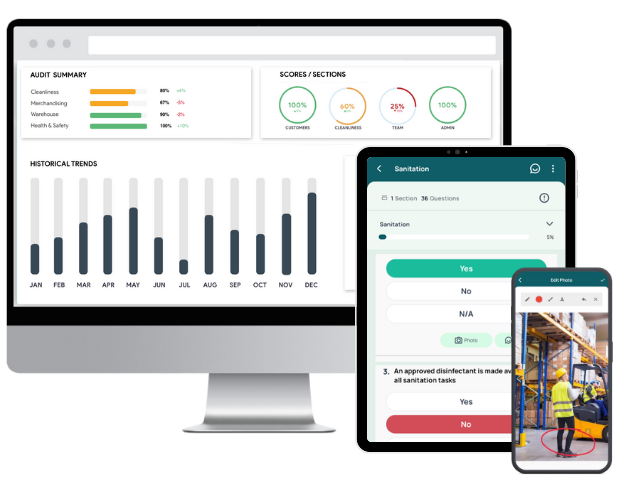
Standardize IPC checklists and data collection
- Start with pre-built clinical audit templates or digitize your existing forms.
- Conduct audits on any device, online or offline, with mandatory fields to avoid missed checks.
- Attach photos, comments, and evidence directly at the point of care.
Instant, audit-ready reports
- Generate professional reports automatically once you complete the audit.
- Include scores, trends, time and location stamps, and e-signatures for full traceability.
- Share reports automatically with nursing leaders, IPC teams, and quality committees.
Close the loop with actions and follow-up
- Assign corrective tasks on the spot with owners, priorities, and due dates.
- Track completion, escalations, and overdue items on dashboards.
- Schedule recurring audits and monitor completion rates across units or facilities.
See infection risks at a glance
- Compare scores by unit, shift, or site to spot trends.
- Identify recurring non-conformities (e.g., hand hygiene misses) to inform targeted training.
- Maintain a complete digital record for regulators and accreditors.
How to Improve IPC Audit Performance & Outcomes?
Here are some points to remember to improve audit performance and results.
Before & During the IPC audit
Co-design checklists with frontline staff. Review audit questions with nurses, environmental services, and physicians to ensure they reflect real workflows and remove checks that don’t add value.
Eliminate duplication and vague items. Each question should test one behavior or requirement; merge overlapping items or audits, and avoid ‘yes/no’ questions without clear criteria.
Verify resources and guidance. Make sure staff have current IPC policies, correct PPE, approved disinfectants, and functional equipment so audit results reflect practice, not supply issues.
Use digital tools to reduce errors. Digital audit software prevents missed fields, automates scoring, and captures photos and timestamps, making data more reliable and easier to analyze.
After the IPC audit
Use audit findings to drive specific interventions. Instead of generic refreshers, focus on the precise steps or decisions where noncompliance occurred. Brief coaching sessions, micro-trainings, or quick demonstrations often resolve issues quickly.
Promote open discussion of challenges, root causes, and workflow barriers. Recognize units that improve over time, and encourage cross-sharing of effective practices to elevate overall IPC performance.
Maintain clear records of findings, corrective actions, follow-up audits, and training activities. This demonstrates accountability and supports compliance during external inspections or accreditation reviews. Consistent documentation shows that the organization monitors risks and acts on them.
👉 GoAudits gives IPC teams a fully digital, audit-ready record of every inspection, action, and outcome. All findings, photos, timestamps, and corrective tasks are automatically organized, making it easy to demonstrate compliance and trace improvements. Dashboards highlight recurring issues, while automated reports support transparent communication with clinical leaders and quality teams. With streamlined workflows and real-time visibility, GoAudits helps close gaps faster and sustain higher infection-control standards across every department.

FAQs
Infection control encompasses standard precautions applied universally to all patients, including hand hygiene, use of PPE, safe injection practices, respiratory hygiene, and environmental cleaning to prevent transmission from any source. Transmission-based precautions supplement these based on specific pathogen routes: contact precautions for direct or indirect spread, droplet precautions for close-range spread, and airborne precautions for aerosolized particles. These approaches follow a two-tiered risk management strategy in healthcare settings to minimize healthcare-associated infections.
The ICAR tool, developed by the CDC post-Ebola crisis, evaluates infection prevention and control practices across acute care, long-term care, and outpatient facilities through structured modules. It includes facilitator guides with discussion-based assessments on topics like hand hygiene, transmission-based precautions, injection safety, environmental services, and antibiotic stewardship, plus observation forms for direct verification. Designed for on-site reviews, it identifies gaps, provides education, and supports targeted improvements via audits and feedback.
The five standards typically refer to core elements like hand hygiene as the primary barrier against pathogen spread; use of PPE tailored to exposure risks; safe handling and disposal of sharps and waste; aseptic techniques for invasive procedures; and routine cleaning with appropriate disinfectants. Additional standards emphasize respiratory etiquette, linen management, and reprocessing of equipment to maintain a safe care environment.
The three hierarchical methods are administrative controls, such as staff training, policies, and patient placement to reduce exposure risks; engineering controls like ventilation systems and safety devices to isolate hazards; and work practice controls, including hand hygiene, PPE use, and non-touch techniques at the point of care. Horizontal methods target multiple pathogens broadly, while vertical methods focus on specific ones. Together, they form evidence-based interventions adaptable to healthcare and community settings.
The infection prevention steps are proactive measures designed to reduce the likelihood of infections occurring in the first place: staff education and competency training to ensure consistent best practices, vaccination and immunization programs for healthcare workers and patients, facility design and airflow management to minimize pathogen spread, screening and risk assessment to identify potential infections early, and policies that promote routine hygiene, aseptic technique, and safe workflows before exposure or transmission happens.