

Warehouse Safety Checklist Templates
Template Library > Safety Inspections > Warehouse Safety Checklist Templates
Get Started With Ready-to-Use Warehouse Safety Checklists
Warehouse environments involve moving equipment, heavy loads, and high foot traffic, which makes regular safety checks essential. A warehouse safety checklist helps identify risks early, standardize warehouse SOP inspections, and reduce the risk of accidents and injuries.
With our comprehensive warehouse safety checklist template, you can:
- Identify safety risks related to equipment, storage, and walkways.
- Standardize safety inspections across shifts and warehouse zones.
- Record findings to support corrective actions and demonstrate compliance over time.
Best for: Daily inspections, safety audits, OSHA checks, and warehouse risk assessments.

With the GoAudits Safety Inspection App, you can:
- Eliminate paperwork: conduct efficient digital audits, add photos from mobile device
- Customize this template or easily create your own
- Save time with instant reports & assign corrective actions
Emergency Evacuation
Electrical
Lighting And Passageways
Rubbish
Work Areas
Storage
Chemicals
First Aid
General Environment
Amenities
Corrective Actions
Emergency Evacuation
Electrical
Lighting And Passageways
Rubbish
Work Areas
Storage
Chemicals
First Aid
General Environment
Amenities
Corrective Actions
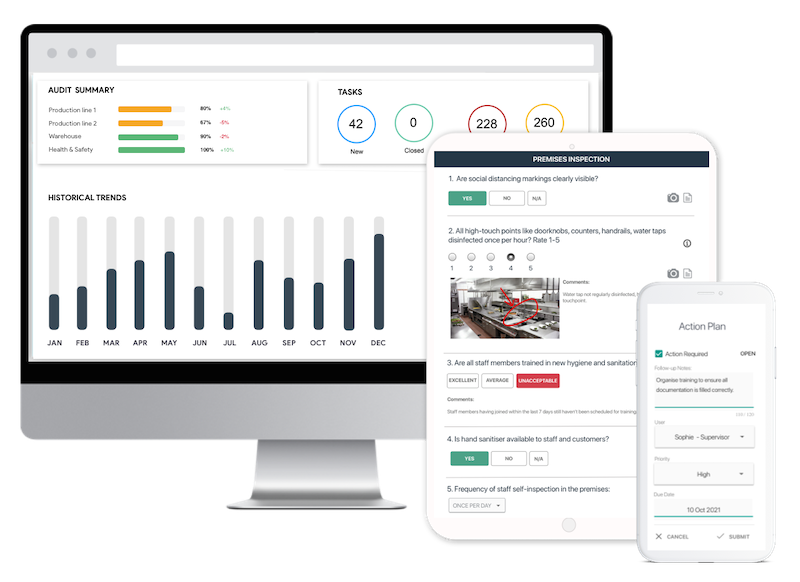
Save Time with Digital Inspections
- Easily capture & attach photos, directly on your mobile device.
- Instantly generate and share detailed reports after the inspection.
- Track corrective actions, view historical trends, improve standards.


What Is a Warehouse Safety Checklist?
A warehouse safety checklist is a structured tool used to evaluate hazards and monitor safety conditions within a warehouse environment. It helps supervisors and safety teams regularly inspect areas such as storage racks, aisles, loading docks, material handling equipment, and emergency exits.
Warehouse audit checklists ensure that routine safety checks are carried out consistently and that risks like blocked walkways, unstable loads, faulty equipment, or poor housekeeping are addressed promptly. It also supports compliance with workplace safety requirements and internal safety policies.
Using a warehouse health and safety checklist helps:
- Identify risks early and prioritise corrective actions before incidents occur.
- Maintain consistent safety standards across shifts and locations.
- Create a clear audit trail to support accountability, reviews, training, and reporting.
Key Areas Covered in a Warehouse Safety Audit Checklist
A warehouse safety audit checklist helps identify hazards across storage, handling, and movement areas. It ensures risks are controlled consistently and operations remain safe and compliant.
Floors, Aisles, and Walkways
- Spills, leaks, and slippery surfaces.
- Obstructions, loose materials, and trailing cables.
- Uneven flooring or damaged surfaces.
- Clear visibility, lighting, and marked walkways.
Racking and Storage Systems
- Clearly displayed load limits.
- Damage, corrosion, or misalignment.
- Structural stability and secure fixing.
- Safe stacking practices and pallet racking conditions.
Material Handling Equipment
- Safe condition of forklifts, pallet jacks, and lifting aids.
- Guarding and safety features on conveyors.
- Maintenance status and inspection records.
- Operator authorization and safe-use practices.
Loading Docks and Vehicle Movement
- Dock edges are protected with barriers or wheel chocks.
- Safe bay operations and traffic flow controls.
- Reversing procedures and spotter use where required.
- Warning signage and high-visibility markings.
Fire Safety and Emergency Preparedness
- Accessible and unobstructed emergency exits.
- Fire extinguishers are correctly placed and inspected.
- Functional alarms, detectors, and emergency lighting.
- Clearly marked evacuation routes and assembly points.
Electrical Safety
- Cables, plugs, and sockets are in good condition.
- Electrical panels are accessible and clearly labelled.
- No overloaded circuits or exposed wiring.
- Lockout and isolation procedures followed.
Hazardous Substances and Spill Control
- Proper storage and labelling of chemicals.
- Availability of spill kits and containment tools.
- Ventilation in areas handling hazardous materials.
- Staff trained in spill response procedures.
Personal Protective Equipment (PPE)
- Availability of required PPE for specific tasks.
- PPE is in good condition and correctly stored.
- Clear signage indicating mandatory PPE zones.
- Staff compliance with PPE requirements.
Signage, Markings, and Communication
- Safety signs are visible, legible, and up to date.
- Floor markings for pedestrian and vehicle routes.
- Warning labels on high-risk equipment and areas.
- Safety instructions were clearly communicated to workers.
Training, Behavior, and Supervision
- Workers are trained for the tasks they perform.
- Safe manual handling practices followed.
- No unsafe shortcuts or rule bypassing observed.
- Adequate supervision in high-risk areas.

Common Warehouse Hazards and How Warehouse Health and Safety Checklists Help Prevent Them
While warehouse safety checklists cover many inspection areas, certain hazards appear repeatedly in day-to-day operations. Without regular checks, small issues can quickly turn into serious safety incidents. A structured warehouse hazards checklist helps identify risks early and ensures warehouse quality controls stay in place.
Slips, Trips, and Falls – Spills, loose packaging, uneven floors, and poor lighting are common causes of injuries. Checklists ensure walkways are clear, spills are addressed promptly, and floor conditions are monitored.
Unsafe Racking and Storage – Overloaded racks, damaged shelving, or poor stacking can lead to falling objects. Routine checks verify load limits, rack condition, and proper storage practices.
Forklift and Vehicle Hazards – Speeding, poor visibility, or lack of separation between pedestrians and vehicles increases accident risk. Checklists help enforce traffic rules, signage, and designated walkways.
Manual Handling Injuries – Lifting heavy or awkward loads without proper techniques leads to strains and sprains. Inspections confirm lifting aids are available and staff follow safe handling procedures.
Blocked Exits and Emergency Routes – Storage placed in front of exits or fire equipment delays emergency response. Regular checks keep escape routes and safety equipment accessible.
Poor Housekeeping – Cluttered aisles, unused pallets, or waste buildup create multiple hazards at once. Warehouse cleaning checklists promote consistent housekeeping and accountability.
Inadequate Use of PPE – Missing or incorrectly used PPE exposes workers to avoidable risks. Safety checks verify PPE availability, condition, and compliance.
Setting the Right Frequency for Warehouse Safety Inspections
Establishing a clear inspection schedule helps warehouses stay safe, compliant, and operational. Different risks require different inspection frequencies, which is why safety checks should be layered across daily routines, planned inspections, and incident-driven reviews.
Pre-Shift and Daily Checks
Pre-shift and daily inspections focus on identifying immediate hazards before work begins. These quick checks help spot issues like spills, blocked aisles, damaged pallets, or malfunctioning material handling equipment. Addressing issues before operations begin reduces the risk of incidents during active work.
Weekly and Monthly Safety Inspections
Weekly and monthly inspections allow for more detailed assessments of warehouse conditions. These checks typically cover racking integrity, load limits, floor conditions, emergency exits, fire safety equipment, and signage. Regular scheduling ensures gradual wear and compliance gaps don’t go unnoticed.
Incident-Triggered Inspections
Any accident, near miss, equipment failure, or layout change should prompt an immediate inspection. Incident-triggered checks help identify root causes, verify corrective actions, and prevent similar issues from recurring. They also support proper documentation for audits and internal safety reviews.

Roles and Responsibilities in Warehouse Safety Inspections
Warehouse safety inspections work best when responsibilities are clearly shared across roles. Each group plays a different part in identifying risks, fixing issues, and keeping safety standards consistent.
Warehouse Managers and Supervisors
Managers and supervisors oversee day-to-day safety within the warehouse. They ensure inspections are scheduled, corrective actions are followed up, and teams comply with safety procedures like the 5S warehouse principles during daily operations.
Safety Officers or EHS Teams
Safety officers or EHS teams lead formal inspections and audits. They assess compliance with internal policies and legal requirements, document findings, and provide guidance on risk control measures and corrective actions.
Warehouse Operatives and Team Leads
Operatives and team leads are often the first to notice hazards. They carry out routine visual checks, report unsafe conditions, and follow safe working practices during picking, loading, and material handling tasks.
Maintenance and Engineering Teams
Maintenance teams inspect machinery, racking systems, conveyors, and lifting equipment. Their role is to identify wear, damage, or faults and ensure repairs are completed before equipment becomes a safety risk.
Health and Safety Committees or Representatives
Where applicable, safety representatives or committees support inspections by providing worker feedback. Their involvement helps highlight practical issues that may not always appear during formal audits.
External Inspectors or Consultants
For high-risk environments or periodic audits, external inspectors may be engaged. They provide an independent assessment and help verify compliance with regulations and industry best practices.
Senior Management
Senior leadership is responsible for setting expectations around safety. They review inspection outcomes, allocate resources, and ensure safety performance is treated as a priority across the organization.
👉 Strategic Risk Management: Health and Safety Framework
While floor-level hazards are immediate, systemic risks are often found in documentation and procedural gaps. We recommend performing a quarterly review using the Warehouse Health and Safety Checklist. This comprehensive tool facilitates the evaluation of employee participation, contractor management, and hazard identification processes to mitigate long-term institutional liability.
Start your free trial now.
How Warehouse Safety Checklists Support Compliance
Warehouse safety checklists play a key role in aligning daily operations with regulatory and international safety requirements. Instead of relying on ad hoc inspections or individual judgment, checklists provide a documented, repeatable way to meet compliance expectations and demonstrate due diligence during warehouse audit inspections.
HSE Regulations
Health and Safety Executive (HSE) regulations require employers to identify risks, implement controls, and regularly review workplace safety conditions. Warehouse health and safety checklists support this by:
- Recording routine inspections of floors, racking, fire exits, and equipment
- Highlighting hazards before they escalate into incidents
- Providing written evidence that risks are being actively managed
OSHA Warehouse Regulations
Occupational Safety and Health Administration regulations set clear expectations for warehouse environments, particularly around material handling, equipment use, and employee safety. OSHA Warehouse Checklists help support compliance by:
- Ensuring regular checks of forklifts, conveyors, and storage systems
- Verifying housekeeping standards to prevent slips, trips, and falls
- Confirming that safety signage, PPE use, and emergency access points are in place
ISO 45001 Standards
ISO 45001 focuses on building a proactive occupational health and safety management system. Warehouse safety checklists align with ISO 45001 standards by:
- Supporting hazard identification and risk assessment processes
- Encouraging worker involvement in safety observations
- Maintaining traceable inspection histories for internal and external audits
ILO Safety Standards
International Labour Organization safety standards emphasize worker protection, safe working conditions, and accident prevention. Warehouse safety checklist templates support these principles by:
- Promoting consistent monitoring of unsafe conditions
- Reinforcing safe work practices across shifts and teams
- Helping organizations demonstrate commitment to internationally recognized safety norms
ERM Practices
From an Enterprise Risk Management (ERM) perspective, warehouse safety checklists help organizations identify, assess, and control operational risks. They contribute to ERM by:
- Reducing the likelihood of accidents that disrupt operations
- Limiting financial exposure from injuries, damage, or downtime
- Providing data that supports risk analysis and decision-making
By embedding safety checks into routine operations, compliance becomes part of broader risk management rather than a standalone task.
Digitize and Automate Your SOP Checklists With GoAudits
GoAudits makes it easier for organizations to standardize and monitor their Standard Operating Procedures (SOPs) across teams and locations. Instead of managing SOP compliance manually or through paper forms, digital SOP checklists let you track every process step, verify completion, and ensure adherence to quality and safety standards in real time.
With GoAudits, you can:
- Conduct SOP inspections and verifications directly on mobile devices, tablets, or desktops.
- Capture photos, comments, and sign-offs to document compliance at every stage.
- Track deviations or missed steps and assign corrective actions instantly.
- Generate professional SOP compliance reports in seconds, ready to share with management or auditors.
- Maintain a centralized record of all SOP checks for continuous improvement and easy audit preparation.
By digitizing your SOP checklists with GoAudits, you can simplify compliance management, improve accountability, and keep every process consistent, efficient, and audit-ready.

Other Popular Warehouse Checklists:

Digitize your Safety Inspections
- Easily perform audits anywhere on the site using a mobile device, even offline
- Attach photos to document issues or prove compliance
- Assign tasks, set deadlines and track progress - all within a single app
- Analyze data from audits to identify trends, pinpoint recurring issues, and assess compliance levels.