Warehouse Cleaning and Housekeeping Checklist Templates
Template Library > Warehouse Inspections > Warehouse Cleaning Checklist
Standardize Warehouse Cleaning and Housekeeping with Checklists
A warehouse housekeeping checklist template will help you verify the cleaning tasks completed by your staff. It acts as a guide for them to cover all the areas without missing out on any cleaning duties. Ultimately, it will help ensure your warehouse is organized and well-maintained.
With this warehouse cleaning checklist template, you can:
- Provide a safe environment for your employees
- Ensure compliance with safety and operational standards
- Make your warehouse operations more efficient and organized

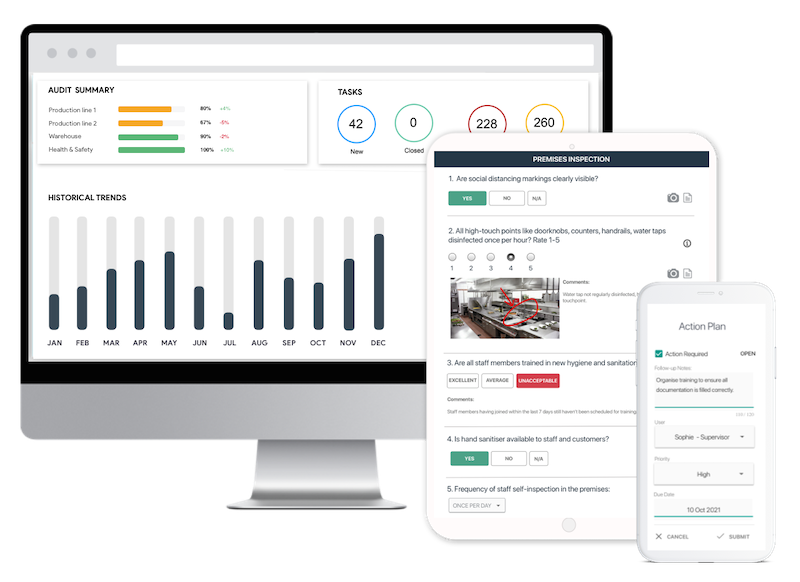
With the GoAudits Inspection App, you can:
- Eliminate paperwork: conduct efficient digital audits, add photos from mobile device
- Customize this template or easily create your own
- Save time with instant reports & assign corrective actions
Daily Cleaning
Weekly Cleaning
Monthly Cleaning
Daily Cleaning
Weekly Cleaning
Monthly Cleaning
What is a Warehouse Cleaning Checklist?
A warehouse cleaning checklist is a tool that helps you keep track of all the areas in a warehouse that need to be cleaned daily, weekly, and monthly. Essentially, it is a list of cleaning, housekeeping, and other operational tasks that need to be completed to maintain the warehouse’s cleanliness and orderliness.
Furthermore, checklists play a crucial role in implementing warehouse cleaning SOPs. By defining specific tasks and a warehouse cleaning schedule, these checklists ensure that housekeeping staff adhere to established cleanliness guidelines, maintaining safety and operational efficiency.
Importance of Maintaining Warehouse Cleanliness
Here are three reasons why cleanliness is important in warehouses:
- It Keeps People Safe: A clean and organized warehouse prevents injuries. Keeping floors clean from water spills or grease and decluttering crowded aisles or removing boxes lying on the floor can prevent slip, trip, and fall hazards.
- Ensures Regulatory Compliance: Warehouses must comply with safety guidelines set by organizations like OSHA and HSE to ensure worker safety.
- It Creates an Organized and Efficient Work Environment: A clean and organized warehouse promotes an efficient system where there are minimal delays in movements caused by cluttered aisles, improperly stored items, or unaddressed spills and debris.

Defining Your Warehouse Housekeeping Standards for Compliance
Establishing clear warehouse housekeeping standards is the first step toward meeting mandates set by organizations like OSHA.
Your rigorous cleaning checklist helps you comply with specific regulations:
- OSHA 29 CFR 1910.22 (Walking-Working Surfaces): This standard mandates that all floors, aisles, and pathways be kept clean, orderly, and free of clutter, debris, and spills. Your daily cleaning schedule directly addresses this by ensuring clear, hazard-free routes.
- Preventing Fire Hazards: Compliance requires that combustible waste (like cardboard and packaging) be stored in covered, non-combustible receptacles and disposed of daily. Furthermore, emergency access points, fire extinguishers, and sprinkler systems must be kept clear of all materials, as verified by your weekly checks.
- Sanitation Standards: The cleaning checklist ensures employee facilities (restrooms, break rooms) meet high warehouse cleanliness standards through regular disinfection and restocking, adhering to sanitation regulations.
- Combustible Dust: Dust from wood, grain, plastics, metals, and packaging accumulates on beams, rafters, light fixtures, and other horizontal surfaces where nobody looks. At sufficient depth, it becomes an explosion hazard, which is why OSHA treats dust accumulation as a housekeeping matter rather than a cosmetic one. Your high-level cleaning schedule addresses this, and dust removal should use HEPA-filtered vacuums or wet methods rather than compressed air or sweeping, both of which put dust into suspension.
- Hazard Communication (HAZCOM): Any cleaning chemicals used must be correctly labeled, and their Safety Data Sheets (SDS) must be readily accessible to all staff, integrating chemical safety into the cleaning process.
In August 2026, OSHA renewed its National Emphasis Program for warehousing and distribution centres, extending it to five years. Walking-working surfaces and means of egress are two of its seven inspection focus areas, so blocked aisles, obstructed exits, and uncleared spills are among the first things an inspector will look for. A completed, dated cleaning record is what demonstrates the standard was maintained rather than merely intended.
Most warehouses document this at two levels. A warehouse cleaning policy states the standard your organisation requires and who is accountable for it. The cleaning checklist and schedule below turn that policy into specific tasks, frequencies, and named owners. A policy without a checklist gives staff no way to comply; a checklist without a policy gives supervisors no basis to enforce it.
What Areas Should Be Included in a Warehouse Housekeeping Checklist?
The exact sections of a warehouse cleaning list depend on the type of facility and the goods stored in it. However, a typical warehouse hygiene checklist template covers the following areas:
Aisles
Regularly clean and sweep aisles to prevent debris buildup and maintain clear walkways. Remove any items that don’t belong in aisle spaces to ensure a safe and clutter-free environment.
Racks
Wipe down and dust racks frequently to keep surfaces clean and organized. Remove trash, broken pallets, or misplaced items, ensuring all racks are tidy and safe for storage. Check out our racking inspection checklist for additional safety and maintenance checks.
High-Level Areas
Ceilings, roof structures, overhead pipework, sprinkler heads, and high-level lighting collect dust that eventually falls onto stock and work areas, and in some facilities creates a genuine fire risk. High-level cleaning usually runs quarterly or annually rather than on the daily schedule, and often needs specialist access equipment. Include a visual check of high-level areas in the monthly walkthrough, so build-up is spotted before it becomes a scheduled job.
Material Handling Equipment
Regularly clean equipment like forklifts and pallet jacks to remove dirt, grease, and debris. This prevents buildup that could lead to operational issues and ensures that equipment remains in a safe working condition.
Slip and Trip Hazards
Conduct frequent checks for any spills, leaks, or wet spots, and address them immediately by cleaning and placing caution signs. Use anti-slip mats in areas prone to spills to prevent potential accidents.
Cold Storage
Frequently clean cold storage floors and shelves to prevent ice buildup or condensation. This minimizes slip hazards and maintains a hygienic environment for storing perishable goods.
👉 Useful Resource: Free Cold storage checklist to inspect cleaning and maintenance, pest control, waste disposal, etc.

Dispatch and Receiving Areas
Keep dispatch and receiving zones free of clutter and unnecessary materials by sweeping and removing waste regularly. Maintain cleanliness to avoid pile-ups of packaging material and improve workflow.
Canteen
Ensure daily cleaning of surfaces, tables, and floors of the canteen. Empty trash bins and sanitize countertops and equipment to prevent food contamination and maintain a safe eating area.
Toilets
Clean toilets, sinks, and floors multiple times a day to maintain hygiene and a pleasant environment for employees. Restock supplies and disinfect surfaces regularly to maintain high sanitary standards.
👉 Useful Resource: here’s a free bathroom cleaning checklist to help you get started.
Warehouse Cleanliness Equipment and Procedures
Achieving high warehouse cleanliness standards requires more than just mops and brooms. You must invest in the right industrial equipment and establish specific protocols for different areas of the facility.
Essential Industrial Cleaning Equipment
- Industrial Floor Scrubbers: Use ride-on or walk-behind automatic scrubbers for large aisles and open storage areas. These are essential for quickly removing dirt, grease, and tire marks from concrete and epoxy floors.
- HEPA-Filtered Vacuums: For fine dust, which can degrade air quality and damage products, use vacuums with High-Efficiency Particulate Air (HEPA) filters. Never use compressed air to blow dust, as this simply moves contaminants.
- Color-Coded Supplies: Implement a color-coding system for mops, buckets, and cloths to prevent cross-contamination (e.g., Red for Restrooms, Yellow for Canteen, Blue for General Warehouse).
MHE Sanitation and Safety
Material Handling Equipment (MHE), like forklifts and pallet jacks are high-touch area. MHE cleaning is a critical warehouse housekeeping standard.
- Follow Lockout/Tagout (LOTO): Always ensure the equipment is de-energized, and keys are removed before any deep cleaning or maintenance.
- Focus on High-Touch Points: Use non-residue disinfectant wipes or spray on control panels, steering wheels, levers, and seatbelts during daily cleaning.
- Avoid Electronics: Never spray water or harsh chemicals directly onto electrical components, batteries, or hydraulic systems. The cleaning process should also include a quick visual inspection for leaks or damage.
Warehouse Cleaning Schedule Checklist Templates
Maintaining a clean and organized workspace requires a structured warehouse cleaning schedule. These checklists, categorized by frequency, ensure immediate, daily, weekly, monthly, and quarterly tasks are systematically addressed.
Immediate Warehouse Cleaning Checklist
As the name suggests, this warehouse cleanliness checklist includes tasks that must be addressed promptly to prevent slip, trip, and fall hazards.
- Address any spills or leaks to prevent slip hazards.
- Put away cleaning tools and equipment after use to maintain a tidy workspace.
- Dispose of litter, including parcel tape, packaging, and cardboard.
- Clean and repair any broken tools or equipment to ensure safe operation.
- Sweep up wood and metal shavings to keep floors safe and clean.
- Tidy up and secure any loose cords or cables in walkways.
Daily Warehouse Cleaning Checklist Template
This warehouse housekeeping checklist includes cleaning high-contact areas such as floors, equipment, and frequently used countertops. By incorporating daily cleaning into standard operations, warehouses can promote a healthier workplace and enhance overall productivity.
- Sweep all floors to remove dust, dirt, and debris.
- Clean and disinfect high-touch surfaces, such as doorknobs, light switches, and shared equipment.
- Clean and restock supplies in restrooms, ensuring they are well-maintained for employee use.
- Tidy up storage areas by returning misplaced items to their proper locations and ensuring clear labeling.
- Conduct a walkthrough to identify and address potential hazards, such as spills or loose items.
Weekly Warehouse Cleanliness Checklist
A weekly warehouse cleaning schedule is essential for areas that require more in-depth maintenance. This includes tasks that may not be addressed daily, such as cleaning high or hard-to-reach surfaces and ensuring that the warehouse is fully stocked with necessary supplies.
- Tidy up storage areas by rearranging shelves and pallets.
- Conduct weekly maintenance on machinery and equipment.
- Restock essential supplies, such as cleaning materials, safety gear, and office supplies.
- Dust off light fixtures, high ceilings, grab bars, and door frames.
- Clean shelves and wall partitions to prevent the accumulation of dust.
- Polish glass wall partitions, windows, doors, and walls.
- Check and confirm the condition of fire escapes, fire extinguishers, emergency exits, sprinkler systems, and other emergency features.
👉 Useful Resource: Free warehouse maintenance checklist to review various systems of a warehouse.
Monthly Warehouse Sanitation Checklist
While daily and weekly warehouse sanitation checklists keep the storage running smoothly, a monthly cleaning checklist for the warehouse is crucial for tackling deep cleaning and maintenance tasks that are often overlooked.
- Conduct a thorough cleaning of all floor surfaces, including scrubbing and polishing.
- Check and clean air ducts, vents, and air conditioning units.
- Inspect all lighting fixtures, replace burnt-out bulbs, and clean light covers.
- Perform a comprehensive inspection of safety equipment, including fire extinguishers, first aid kits, and PPE.
- Inspect the facility for signs of pest activity and address any issues promptly.
- Deep clean storage areas, removing any outdated or damaged items.
- Check loading docks for cleanliness, maintenance needs, and safety compliance.
- Review current cleaning and operational procedures.
- Ensure emergency exits are clear and accessible.
Every 3-6 Months Warehouse Cleaning Checklist
This warehouse hygiene checklist focuses on larger maintenance activities for the facility to remain safe and functional for employees.
- Review the condition of shelving units and pallet racks, making necessary repairs or replacements.
- Check the roof for debris and leaks, and clean gutters to prevent water buildup and potential leaks.
- Assess cleaning operations for compliance with local safety regulations.
How to Perform Warehouse Cleaning Procedures Using Cleaning Checklist Templates?
Start by customizing the warehouse housekeeping checklist to fit the specific needs and layout of your warehouse. Analyze the workflow and identify key areas that require regular attention.
Next, assign responsibilities to staff members, ensuring that each task is clearly defined and scheduled according to the appropriate frequency—immediate, daily, weekly, or monthly. This helps ensure accountability and efficiency in maintaining cleanliness.
Incorporate training sessions to educate staff on the importance of cleanliness and familiarize them with the cleaning checklist for the warehouse. Encourage the use of templates as part of routine operations. Make sure the checklists are easily accessible, preferably in digital format, to facilitate consistent updates and recording of completed tasks.
Management and Implementation Best Practices
To sustain a clean warehouse, you need clear roles, schedules, and accountability metrics.
Implementation: Zoning and Accountability
- Zone Cleaning Model: Divide the warehouse into distinct zones (e.g., Receiving, Shipping, Aisle 1-10, Canteen). Assign permanent responsibility for the daily warehouse cleanliness standards in that zone to the staff or supervisor working there.
- Integrated ‘Clean-as-You-Go’ Policy: Train all employees to immediately clean up spills, dispose of packaging, and return misplaced inventory. Housekeeping is a collective responsibility, not just a janitorial task.
- Treat Cleaning Staff as Inspectors: Your cleaning team covers every square metre of the facility more regularly than anyone else. Give them a way to report what they notice- a cracked rack upright, a hydraulic leak under a forklift, a damaged dock seal- and cleaning rounds become an early-warning system for maintenance issues rather than just a tidying exercise. In a digital checklist this is a single “issue observed” field with a photo, routed straight to maintenance.
Key Performance Indicators (KPIs) for Cleanliness
To measure the effectiveness of your warehouse housekeeping standards, track these data points:
- Checklist Compliance Score: The percentage of daily and weekly tasks that are completed and signed off on time.
- Safety Incident Rate: Track the reduction in “slip, trip, and fall” incidents over time. This is the clearest measure of the housekeeping program’s safety success.
- Time-to-Spill Clearance: Measure the average time elapsed from a spill being reported to it being completely cleaned and signed off. A faster clearance time is a sign of operational excellence.
FAQs
How often should a warehouse be cleaned?
On a tiered schedule rather than a single frequency. Spills, leaks, and debris are dealt with immediately. Floors, high-touch surfaces, and restrooms are cleaned daily. Shelving, light fixtures, and glass are handled weekly. Deep floor cleaning, air ducts, and pest inspection run monthly, and racking condition, roof, and gutters every three to six months. Warehouses handling food or pharmaceuticals need higher frequencies throughout.
What should be included in a warehouse cleaning checklist?
Floors and aisles, racking and shelving, material handling equipment, dispatch and receiving areas, cold storage, restrooms, canteen, waste disposal, and slip and trip hazard checks. Each item should specify who is responsible and how often it is done, since a checklist without owners and frequencies is a wish list.
What is the difference between warehouse cleaning and housekeeping?
Cleaning is the physical removal of dirt, dust, and spills. Housekeeping is broader: it covers cleaning plus organisation, keeping aisles clear, returning items to their locations, managing waste, and maintaining safe walkways. OSHA’s requirements under 29 CFR 1910.22 are housekeeping requirements, not just cleaning ones, which is why they cover clutter and obstruction as well as dirt.
Who is responsible for warehouse cleaning?
Most warehouses use a zone model: each area has a named owner responsible for daily standards there, supported by a clean-as-you-go policy where every employee handles spills and packaging immediately. Deep cleaning is usually scheduled for a dedicated team or contractor. Assigning cleaning to “everyone” without zones generally means it belongs to no one.
Can this checklist be used for a factory, store, or other facility?
Yes. The structure applies to any facility with floors, storage, equipment, and staff areas. A factory cleaning checklist typically adds machine cleaning and swarf or waste removal; a store cleaning checklist adds customer-facing areas and fitting rooms. Every checklist in this library is customisable, so you can adapt the areas without rebuilding the schedule.
How do you verify warehouse cleaning was actually done?
Through a monitoring or verification check separate from the cleaning itself: a supervisor spot-checks a sample of completed tasks against the checklist record. Digital checklists make this practical, since each completed item carries a timestamp, the name of the person who signed it off, and photo evidence where required. Without verification, a completed checklist only records that someone ticked a box.
Other Warehouse & Cleaning Checklists:

Digitize your inspections
- Easily perform audits anywhere in the facility using a mobile device.
- Attach photos to document issues or prove compliance
- Assign tasks, set deadlines and track progress - all within a single app
- Analyze data from audits to identify trends, pinpoint recurring issues, and assess compliance levels.