


Didn't find what you are looking for? Get in touch and we'll help you build your own custom template.
Free & Customisable Domiciliary / Home Care Audit Templates
Library of homecare audit checklists to ensure care quality, safety and compliance in domiciliary care. Save time with digital inspection reports using our inspection app.
Home Care Audit Checklists for Safer, High-Quality Domiciliary Care
📃: Eliminate paperwork with digital checklists
⏳: Save time in monitoring
📈: Demonstrate evidence of continuous improvement to regulators
Home care audit checklists help domiciliary care providers assess in-home care quality, meet CQC standards, and improve outcomes for service users — all in one structured review. Use these home health care audit templates to:
- Ensure personal care tasks are carried out consistently
- Monitor household support and safety measures
- Verify care records are accurate and up to date
- Gather client and family feedback
- Track trends and address recurring issues over time
Template Library > In-Home (Domiciliary) Care
Domiciliary Care Audit Templates: Top Downloads
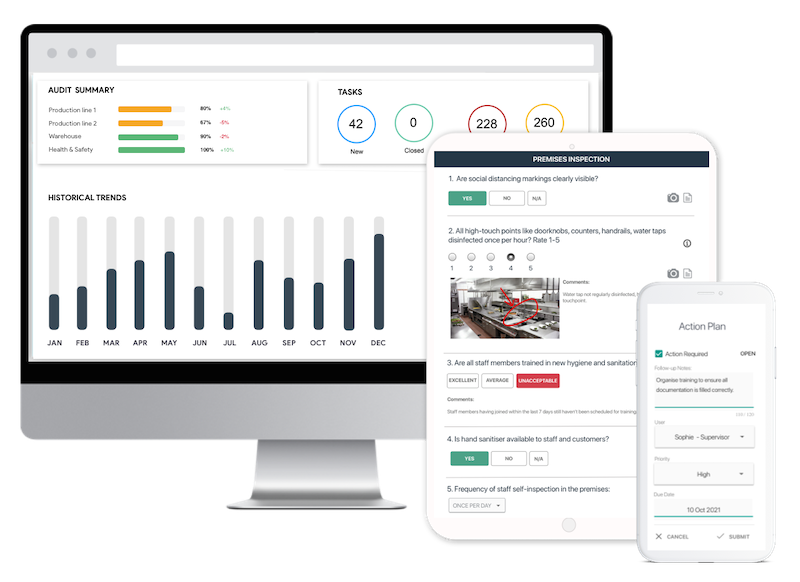
Easy Start with Digital Checklists
- Capture photos as proof of compliance or areas needing attention
- Instantly generate and share detailed reports after the inspections
- Assign follow-up tasks and track completion on a centralized dashboard


Domiciliary Care Compliance
Domiciliary care, or in-home care, refers to professional care and support provided to individuals in their own homes, typically by regulated agencies or caregivers, to help with daily living, while maintaining independence and comfort.
Trained caregivers assist with tasks such as personal hygiene, medication management, housekeeping, meal preparation, mobility, and companionship. This service supports autonomy, reduces risks linked to institutional care, and helps with specialist needs like dementia or end-of-life care.
In the UK, domiciliary care compliance is regulated and monitored by specific bodies in each country:
- England: Care Quality Commission (CQC). GoAudits offers free CQC inspection checklists to perform mock CQC inspections, implement the new CQC framework, and ensure CQC compliance.
- Scotland: Care Inspectorate
- Wales: Care Inspectorate Wales (CIW)
- Northern Ireland: Regulation and Quality Improvement Authority (RQIA)
Domiciliary care compliance ensures robust quality, safety, and continuous improvement in home-based care, with strict requirements for registration, regular inspections, and enforcement of standards by these regulatory bodies.
What is a Home Care Checklist Template?
A home care checklist template (or a domiciliary care audit template) is a digital tool used to outline, track, and ensure completion of daily tasks and responsibilities required for individuals receiving care at home.
It is used to perform regular domiciliary care audits, reviewing care and safety standards, staff competence, medication management, hygiene, and compliance with legal requirements in domiciliary or home care settings. This helps care providers monitor performance, identify gaps for improvement, and prepare for regulatory inspections.
These checklists are mainly used by home care agencies and providers, auditors, and caregivers who are responsible for delivering or overseeing care to individuals in their homes.
👉 Success Story: Careville Care Agency
“Reports are ready in 10 minutes — instead of maybe half a day previously.”
Careville consolidated care plan, medication, and CQC pre-inspection audits into a single GoAudits platform, eliminating fragmented spreadsheets and freeing up significant management time for higher-value work. The team now audits more often, with professional, time-stamped reports ready for CQC at a moment’s notice.
Key Elements of Domiciliary Care Audit Templates
Here are the key elements of home care checklist templates that guide auditors and care providers on what to examine, document, and evaluate, ensuring that every essential aspect of care is consistently reviewed.
Care Planning
They help auditors review whether care plans are current, person-centred, and reflective of the individual’s needs and preferences. This includes client care notes, service user feedback, dignity audits, missed or late calls audits, and the service improvement plan audit. Auditors use these checklists to confirm that care plans are regularly updated and tailored to changing circumstances.
Medication Management
This section helps auditors verify that medication storage, administration, and recordkeeping processes are safe, accurate, and compliant with prescribing instructions.
Infection Control
Infection control sections cover hygiene practices, cleaning routines, and the use of protective equipment. This ensures that infection prevention measures are in line with policy and reduce risks in the home environment.
👉 GoAudits offers the following infection control checklists. You can sign up for free and start using these checklists or customise them to meet your requirements.
- Infection Control Inspection Checklist
- Donning and Doffing PPE Checklist
- Infection Control Audit Template – General
- Deep Cleaning for Infection Control
- COSHH Form Template
Health & Safety
Domiciliary care audit templates cover workplace safety checks, such as risk assessments, fire procedures, and equipment use. They prompt auditors to identify hazards and confirm that preventive measures are in place.
Staff Training & Competence
Training and competence sections highlight whether staff have completed mandatory courses, demonstrate practical skills, and participate in ongoing development. Relevant audits include HR/recruitment audits, staff file audits, staff performance audits, and staff feedback audits. Home care checklists help review records and evidence of competence.
👉 Use our free staff training & development audit checklist and healthcare employee training checklist to ensure care providers are well-trained and competent.
Personal Care, Hygiene, and Nutrition
Home care audit checklists assess whether support with bathing, dressing, oral care, and continence is delivered respectfully. Nutrition checks confirm that dietary needs, hydration, and mealtime support are properly managed.
Social and Emotional Needs
Well-being goes beyond physical care. Audit tools for domiciliary care should include measures for social interaction, emotional support, companionship, and activities that reduce isolation and enhance quality of life.
Health Monitoring
Home care checklist templates cover routine checks such as blood pressure, weight, blood glucose (where relevant), and observations of general condition, ensuring regular monitoring and early detection of changes in health.
Medical Procedures
Where medical procedures are part of care, domiciliary care audit templates provide criteria for verifying staff competence, documentation, and adherence to clinical guidelines.
Housekeeping
These templates include checks on cleanliness, food storage, laundry, and waste management. They help auditors assess whether the home environment is safe, hygienic, and comfortable.
Documentation and Recordkeeping
Accurate records provide accountability and legal compliance. This section includes business insurance audits, complaints audits, statement of purpose audits, medication audits, and more. Proper recordkeeping ensures transparency and quality assurance across the service.
👉 Success Story: Smeaton Healthcare
Smeaton Healthcare leveraged GoAudits to replace time-consuming paper-based checks with a streamlined digital system.
Their staff now conducts real-time audits through the mobile app, capturing photographic evidence, annotating risks, and generating instant reports. All records are securely stored in one centralised platform, making them easily accessible for managers and inspectors. This supports better communication and collaboration across branches. Standardised digital forms have also enhanced accuracy and consistency, reducing errors common in manual processes. Automated scoring and detailed reports strengthen compliance with CQC requirements and provide clear accountability. With encrypted storage and role-based access, sensitive data is better protected. Most importantly, what previously took several staff members days to complete is now managed by one person in minutes, saving each branch up to eight hours a week.
Smeaton Healthcare can now allocate more time and resources to delivering high-quality care.
How to Customise Domiciliary Care Audit Templates?
Here’s how you can customise audit templates effectively:
Assess the Unique Needs of Your Domiciliary Care Service
Start by evaluating your service model, client base, and workforce structure. Consider specific challenges, such as medication management, safeguarding, or staff training. This assessment highlights the areas that require more detailed audit measures.
Define the Scope of the Audit
Decide whether the audit will cover all aspects of care or focus on a specific area, such as health and safety or client satisfaction. A clear scope prevents gaps and ensures that the audit remains manageable and relevant.
Identify Regulatory Requirements
Review the regulations and standards that apply to domiciliary care in your region. For example, compliance may involve national health guidelines, data protection laws, or workforce standards. Aligning your template with these requirements ensures audits support legal and professional accountability.
Create Clear and Measurable Criteria
Translate expectations into specific questions or checkpoints. Replace vague prompts like “Is care adequate?” with measurable criteria such as “Are care plans reviewed within the required timeframe?”. This approach provides evidence-based outcomes and reduces subjectivity.
Follow a Consistent Structure
Maintain uniform sections across all audits, such as compliance, safety, staff performance, and client outcomes. A consistent structure makes audits easier to compare over time and improves clarity for both staff and management.
Use Digital Tools for Domiciliary Care
Use digital tools, like GoAudits, to customise, store, and manage your templates, automate scoring, flag risks, and generate reports instantly. They also make it easier to update templates when regulations or organisational needs change.
👉 GoAudits can simplify your audit process with a mobile-first solution. You can customise industry-specific checklists, conduct audits even offline across web, iOS, and Android, and generate reports instantly, boosting inspection speed by up to 5 times. You assign corrective actions on the spot, trigger workflows with reminders and escalations, and track resolution in real time via interactive dashboards. GoAudits is known for its ease of use, customisation, offline functionality, and responsive customer support.
FAQs
What is a home care safety checklist?
A home care safety checklist is a tool used to identify and reduce potential hazards in the home. It covers areas such as fall risks, fire safety, medication storage, and emergency preparedness. The checklist ensures a safer environment for individuals receiving care at home.
What does a home health assessment consist of?
A home health assessment evaluates a person’s overall health, living environment, and care needs. It typically includes reviewing medical history, physical health, medications, mobility, nutrition, and safety risks at home. This assessment helps create a personalised care plan tailored to their medical requirements and daily support needs.
What are three tasks that a home health aide does?
A home health aide assists with personal care tasks, such as bathing, grooming, and dressing. They also support mobility by helping with transfers and exercises. Additionally, aides monitor vital signs, observe health changes, and report them to healthcare professionals, ensuring timely and appropriate care is provided.
What do home health services include?
Home health services provide skilled medical care in a person’s home. They often include nursing care, physical therapy, occupational therapy, speech therapy, and wound care. They are designed to support recovery, manage chronic conditions, and improve independence while reducing the need for hospital or facility stays.
What do home care services include?
Home care services focus on non-medical assistance that promotes daily living and independence. They often include help with bathing, dressing, meal preparation, housekeeping, and companionship. These services provide practical and emotional support, making the home environment safer and more comfortable without requiring skilled medical interventions.
Easy start with digital checklists
- Capture photos as proof of compliance or areas needing attention
- Instantly generate and share detailed reports after the inspections
- Assign follow-up tasks and track completion on a centralized dashboard