

Running an assisted living facility requires managing multiple responsibilities. They have to ensure high-quality resident care, meet regulatory standards, maintain accurate documentation, manage staff schedules, and keep families informed. Assisted living software streamlines these complex tasks by centralizing operations into a single, accessible platform. From tracking care plans and medications to generating reports and coordinating staff, the right software reduces administrative burden and minimizes errors.
This article will help you choose the right assisted living software, so you can offer personalized resident care and create a more efficient environment for both staff and families.
- 5 Best Assisted Living Software in 2026
- Free Checklists to Ensure Assisted Living Compliance
- Key Components of Assisted Living Compliance Program
- What is Assisted Living Software?
- Assisted Living Software Features that Ensure Assisted Living Compliance
- How to Choose the Best Assisted Living Software?
- FAQs
5 Best Assisted Living Software in 2026
Let’s explore the top 5 assisted living software:
1. GoAudits Assisted Living App for Compliance
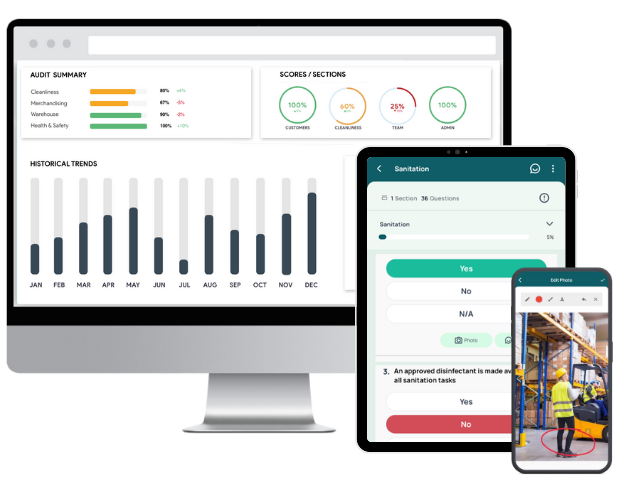
GoAudits is designed to support the day-to-day operational oversight that most EHRs and eMARs don’t cover. While clinical software documents care delivery, assisted living communities still need consistent inspections, regulatory tracking, and quality assurance across hundreds of operational touchpoints. GoAudits healthcare compliance software fills that gap with a mobile-first platform built for compliance, safety, and survey readiness.
With GoAudits, administrators can standardize daily, weekly, and monthly checks across all departments: care, housekeeping, maintenance, medication rooms, food service, infection control, fire safety, and more. The result is a defensible audit trail that aligns with state requirements, internal policies, and best practices for senior living.
Core Benefits of GoAudits for Assisted Living Communities
- Mock State Surveys: Run full mock inspections for infection control, life safety, staffing, medication services, kitchen hygiene, and environmental safety. Identify gaps before regulators do.
- Incident & Fall Investigation Workflows: Standardize how falls, elopements, injuries, behavioral events, and medication errors are documented and followed up with corrective actions.
- Medication Room & MAR Compliance Checks: Conduct routine checks for storage, labeling, expiration, narcotics documentation, and secure access.
- Housekeeping & Maintenance Rounds: Digitize checks for cleanliness, repairs, room readiness, temperature logs, equipment, and preventive maintenance.
- Infection Control Audits: Monitor hand hygiene, PPE use, cleaning protocols, isolation procedures, and outbreak response.
- Multi-Location Oversight: Compare performance across buildings, regions, or departments with clear dashboards and escalation workflows.
Key Features of GoAudits
- Ready-made assisted living compliance templates, or convert your existing forms into digital checklists.
- Complete inspections up to 5× faster on any device (online or offline).
- Generate professional, survey-ready reports instantly with photos, timestamps, e-signatures, and geo-location.
- Track recurring issues, trending risks, and overdue corrective actions from a centralized dashboard.
- Assign tasks with due dates and automated reminders to ensure timely resolution.
- Provide leadership teams with real-time visibility into compliance gaps, progress, and risk patterns across all locations.
- Available in six languages for diverse frontline teams.
👉 In short, GoAudits helps assisted living communities consistently meet state regulations, strengthen care quality, reduce risk, and stay survey-ready, without overwhelming staff with paperwork.

2. ShiftCare Assisted Living Facility Software
ShiftCare is designed to streamline operations in assisted living facilities. From scheduling staff across locations to managing care documentation, it enhances collaboration, improves accuracy, simplifies daily administrative tasks, and keeps sensitive information secure and easily accessible.
Main Features:
- Coordinate staff, clients, and shifts effortlessly across multiple facilities
- Upload, update, and share care plans and documents instantly
- Add care notes with ease, including ‘talk-to-text’ functionality
- Sync with Xero, QuickBooks, ADP, and other payroll tools
- ShiftCare Connect portal lets loved ones stay informed and involved
3. ECP Assisted Living Management Software
ECP is designed to streamline every aspect of assisted living operations. From capturing leads and managing admissions to clinical care and billing, it simplifies workflows, improves accuracy, and enhances resident satisfaction.
Main Features:
- Track prospects through move-in with minimal clicks
- Improve medication administration, assessments, and care plans
- Automatically sync charges from clinical workflows to billing
- Connect with pharmacies, BI tools, and existing software
- Capture leads, grow occupancy, and streamline resident onboarding
4. OSP Assisted Living Management Software
OSP streamlines operations, improves resident care, and enhances staff productivity in senior care facilities. It centralizes resident information, automates scheduling, and integrates clinical, billing, and communication workflows. Facilities can operate efficiently while delivering personalized care.
Main Features:
- Centralized profiles with medical history, preferences, and care plans
- Automated staff shifts, resident appointments, and real-time notifications
- Messaging interface for staff collaboration and document sharing
- Seamless connectivity with EHR/EMR, telehealth, and billing systems
- Insights on resident health, medication adherence, and operational efficiency
5. StoriiCare Assisted Living Software
StoriiCare streamlines care management for assisted living communities, enabling staff to focus on residents. With a cloud-based platform, it centralizes resident profiles, care plans, activity scheduling, and family communication, ensuring efficient operations and personalized, person-centered care.
Main Features:
- Centralized personal profiles with care history and engagement tools
- Customizable activity calendars with attendance tracking
- Easy-to-use dashboards, data exports, and recurring email reports
- Family app access for updates, messaging, and participation in resident care
- Medical records, care planning, assessments, and incident tracking
| Pricing | Free trial & demo | |
| GoAudits | $10 per user per month (billed annually) | 14-day free trial and personalized demo |
| ShiftCare | $40 per month when billed annually | 7-day free trial and demo |
| ECP | Contact for pricing | Demo available |
| OSP | Contact for pricing | Demo available |
| StoriiCare | Contact for pricing | Demo available |
Free Checklists to Ensure Assisted Living Compliance
Sign up for free and use these healthcare checklists to ensure resident safety and compliance with state regulations and applicable federal laws.
- Assisted Living Assessment Checklist
- Aged Care Infection Control Checklist
- Medication Audit Checklist
- Checklist for Elderly Living Alone
- Medical Record Audit Checklist
- Weekly Care Plan Audit
Key Components of Assisted Living Compliance Program
A strong assisted living compliance program is built on clearly defined processes that protect residents, staff, and the organization while meeting regulatory requirements. Each component plays a specific operational role and must work together to produce consistent, defensible outcomes.
Licensing and Regulatory Requirements
Licensing and regulatory requirements establish the legal framework for daily operations. Facilities must maintain active licenses, meet state inspection standards, follow staffing ratio rules, and comply with mandatory reporting timelines. A strong assisted living compliance program tracks regulation changes and enforces consistent adherence to avoid citations and operational risk.
Resident Care and Individualized Care Plans
They ensure that every resident receives services tailored to their medical, functional, and psychosocial needs. Assessments must be completed on time and updated when conditions change. Care plans translate these assessments into daily tasks that staff can follow and document. Compliance depends on proving that care promised in admission agreements is consistently delivered.
Resident Rights and Privacy
Resident rights and privacy protect dignity, autonomy, and confidential health information. Policies must define how consent is obtained, how grievances are handled, and how personal data is accessed and shared. Strict access controls and clear communication protocols ensure information is used only for legitimate care and operational purposes.
Staff Qualifications and Training
These ensure that care is delivered by competent, authorized personnel. This includes license verification, background checks, ongoing education, and skills assessments. Training programs must be structured, tracked, and refreshed regularly to align with evolving regulations and resident care needs.
👉 Free Checklists
You can use these checklists to track competencies and ensure staff remain qualified as regulations and resident needs evolve.
→ Staff Training and Development Audit
→ Staff Support Inspection
→ Healthcare Employee Training Checklist
Facility Hygiene & Sanitation, Environment, and Safety
Facility hygiene, sanitation, environment, and safety focus on creating a clean, hazard-free living space. Compliance includes structured cleaning protocols, pest control, waste management, water safety, and infection prevention practices. Environmental safety requires regular checks of lighting, flooring, handrails, alarms, and temperature controls to reduce fall risks and prevent injuries.
👉 Free Checklists
Food Safety and Nutrition
Food safety and nutrition ensure residents receive safe, balanced, and medically appropriate meals. Compliance requires proper food storage, temperature control, allergen management, kitchen sanitation, and documented meal planning. Special diets must be managed precisely to avoid medical complications.
Emergency Preparedness
Emergency preparedness protects residents and staff during unexpected events. A compliant program includes plans for fires, severe weather, power outages, infectious disease outbreaks, and evacuation. Regular drills, equipment checks, and staff training ensure that response procedures are understood and executable under pressure.
What is Assisted Living Software?
Assisted living software is designed to streamline the day-to-day operations of assisted living facilities. Unlike electronic health record (EHR) systems that focus primarily on storing and managing medical information, assisted living software covers a broader range of operational, administrative, and compliance functions. It acts as the central hub for tracking resident activities, managing staff schedules, coordinating care plans, and ensuring regulatory compliance.
While EHRs are essential for documenting clinical data like medications, diagnoses, and medical history, they often lack tools for handling the complex operational workflows of an assisted living facility. Assisted living software bridges that gap by combining operational efficiency with compliance oversight. It allows administrators to monitor resident care, automate reporting for state regulations, track billing and invoicing, and even manage housekeeping or maintenance tasks.
How Assisted Living Apps Ensure Assisted Living Compliance?
Assisted living software strengthens compliance by standardizing documentation, reducing errors, and ensuring staff follow required processes. Key benefits include:
- Unified documentation and audit trails that create time-stamped, tamper-proof records for surveyors and internal reviews.
- Automated workforce compliance tracking, covering licenses, background checks, health screenings, and training deadlines.
- Real-time care plan delivery and condition tracking, ensuring staff follow current orders and changes are documented promptly.
- Automated workflows and communication, reducing missed tasks and ensuring critical updates reach the right staff quickly.
- Secure, compliant data management with role-based access, encryption, and full visibility into record access or changes.
- Higher efficiency and lower operating costs through faster documentation and reduced duplication of work.
- Better care quality and fewer errors thanks to standardized procedures and alerts that prevent missed services or medication mistakes.
- Improved staff satisfaction from clearer task priorities, reduced paperwork, and easier mobile documentation.
- Stronger resident and family experience, which supports occupancy through more transparent, consistent service delivery.
Assisted Living Software Features that Ensure Assisted Living Compliance
Assisted living compliance is not achieved through a single platform. Most communities rely on multiple systems that work together, including clinical, operational, and financial software.
Electronic Health Records (EHR)
EHR systems create a centralized, time-stamped record of assessments, diagnoses, care notes, and service delivery. Role-based access and audit logs protect data integrity and provide clear evidence of compliant care during inspections or legal reviews.
Medication Management
Medication management features reduce clinical risk by automating medication schedules, generating alerts, tracking administration, and recording exceptions. Built-in safeguards help prevent missed doses, duplications, and unauthorized access to medications.
Care Planning and Scheduling
Care planning and scheduling tools translate assessments and physician orders into structured, trackable daily tasks. These systems ensure that staff assignments match resident acuity levels and that required services are delivered consistently and documented in real time.
Compliance and Reporting
Compliance and regulatory reporting features automate the creation of state-specific reports, inspection documents, and audit-ready records. Deadlines, expiring licenses, and required assessments are tracked to prevent missed submissions and late filings.
Family Communication Tools
These features provide secure, controlled channels for sharing updates, care changes, and non-clinical information. Message logs create a traceable record of communication that strengthens transparency and reduces disputes.
Billing and Administration
Billing and administration features connect care documentation with financial workflows. Accurate, service-based billing reduces audit risk, prevents revenue leakage, and ensures contracts and payment records align with delivered care.
Analytics and Dashboards
These features provide real-time visibility into operational performance. Leaders can monitor missed care tasks, documentation delays, staffing gaps, and risk trends to correct issues before they escalate into compliance failures.
Incident and Risk Management
They standardize how falls, injuries, medication errors, and behavioral events are recorded and investigated. Automated escalation and structured follow-up workflows ensure timely corrective actions and continuous risk reduction.
How to Choose the Best Assisted Living Software?
Choosing the best assisted living software is a strategic decision that directly impacts care quality, staff productivity, and regulatory compliance. The right platform should solve real operational challenges without adding technical or financial strain.
Understand your Requirements
Start by defining your operational needs. Consider community size, resident acuity, and current workflows such as admissions, medication management, staffing, billing, and reporting. Assisted living software that matches how your team already works reduces training time and workflow disruption.
Consider your Budget and Cost
Evaluate the budget based on the total cost of ownership, not just the purchase price. Include setup, data migration, training, integrations, and support. Avoid platforms that hide essential features behind expensive add-ons. Predictable pricing reduces financial risk and supports long-term planning.
Look for Intuitive and User-Friendly Cloud-Based Software
Avoid overly complex systems. Choose an intuitive, cloud-based platform with a mobile app, strong data security, and offline functionality. These features support real-time documentation, protect sensitive data, and maintain continuity during connectivity issues.
Read Assisted Living Software Reviews
Read real user reviews to assess reliability. Focus on feedback from similar communities and look for consistent patterns related to uptime, onboarding, and support quality rather than isolated complaints.
Must Offer Dedicated Customer Support
Round-the-clock customer support is essential. Assisted living communities operate 24/7, so issues must be resolved quickly. Prioritize vendors with live support, fast onboarding, and minimal IT infrastructure requirements.
Enquire About Free Trials and Demos
Always use free trials and demos before making a final decision. Hands-on testing helps staff validate usability, confirm workflow fit, and identify limitations before committing to a long-term contract.
FAQs
Conduct routine facility audits in assisted living by establishing a structured assisted living compliance program with a dedicated officer or team to oversee key areas. Perform them regularly, on a schedule that aligns with your state’s requirements and your organization’s internal risk assessments, to identify and correct issues before escalation. Digitize records for easy access during inspections and leverage software for scheduling, real-time alerts, and automated tracking to streamline processes and ensure adherence to health, safety, and regulatory standards. Facilities should also review policies regularly and prepare for state surveys.
Assisted living is primarily regulated at the state level; there is no single federal licensing standard for all facilities. Primary oversight is handled by state agencies that license and inspect these facilities, and requirements vary by state. However, some federal laws apply indirectly, including those from the Centers for Medicare & Medicaid Services (CMS) for facilities offering Medicare/Medicaid services on fire safety, food service, and medication management. Other federal laws that apply include the Fair Housing Act, Americans with Disabilities Act (ADA), and Health Insurance Portability and Accountability Act (HIPAA). States enforce compliance through initial licensing inspections, periodic reviews, and investigations after complaints. Penalties for violations can include fines, corrective action plans, or license suspension or revocation.
The facility administrator or operator holds responsibility for everything that happens in assisted living, overseeing daily operations, resident care, staff management, and regulatory compliance to ensure safety and quality standards are met. They must implement assisted living compliance programs, conduct audits, maintain accurate documentation, and respond to state inspections or complaints, with potential support from compliance officers or outsourced teams in smaller facilities. Legal accountability extends to them for violations, including financial penalties, licensure loss, or resident harm, emphasizing proactive risk management and staff training.
The three key principles guiding assisted living are dignity, independence, and choice, ensuring residents receive respectful care that honors their privacy, preferences, and autonomy in daily activities. Dignity involves tactful assistance recognizing residents’ life experiences; independence promotes self-reliance with support; and choice empowers personal decision-making in care plans and lifestyles. These principles support compliance, resident rights, and operations in communities.


