SOP Checklist Templates
Template Library > Safety Inspections > SOP Checklist Templates
Streamline Operations With Standard Operating Procedure Checklists
Standard Operating Procedures (SOPs) keep processes consistent, safe, and aligned with company requirements. An SOP checklist turns those procedures into user-friendly steps that teams can follow reliably during daily work.
With a comprehensive SOP checklist, you can:
- Ensure that procedures are performed correctly and consistently reduce errors.
- Support audits, training and continuous improvement through clear documentation and traceable records.
- Identify gaps or deviations that require updates to the SOP.

With the GoAudits Safety Inspection App, you can:
- Eliminate paperwork: conduct efficient digital audits, add photos from mobile device
- Customize this template or easily create your own
- Save time with instant reports & assign corrective actions
24 questions in 7 sectionsInteractive preview: try the answers
Section 1 of 7 · 4 questionsDocumentation And Structure
Does each SOP have a clear and descriptive title?
Does the SOP clearly outline its purpose and objectives?
Are SOP versions and revisions properly documented?
Is there consistency in formatting and structure across all SOPs?
Section 2 of 7 · 4 questionsContent And Information
Does the SOP define its scope and applicability clearly?
Are procedures described in a detailed and sequential manner?
Are responsibilities outlined for each process step?
Are relevant references or supporting documents included?
Section 3 of 7 · 4 questionsCompliance And Accuracy
Does the SOP adhere to relevant regulatory requirements?
Is the information within the SOP accurate and up-to-date?
Does the SOP reflect industry best practices?
Are SOPs reviewed and approved by authorized personnel?
Section 4 of 7 · 3 questionsAccessibility And Training
Are SOPs easily accessible to all relevant personnel?
Are training requirements specified within the SOP?
Is there documentation of personnel trained on SOPs?
Section 5 of 7 · 3 questionsChange Management And Revision
Is there a defined process for SOP revisions or updates?
Are changes documented, and is there a revision history?
Are changes effectively communicated to relevant stakeholders?
Section 6 of 7 · 3 questionsPerformance Measurement And Feedback
Are there defined metrics to measure SOP effectiveness?
Is there a system for soliciting feedback on SOPs?
Are there provisions for continual SOP enhancements?
Section 7 of 7 · 3 questionsAudit And Review
Are SOPs reviewed periodically for relevance and accuracy?
Do SOPs comply with internal audit requirements?
Are corrective actions implemented based on audit findings?
Checklist by GoAudits. This checklist is an example: we do not guarantee compliance with the laws applicable to your territory or industry. Seek professional advice to adapt it to your workplace or jurisdiction.
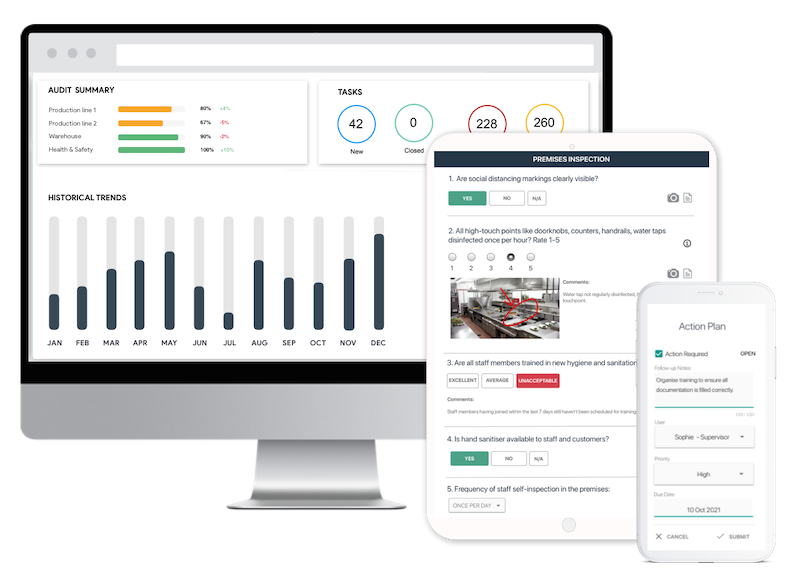
Save Time with Digital Inspections
- Easily capture & attach photos, directly on your mobile device.
- Instantly generate and share detailed reports after the inspection.
- Track corrective actions, view historical trends, improve standards.


What is an SOP Checklist?
An SOP checklist is a practical tool that guides, verifies, and records each step of a Standard Operating Procedure. It shows what needs to be done, who is responsible, and how completion should be approved. A typical checklist includes the procedure name, assigned personnel, step-by-step actions, and verification fields such as tick boxes or signatures. This structure supports consistency, accountability, and audit-ready documentation.
Example of a Simple SOP Checklist Format
A typical SOP checklist includes:
- Procedure title
- Purpose or objective
- Required tools or materials
- Step 1: ______
- Step 2: ______
- Step 3: ______
- Safety checks or cautions
- Verification fields (tick boxes, signatures, timestamps)
- Notes or comments
- Supervisor sign-off
This format keeps instructions accessible and provides a clear record of what was completed.
SOP vs SOP Checklist: What’s the Difference?
An SOP explains a full procedure in detail, including purpose, scope, responsibilities, tools, and steps. It’s the complete document.
An SOP checklist is the practical version teams use during day-to-day work. It condenses the procedure into simple, trackable actions that can be followed in real time.
Here’s how they differ in practice:
SOP
- Full narrative of the process
- Suitable for training and reference
- Harder to use while performing tasks
- Contains background information
- May be updated less frequently
SOP Checklist
- Condensed steps to follow
- Suitable for daily use
- Easy to use on the job
- Focuses on actions and verification
- Adjusted as processes evolve
Both are valuable, but the SOP checklist makes the procedure usable, consistent, and easy to verify.

Common Gaps in SOP Implementation (and How Checklists Help)
Even well-written SOPs can fall short if they’re not easy to use. Typical issues include:
- Outdated procedures that are rarely reviewed
- Long or hard-to-access documents that staff don’t consult during busy shifts
- Inconsistent training, leading to different interpretations of the same process
- Missed steps when teams rely on memory or ad-hoc training
- Limited audit trails because tasks aren’t documented consistently
These barriers make it difficult to maintain quality, safety, and compliance.
How SOP Checklists Solve These Problems
SOP checklists close the gap between “what’s written” and “what actually happens.” They help teams:
- Follow tasks in the correct sequence using a simple, actionable format
- Maintain consistency across shifts, teams, and locations
- Capture verification data such as timestamps, signatures, and comments
- Highlight deviations or skipped steps so issues can be corrected
- Produce reliable evidence for audits, training, and quality reviews
By turning procedures into clear, trackable actions, checklists support compliance and drive continuous improvement.
How to Create an Effective SOP Checklist
Building a reliable SOP checklist starts with breaking the process into simple, actionable steps.
- Define the purpose of the procedure and what the checklist must support.
- Break the SOP into short, action-focused steps that follow the correct sequence.
- Assign responsibility for each task or phase.
- Add verification elements such as tick boxes, signatures, or timestamps.
- Test the checklist in real conditions to identify missing or unclear steps.
- Refine the wording and layout for clarity and ease of use.
- Train staff on how and when to use the checklist.
Testing and iteration make the final checklist more reliable and user-friendly.

Key Components of an Effective SOP Checklist
A well-designed SOP checklist typically includes the following elements:
Tasks and Responsibilities
- Break down each procedure into specific, easy-to-follow tasks.
- Assign clear responsibility for each step or phase.
- Include checkpoints or verifications before moving to the next stage.
- Ensure accountability with completion tracking or timestamps.
Documentation and Sign-Off Requirements
- Record completion details, responsible personnel, and approval signatures.
- Attach or reference supporting documents such as test results or logs.
- Include fields for supervisor or auditor validation.
- Keep signed records organized for traceability and compliance audits.
Review and Update Cycles
- Set regular review intervals to confirm the SOP remains accurate and effective.
- Update the checklist when there are changes in processes, tools, or standards.
- Notify staff about revisions and provide retraining if procedures change.
- Track review dates, version numbers, and authorizations.
Training and Competency Verification
- Verify that employees are trained on each SOP they’re responsible for.
- Include sign-offs or assessments confirming understanding and competence.
- Document refresher training sessions and updates for new hires.
Compliance and Validation
- Ensure all steps align with internal audit SOPs and external standards (e.g., ISO, HACCP, GMP).
- Validate new or revised procedures through test runs or pilot checks.
- Record corrective actions for any nonconformities identified during audits.
Communication and Accessibility
- Make sure the latest version of each SOP and checklist is easily accessible.
- Use clear, standardized formatting to avoid confusion.
- Encourage feedback from employees to improve clarity and usability.
How Different Industries Use SOP Checklists
SOP checklists help organizations turn complex procedures into consistent, repeatable actions. They’re essential for maintaining compliance, ensuring quality, and keeping workers safe across every stage of an operation.
Healthcare
In hospitals and clinics, SOP checklists help maintain hygiene, patient safety, and procedural accuracy. They standardize everything from infection control to emergency response.
- Equipment cleaning and sterilization
- Medication administration protocols
- Waste segregation and disposal
- Patient admission and discharge workflows
- Incident reporting and safety drills
Manufacturing
Manufacturers rely on SOP checklists to ensure consistency, safety, and quality in production. They also support audits and regulatory compliance.
- Machine operation and shutdown sequences
- Equipment maintenance and calibration
- Raw material inspection and storage
- Product testing and quality control steps
- PPE and safety compliance procedures
Food & Hospitality
In restaurants, hotels, and catering services, SOP checklists help uphold hygiene, service quality, and food safety standards.
- Food handling and temperature monitoring
- Cleaning and sanitizing schedules
- Staff hygiene and uniform compliance
- Guest room and facility cleaning routines
- Customer feedback and complaint resolution
Construction
Construction teams use SOP checklists to manage site safety, equipment inspections, and quality assurance.
- Daily pre-start equipment checks
- Hazard identification and risk assessments
- Permit-to-work documentation
- Waste disposal and site housekeeping
- Final inspection and project handover
Retail
Retail SOPs help maintain consistency across multiple locations, ensuring brand standards and operational safety.
- Store opening and closing routines
- Cash handling and POS operations
- Merchandising and product display standards
- Customer service and complaint handling
- Emergency evacuation procedures
Corporate and Office Settings
SOP checklists in office environments ensure smooth operations, workplace safety, and IT consistency.
- Cleaning and disinfection routines
- Fire safety and evacuation planning
- New employee onboarding and training
- Data security and access control
- Equipment inspection and maintenance
Transportation and Logistics
This sector depends on SOP checklists to ensure vehicle safety, regulatory compliance, and efficient movement of goods.
- Vehicle inspection and maintenance schedules
- Driver safety and fatigue management
- Cargo loading and securing procedures
- Route planning and dispatch coordination
- Incident response and reporting protocols

Linking SOP Compliance Checklists With Quality and Safety Standards
SOP checklists help organisations translate broad regulatory or quality requirements into clear, repeatable daily tasks. By linking each step of a procedure to a specific standard, teams can show exactly how frontline work supports audit readiness, risk control, and operational consistency.
Audit Readiness
SOP checklists turn high-level requirements from standards into clear, trackable actions. When every step is documented, it becomes easier to demonstrate compliance during internal and external audits. Managers can show when tasks were completed, who signed them off, and whether any issues were raised and resolved.
Risk Control
Many standards expect organisations to identify, assess, and control operational risks. SOP checklists support this by guiding employees through tasks that prevent incidents, quality failures, or unsafe conditions. The structure helps teams follow the right sequence, avoid shortcuts, and maintain controls that protect people, equipment, and product quality.
Operational Excellence
Standards like ISO and HSE encourage structured, consistent procedures. Well-developed ISO SOPs make it easier to align daily tasks with these requirements. SOP checklists support this by creating consistent data on performance. Patterns such as recurring issues, delays or missed steps become easier to spot, helping managers refine processes, close gaps, and improve efficiency without compromising safety or compliance.
Digitize and Automate Your SOP Checklists With GoAudits
GoAudits makes it easier for organizations to standardize and monitor their Standard Operating Procedures (SOPs) across teams and locations. Instead of managing SOP compliance manually or through paper forms, digital SOP checklists let you track every process step, verify completion, and ensure adherence to quality and safety standards in real time.
With GoAudits, you can:
- Conduct SOP inspections and verifications directly on mobile devices, tablets, or desktops.
- Capture photos, comments, and sign-offs to document compliance at every stage.
- Track deviations or missed steps and assign corrective actions instantly.
- Generate professional SOP compliance reports in seconds, ready to share with management or auditors.
- Maintain a centralized record of all SOP checks for continuous improvement and easy audit preparation.
By digitizing your SOP checklists with GoAudits, you can simplify compliance management, improve accountability, and keep every process consistent, efficient, and audit-ready.

Other Popular SOP Checklists:

Digitize your Safety Inspections
- Easily perform audits anywhere on the site using a mobile device, even offline
- Attach photos to document issues or prove compliance
- Assign tasks, set deadlines and track progress - all within a single app
- Analyze data from audits to identify trends, pinpoint recurring issues, and assess compliance levels.