Office and Building Cleaning Checklists | Housekeeping Templates
Template Library > Property Inspections > Office Cleaning Checklist
Ensure Optimal Processes With Office Building Cleaning Checklists
Cleaning companies can use checklist templates for offices to organize cleaning processes, as well as evaluate the cleanliness and maintenance of office spaces. With these checklists, you can identify potential issues or areas that require additional attention for a clean and orderly office environment.
Using office cleaning checklist templates offers several benefits that include:
- Improved accountability amongst the cleaning staff
- Consistent and standardized cleaning process
- Enhanced customer satisfaction

With the GoAudits Cleaning Audit App, you can:
- Eliminate paperwork: conduct efficient digital audits, add photos from mobile device
- Customize this template or easily create your own
- Save time with instant reports & assign corrective actions
56 questions in 9 sectionsInteractive preview: try the answers
Section 1 of 9 · 5 questionsCommunal Areas & Corridors
Have all glass partitions been spot cleaned as required?
Have all the surfaces been spot cleaned as required?
Have the hard floors been swept, mopped free of smudges and stains?
Have all the waste bins been emptied, wiped and the liners replaced?
Have the carpets been spot cleaned as required?
Section 2 of 9 · 4 questionsConference Rooms
Have the conference tables and any side tables been dusted, damp wiped, polished and left smear free?
Have the telephones been dusted and sanitised?
Have all the waste bins been emptied, wiped and the liners replaced?
Have the carpets been fully vacuumed and spot cleaned as required?
Section 3 of 9 · 4 questionsExternal Areas
Has any debris, litter, leaves etc. been removed?
Is the exterior of the building free from graffiti or sticky substances such as chewing gum?
Has the external glazing (below 1.5 metres) been cleaned and polished?
Have all cigarette receptacles been emptied?
Section 4 of 9 · 8 questionsKitchens And Coffee Bars
Have the work tops, splash-backs and sinks been cleaned and wiped down?
Have the hard floors been swept, mopped free of smudges and stains?
Have all the waste bins been emptied, wiped and the liners replaced?
Have the microwave ovens been cleaned inside out?
Are the dishwashers being operated correctly, filled and emptied regularly?
Is the washing up (and drying) being done effectively and regularly?
Are the consumables being replenished?
Have all the surfaces been spot cleaned as required?
Section 5 of 9 · 8 questionsLifts, Lobbies And Staircases
Have the buttons and signs been cleaned and polished?
Have the walls been dusted and damp wiped?
Have any mirrors been polished and left smear free?
Have all the waste bins been emptied, wiped and the liners replaced?
Have the door runners been brushed out or vacuumed?
Have the carpeted areas been vacuumed and spot cleaned?
Have the hard floors been spot cleaned?
Have all the hard surfaces been swept and cleaned to remove debris and litter?
Section 6 of 9 · 6 questionsOffice Areas
Have all the surfaces been spot cleaned as required?
Have the hard floors been swept, mopped free of smudges and stains?
Have all the waste bins been emptied, wiped and the liners replaced?
Have the recycling points been spot cleaned as required?
Have all glass partitions been spot cleaned as required?
Have the carpets been spot cleaned as required?
Section 7 of 9 · 9 questionsReception Areas
Have all the seats been dusted / damp wiped / vacuumed?
Have the tables and reception desk been dusted?
Has the outside entrance area been swept and litter removed?
Have the telephones been dusted and sanitised?
Have the hard floors been swept, mopped free of smudges and stains?
Have all the waste bins been emptied, wiped and the liners replaced?
Have the carpets and entrance mats been vacuumed and spot cleaned?
Have the security doors been polished, are they smear free?
Are all the walls and light fittings (below 2 meters) clean?
Section 8 of 9 · 2 questionsRecycling Points
Are all recycling bins either empty or less than half full?
Have all additional recyclable items been removed?
Section 9 of 9 · 10 questionsWashrooms And Showers
Are the work tops, splash-backs and sinks clean and dry?
Are the shower heads and other shower fixings clean and dry?
Are the shower curtains or doors clean?
Have the edges and ledges been cleaned?
Have the hard floors been swept, mopped free of smudges and stains?
Have all the waste bins been emptied, wiped and the liners replaced?
Have the taps been wiped and polished?
Have the WCs and urinals been cleaned and disinfected?
Have the mirrors been polished clean?
Are the consumables being replenished to the maximum number or level identified?
Checklist by GoAudits. This checklist is an example: we do not guarantee compliance with the laws applicable to your territory or industry. Seek professional advice to adapt it to your workplace or jurisdiction.
53 questions in 6 sectionsInteractive preview: try the answers
Section 1 of 6 · 10 questionsAre The Following Areas Clean And In Good Repair?
Mall floors
Walls
Balustrade/Rails
Glass
Furniture
Signage
Vents/Grills
Bins
Doors
Cupboards
Section 2 of 6 · 8 questionsAre The Following Areas Clean And In Good Repair?
Entry Floor
Framework
Glass
Signage
Walls
Bins
Cobwebs
Mats
Section 3 of 6 · 13 questionsAre The Following Areas Clean And In Good Repair?
Mirrors
Wash Basins
Doors/Partitions
Soap / Handwash / Paper Towels
Floor
Furniture
Toilets
Walls
Bins
Vents/Grills
Doors
Urinals
Microwave
Section 4 of 6 · 8 questionsAre The Following Areas Clean And In Good Repair?
Glass/Perspex
Walls/Ceiling
Buttons
Treads
Hand Rails
Doors
Mirrors
Panels
Section 5 of 6 · 4 questionsAre The Following Areas Clean And In Good Repair?
Walls
Kitchen
Furniture
Floors
Section 6 of 6 · 10 questionsAre The Following Areas Clean And In Good Repair?
Service Corridors
Loading Docks
Exit Corridors
Phones
Signage
External Wall Surfaces
Car Park
Plant rooms
Gardens
External Floor Surfaces
Checklist by GoAudits. This checklist is an example: we do not guarantee compliance with the laws applicable to your territory or industry. Seek professional advice to adapt it to your workplace or jurisdiction.
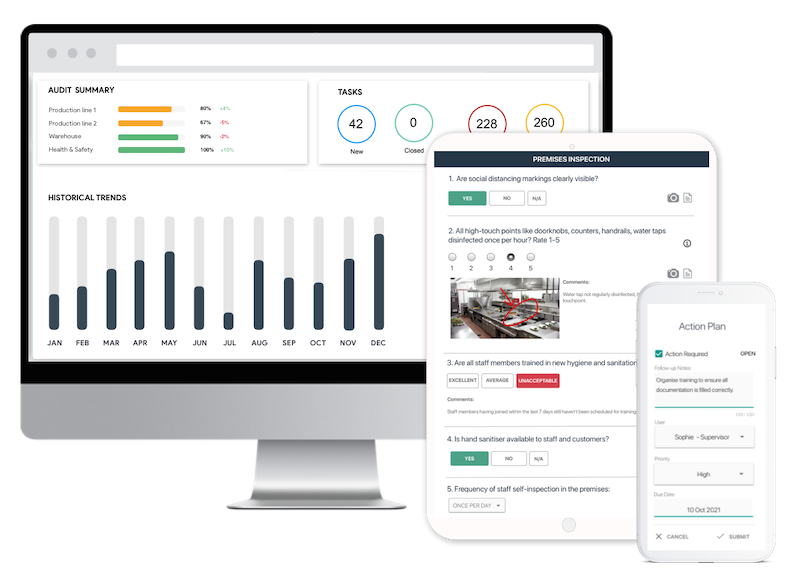
Save Time with Digital Inspections
- Easily capture & attach photos, directly on your mobile device.
- Instantly generate and share detailed reports after the inspection.
- Track corrective actions, view historical trends, improve standards.


What is an Office Housekeeping and Cleaning Checklist?
An office housekeeping and cleaning checklist is a detailed list of tasks that cleaning staff must complete to maintain a clean and organized office environment. This checklist typically includes tasks for various office areas, such as common areas, individual workspaces, exterior areas, etc.
Who Needs an Office Building Cleaning Checklist Template?
Managers and housekeeping teams use these checklists to manage and track daily tasks and often use a cleaning business checklist template to manage and track cleaning tasks.
Facility managers and supervisors also use cleaning checklists in various facilities, such as offices, malls, schools, hospitals, and manufacturing facilities, to ensure that cleaning tasks are completed regularly and consistently.
Benefits of Using an Office Cleaning Checklist
A well-structured professional office cleaning checklist offers numerous advantages. It clarifies responsibilities among cleaning staff, ensuring that each individual knows their specific tasks and duties. This brings consistency and efficiency to the process, as everyone follows a standardized procedure.
By reducing the likelihood of missed tasks or overlooked areas, checklists minimize errors and enhance accountability. Regular cleaning, guided by a checklist, mitigates health risks for the occupants. Furthermore, adhering to a checklist can help cleaning services comply with industry standards and regulations, ensuring a professional and reliable service.

Office Housekeeping and Cleaning Checklists for Different Areas
The exact sections included in a office cleaning template depend on the type of business. However, here are the areas that cleaning services have to include in the housekeeping checklist format for an office:
Desks and Cubicles
Keeping desks and cubicles clean and organized is essential for a productive and healthy work environment. The office cleaning checklist template for desks includes the following:
- Tidying up paper and clutter
- Storing computer wires neatly
- Cleaning out waste paper baskets
- Organizing pens and other stationery
- Sweeping up crumbs and cleaning any stains
- Cleaning chairs and armrests using a disinfectant
- Emptying trash cans, wiping down, and changing liners
- Returning any utensil or cutlery that is out of place to the kitchen
- Wiping down phones, keyboards, and other computer equipment
Reception Area and Waiting Space
The reception area is the first thing anyone entering the office sees. Therefore, you must ensure the area is clean to the highest standards. The reception area cleaning checklist includes:
- Dusting floor mats
- Cleaning floors and hard surfaces
- Straightening out any reception decor
- Sanitizing the coffee table and similar furniture
- Dusting all tables, lamps, window shades, vents, etc.
- Sanitizing the waiting area with a quality disinfectant
- Wiping down door handles, light switches, and baseboards
- Emptying all waste receptacles and replacing them with new liners
- Organizing magazines and the coffee table to give a pleasant first impression
Kitchen or Pantry
The office kitchen cleaning checklist template includes the following:
- Cleaning and sanitizing sinks and faucets
- Wiping down countertops, tables, and chairs
- Washing and drying dishes frequently for use
- Emptying trash and refilling paper towel dispensers
- Cleaning and descaling the coffee machine or the kettle regularly
- Cleaning and sanitizing the interior and exteriors of the microwave
Bathroom or Restrooms
Regular bathroom cleaning helps prevent the spread of germs and diseases, creates a positive impression on visitors, and contributes to overall cleanliness and sanitation.
Major tasks of cleaning office bathrooms and restrooms for offices include:
- Cleaning and sanitizing toilets, sinks, and urinals daily. Furthermore, mopping floors, wiping down walls, and restocking dispensers.
- Every week, cleaners must deep clean toilets and urinals, scrub grout and tiles, clean and sanitize faucets and handles, and check for clogs.
- Scrubbing ventilation fans, addressing plumbing issues, and inspecting tiles and grout, monthly.
Corridors
These are high-traffic areas in offices, and maintaining their cleanliness is crucial for creating a positive impression and ensuring a healthy environment. Here are the key cleaning tasks for corridors:
- Vacuum carpets or rugs regularly to remove dirt and dust
- Sweep and mop floors to remove dirt and debris
- Wipe down walls and doors to remove fingerprints and smudges
- Inspect and clean fire extinguishers to ensure they are in working condition
- Empty trash and recycling bins daily to maintain a clean and tidy appearance
- Clean and sanitize handrails and elevator buttons to prevent the spread of germs
Warehouse/Production Areas
Maintaining a clean and organized warehouse or production area is crucial for safety, efficiency, and compliance. It also reduces the risk of accidents, improves productivity, and helps to maintain quality standards.
Here are some key cleaning tasks to include in your office cleaning checklist for factory and production areas:
- Remove dirt, debris, and spills to prevent accidents and maintain a safe working environment.
- Prevent the buildup of dust and debris, which can attract pests and interfere with equipment operation.
- Remove grease and contaminants to ensure proper functioning and prevent damage.
- Promptly clean up spills to prevent accidents and damage.
👉 Use the GoAudits app to create and manage your own digital checklists
GoAudits makes it easy to improve your operational standards with customized checklists:
- Create an account for free, choose from 100s of templates to customize.
- Alternatively, build your own checklist with a user-friendly drag-and-drop interface.
- Or upload your current checklist in any format, and the GoAudits team will convert it for you at no cost within 24h.
» Read Full Story: How Partnership Cleaning Solutions Delivers Consistent Quality Standards With GoAudits.

Germ Hotspots: Where to Focus Your Building Cleaning Efforts
General cleaning is good, but a truly effective plan focuses on the “germ hotspots” where bacteria and viruses thrive. Make sure your checklist includes these areas:
Kitchen/Break Room: Refrigerator handles, microwave buttons, coffee pot handles, and sink faucets.
Workstations: Computer keyboards, mice, phones, and desk surfaces.
Common Areas: Door handles, light switches, water fountain buttons, and elevator buttons.
Restrooms: Toilet flush handles, faucet handles, and soap dispensers.
Cleaning Chemicals and HazCom Compliance
Office cleaning means handling chemicals, and in the US that brings an obligation most cleaning schedules overlook.
The deadline is 20 November 2026. Under OSHA’s revised Hazard Communication Standard (29 CFR 1910.1200), every employer using hazardous chemicals must have updated workplace labels, revised their written hazard communication programme, and retrained staff on newly identified hazards for substances by that date. Suppliers’ deadline passed in May 2026, so updated safety data sheets should already be with you.
What this means for a cleaning operation:
- Review the chemical inventory and identify anything reclassified under GHS Revision 7
- Obtain current safety data sheets from suppliers and keep them accessible on every shift, not locked in an office
- Update any decanted or secondary container labels
- Retrain cleaners on new hazard classifications and label elements
Products used exactly as a consumer would use them may be exempt, but commercial-strength cleaning chemicals generally are not. Hazard communication was the second most-cited OSHA standard in both 2024 and 2025, so the enforcement risk is real rather than theoretical.
Use the OSHA Hazard Communication Checklist to check where you stand.
What is an Office Cleaning Schedule?
An office cleaning schedule is a structured plan setting out which cleaning tasks happen, where, and how often. Also called a cleaning rota or cleaning roster, it answers a question a checklist does not: not what to clean, but when.
The two work together. The schedule assigns the task to a day; the checklist defines what finishing it looks like.
What an Office Cleaning Schedule Template Should Contain
- Area or zone, broken down to the level you actually inspect: reception, open plan, meeting rooms, kitchen, washrooms, corridors
- Task, written as an action rather than a heading
- Frequency: daily, weekly, monthly, quarterly
- Assigned to, by name or role rather than “cleaning team”
- Day or shift the task falls on
- Sign-off column, with space for a date and initials
Daily, Weekly and Monthly Office Cleaning Tasks
- Daily Cleaning Checklist Tasks: Empty bins and replace liners. Clean and sanitise washrooms and restock consumables. Wipe high-touch surfaces including door handles, light switches, and lift buttons. Vacuum or mop main traffic routes. Clean kitchen worktops and sinks.
- Weekly Office Cleaning Checklist Tasks: Dust desks, shelves, sills and skirting. Vacuum under and behind furniture. Clean internal glass and partitions. Descale kettles and coffee machines. Clean microwave interiors. Mop hard floors throughout.
- Monthly Office Housekeeping Checklist Tasks: Deep clean carpets in high-traffic areas. Clean light fittings and ceiling vents. Wipe down walls and doors. Clean behind and beneath kitchen appliances. Check and clean extract fans in washrooms.
- Quarterly or annually: Carpet deep clean throughout, high-level dusting, external window cleaning, and upholstery cleaning.
How Often Should an Office Be Cleaned?
Frequency follows footfall and risk, not floor area. Washrooms and kitchens need daily attention regardless of how many people use them, because the consequence of missing them is immediate and visible. Desk areas in a hybrid office with staff in three days a week do not need the same daily attention as a five-day office.
The practical approach is to set frequency by area rather than for the building as a whole, then review it after a month against what the inspections are actually finding.
👉 Explore our library of property inspection and facility management checklists.
Office Cleaning Checklist Formats: PDF, Excel, and Word
The format you choose shapes how the checklist gets used.
PDF suits printing and posting on a wall or clipping to a cleaning trolley. It cannot be edited once issued, which is useful for consistency and a problem when the schedule changes.
Excel suits anyone building a schedule across days and areas. A grid of tasks against days of the week, with sign-off columns, is the format most cleaning supervisors reach for. It is also the easiest to adapt when areas or frequencies change.
Word suits checklists that are mostly text and need to carry instructions alongside the task list, such as a housekeeping SOP.
All three share one limitation: a completed paper or spreadsheet checklist records that someone ticked a box, not what the area actually looked like. A digital checklist attaches a photograph to the item, timestamps it, and makes the record checkable without walking to the office.
Cleaning Logs and Registers
A checklist records one cleaning session. A cleaning log or cleaning register is the running record across sessions, showing what was done, when, and by whom over time.
The distinction matters when someone asks a question a single checklist cannot answer: when were the washrooms last deep cleaned, or how many times this month was the kitchen missed?
A cleaning register should record:
- Date and time
- Area or zone
- Tasks completed
- Cleaner’s name or initials
- Supervisor sign-off where required
- Any issue found and reported
The washroom sign-off sheet is the most familiar version: the sheet on the back of the door with initials and times. It works because it is visible at the point of work, and it fails for the same reason: it records attendance rather than standard, and nobody reconciles it against anything.
A digital log solves the reconciliation problem. Each entry links to the completed checklist, the photographs taken, and any issue raised, so the register and the evidence behind it are the same record.
How to Implement a Workplace Cleaning Schedule Template?
Start by assessing the workplace to identify key areas that require regular cleaning, such as workstations, restrooms, break rooms, and high-traffic zones like lobbies and corridors.
Then, focus on cleaning frequency based on usage patterns and the level of cleanliness needed to maintain a healthy environment. For instance, restrooms and high-touch surfaces may need daily attention, while other areas like storage rooms or conference rooms might be cleaned less frequently.
Create detailed office building cleaning checklists and SOPs for each area, specifying the tasks your staff must complete during each session. Checklists ensure you cover all the critical areas and maintain consistency in the cleaning process.
Communicate it clearly to all relevant personnel, providing them with the checklists and any additional instructions they may need. Regular monitoring and feedback are vital to ensure the cleaning schedule is followed and the workplace remains clean and safe.
Other Popular Cleaning Checklists:

Digitize your Property inspections
- Easily perform audits anywhere in the facility using a mobile device.
- Attach photos to document issues or prove compliance
- Assign tasks, set deadlines and track progress - all within a single app
- Analyze data from audits to identify trends, pinpoint recurring issues, and assess compliance levels.