- Library
- Food & Hospitality
- HACCP-Based SOPs
HACCP-Based SOPs
70 questions in 11 sectionsInteractive preview: try the answers
Section 1 of 11 · 13 questionsPersonal Hygiene
Are employees wearing clean and proper uniforms, including closed-toe shoes?
Are effective hair restraints properly worn?
Are fingernails short, unpolished, and clean, with no artificial nails?
Is jewelry limited to a plain ring, such as a wedding band or watch, with no bracelets?
Are hands washed properly, frequently, and at appropriate times?
Are burns, wounds, sores, scabs, and splints covered with waterproof bandages and completely covered with a food service glove while handling food?
Is eating, drinking, chewing gum, and smoking allowed only in designated areas away from preparation, service, storage, and ware washing areas?
Do employees use disposable tissues when coughing or sneezing and then immediately wash hands?
Do employees appear in good health?
Are hand sinks unobstructed, operational, and clean?
Are hand sinks stocked with soap, disposable towels, and warm water?
Is a hand washing reminder sign posted?
Are employee restrooms operational and clean?
Section 2 of 11 · 11 questionsFood Preparation
Is all food stored or prepared in the facility from approved sources?
Is frozen food thawed under refrigeration or in cold running water and then cooked to the proper temperature?
Is thawed food not refrozen?
Is preparation planned so ingredients are kept out of the temperature danger zone?
Is food tasted using the proper procedure?
Are procedures in place to prevent cross-contamination?
Is food handled with suitable utensils, such as single-use gloves or tongs?
Is food prepared in small batches to limit the time it is in the temperature danger zone?
Are clean reusable towels used only for sanitizing equipment and surfaces and not for drying hands, utensils, or the floor?
Is food cooked to the required safe internal temperature for the appropriate time?
Is the internal temperature of the food being cooked monitored and documented?
Section 3 of 11 · 5 questionsHot Holding
Is the hot holding unit clean?
Is food heated to the required safe internal temperature before placing it in hot holding, and are hot holding units not used to reheat potentially hazardous foods?
Is the hot holding unit preheated before hot food is placed in it?
Is the temperature of hot food being held at or above 135 ºF?
Is food protected from contamination during hot holding?
Section 4 of 11 · 2 questionsCold Holding
Is the temperature of cold food being held at or below 41 ºF?
Is food protected from contamination?
Section 5 of 11 · 5 questionsRefrigerator, Freezer, And Milk Cooler
Is food stored 6 inches off the floor in walk-in coolers?
Are refrigerator and freezer units clean and organized?
Are proper chilling procedures used?
Is all food properly wrapped, labeled, and dated?
Is the air temperature of all refrigerators and freezers monitored using accurate thermometers, and is documentation on file?
Section 6 of 11 · 10 questionsFood Storage And Dry Storage
Is the temperature of the dry storage area between 50 ºF and 70 ºF?
Are all food and paper supplies stored 6 to 8 inches off the floor?
Is all food labeled with the name and date received?
Are open bags of food stored in containers with tight-fitting lids and labeled with the common name?
Is the FIFO (First In, First Out) method of inventory management used?
Are there no dents on the seam, bulging, or leaking canned goods?
Are all food surfaces clean?
Are chemicals clearly labeled and stored away from food and food-related supplies?
Is there a regular cleaning schedule for all food surfaces?
Is food stored in the original container or a food-grade container and labeled with the name and date received?
Section 7 of 11 · 8 questionsCleaning And Sanitizing
Is the three-compartment sink properly set up for ware washing?
Is the dish machine working properly, with gauges and chemicals at recommended levels?
Is water clean and free of grease and food particles?
Are water temperatures correct for wash and rinse?
If heat sanitizing, are utensils allowed to remain immersed in 171 ºF water for 30 seconds?
If using a chemical sanitizer, is it mixed correctly, and is a sanitizer strip used to test chemical concentration?
Are all washed/sanitized items allowed to air dry?
Are wiping cloths stored in a sanitizing solution while in use?
Section 8 of 11 · 7 questionsUtensils And Equipment
Are all small equipment and utensils, including cutting boards and knives, cleaned and sanitized between uses?
Are work surfaces cleaned and sanitized between uses?
Are thermometers cleaned and sanitized after each use?
Are thermometers calibrated on a regular basis?
Is the can opener clean?
Are drawers and racks clean?
Are clean utensils handled in a manner to prevent contamination of areas that will be in direct contact with food or a person's mouth?
Section 9 of 11 · 2 questionsLarge Equipment
Is the food slicer broken down, cleaned, and sanitized before and after every use?
Are the exhaust hood and filters clean?
Section 10 of 11 · 4 questionsGarbage Storage And Disposal
Are outdoor garbage cans/dumpsters clean, water-tight, and kept covered?
Are garbage cans emptied as necessary?
Are boxes and containers removed from the site?
Is the loading dock and the area around the dumpster clean and odor-free?
Section 11 of 11 · 3 questionsPest Control
Do outside doors have screens, are well-sealed, and equipped with a self-closing device?
Is there no evidence of pests present?
Is there a regular schedule of pest control by a licensed pest control operator?
Checklist by GoAudits. This checklist is an example: we do not guarantee compliance with the laws applicable to your territory or industry. Seek professional advice to adapt it to your workplace or jurisdiction.
Free PDF
Download the HACCP-Based SOPs
By downloading this checklist you agree to the GoAudits privacy policy and terms of service.
NEW! Try generating a custom checklist with our free AI tool:
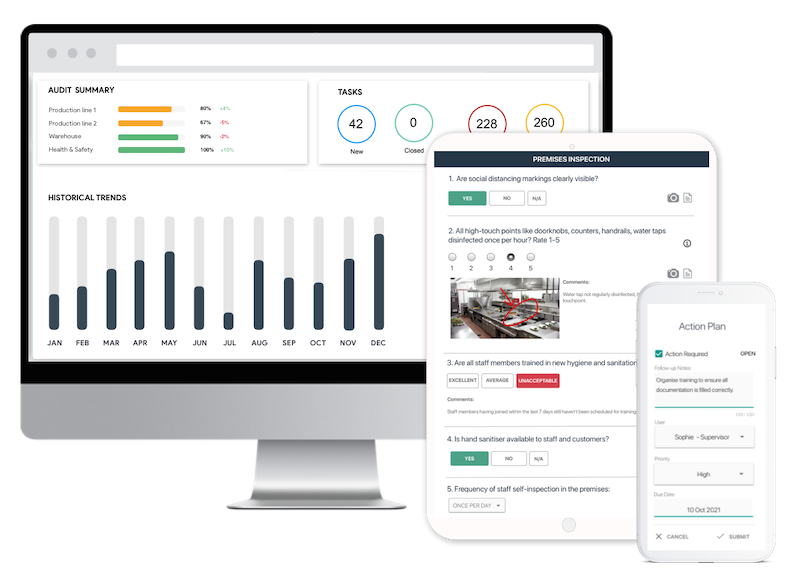
Easy inspection app for your digital checklists
- Conduct inspections anytime, anywhere - even offline
- Capture photos as proof of compliance or areas needing attention
- Instantly generate and share detailed reports after the inspections
- Assign & track follow-up tasks, view historical trends on a centralized dashboard