

HVAC Maintenance Checklist Templates: Free PDF Downloads
Template Library > Property Inspection Templates > HVAC Maintenance Checklists
Simplify HVAC Service Inspections With Ready-to-Use HVAC Maintenance Checklist Templates
Use these HVAC maintenance checklist templates to run consistent service visits, record what was checked, and prove the work was done. Facilities teams and HVAC contractors use them for scheduled preventive maintenance, seasonal changeovers and one-off service calls, across a single building or a whole portfolio.
This hub covers five checklist types:
- Preventive maintenance checklists for scheduled PM and PPM visits
- Commercial and residential checklists sized to the building type
- Equipment-specific checklists for split systems, rooftop units and air handlers
- Seasonal checklists for spring, summer, fall and winter changeovers
- Maintenance logs and service report forms for the record trail

With the GoAudits Property Inspection App, you can:
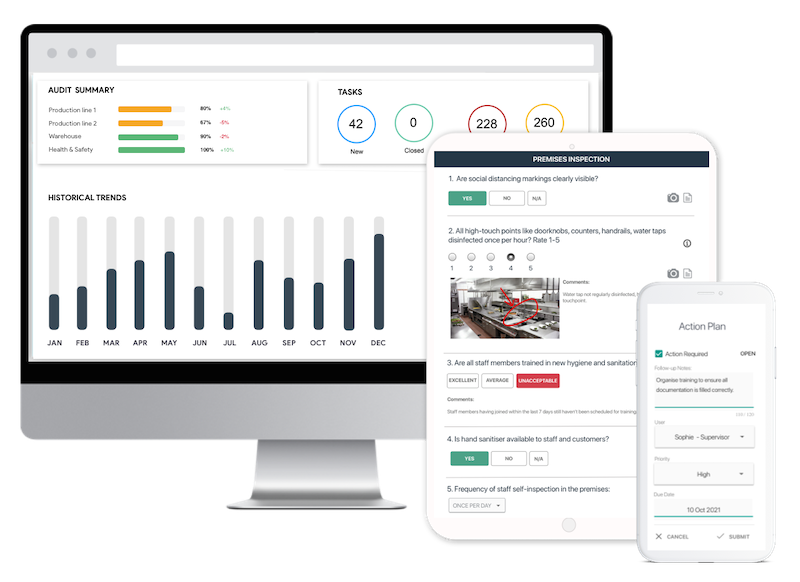
- Eliminate paperwork: conduct efficient digital audits, add photos from mobile device
- Customize this template or easily create your own
- Save time with instant reports & assign corrective actions
HVAC
HVAC
Save Time with Digital Inspections
- Easily capture & attach photos, directly on your mobile device.
- Instantly generate and share detailed reports after the inspection.
- Track corrective actions, view historical trends, improve standards.


What is an HVAC Maintenance Checklist?
An HVAC maintenance checklist is a structured list of the inspection and service tasks a technician completes on a heating, ventilation and air conditioning system during a single visit. It covers filters, coils, thermostats and controls, ductwork, electrical connections, condensate drainage and refrigerant charge.
A completed checklist becomes the maintenance record for that unit, which is what warranty claims, insurance reviews and compliance audits ask to see. The same checklist keeps the visit consistent whether it is a seasonal tune-up, a routine PM inspection or one stop on a wider facilities program.
Why Use an HVAC Preventive Maintenance Checklist?
An HVAC preventive maintenance checklist turns scheduled service into a repeatable, recorded process instead of a technician working from memory. Preventive maintenance, also written as preventative maintenance or PPM, means servicing equipment on a fixed schedule rather than waiting for it to fail.
Three things a PM checklist does that an unstructured visit does not:
- Fixes the scope of the visit, so the same checks happen at every unit on every cycle
- Creates a dated record per unit, which is what warranty and insurance reviews ask for
- Surfaces repeat faults, because the same item failing across three visits is visible in the history
The energy case is well documented. The U.S. Department of Energy’s Federal Energy Management Program estimates that maintenance programs aimed at energy efficiency save 5% to 20% on energy bills without significant capital spending (O&M Best Practices Guide, Release 3.0, 2010).
Pair the checklist with a wider maintenance inspection routine so HVAC sits inside the building’s overall schedule rather than beside it.
What Should Be Included in an HVAC Service Checklist?
An HVAC service checklist is designed to guide technicians through all the essential tasks needed to keep a heating, ventilation, and air conditioning system running safely and efficiently. Whether you’re scheduling seasonal maintenance or a routine inspection, the checklist helps standardize the process, prevent costly oversights, and ensure nothing critical gets missed.
Here’s what a well-rounded HVAC service checklist typically includes:
Thermostat and Controls
- Test for accurate temperature readings
- Calibrate (if needed)
- Check system responsiveness when cycling on/off
Air Filters
- Inspect filters for dust, debris, or clogs
- Replace or clean filters as needed
- Note filter size/type for future servicing
Electrical Components
- Inspect wiring, connections, and terminals
- Tighten loose connections
- Test voltage and current on motors
- Check circuit breakers and fuses
Refrigerant Levels
- Measure refrigerant charge
- Look for signs of leaks
- Check suction and discharge pressures
- Document levels for regulatory compliance
Condensate Drain and Pan
- Clear blockages from the drain line
- Check the drain pan for standing water or algae
- Flush the system to prevent overflow and mold
Blower and Motor Assembly
- Inspect and clean blower components
- Lubricate moving parts (if applicable)
- Test motor performance and amperage draw
Coils (Evaporator and Condenser)
- Inspect coils for dirt, corrosion, or damage
- Clean with appropriate coil cleaner
- Ensure good airflow and heat exchange
Ductwork and Airflow
- Check for visible leaks or disconnected sections
- Measure airflow output at vents
- Inspect insulation and dampers
Safety Devices
- Test limit switches and pressure controls
- Inspect flame sensors (for heating systems)
- Check emergency shut-off switches
System Startup and Shutdown
- Run the system through a full cycle
- Listen for unusual noises or vibrations
- Confirm smooth start and stop functions
Having a standardized HVAC checklist ensures consistency across service visits, whether you’re using an in-house team or a third-party contractor. It reduces risk, helps track performance over time, and supports compliance with safety and energy regulations like the ISO 50001 Audit. Plus, it makes documentation easier if you’re maintaining records for inspections or insurance.
👉 Sample report: See what a completed HVAC maintenance inspection looks like as a finished PDF report with photos and scores, generated the moment the checklist is submitted.
Which HVAC Checklist Applies to Your Equipment Type?
Equipment type changes what the checklist has to cover. A rooftop unit needs curb, weatherproofing and economizer checks that a ductless split system does not have, and an air handling unit needs filter bank and coil access checks that a packaged unit handles differently.
Split and ductless systems. Indoor unit coil and blower wheel cleaning, drain pan and condensate pump, refrigerant line insulation, outdoor unit clearance and coil condition. Mini split and multi-split installations need each indoor head checked separately.
Rooftop units (RTUs). Everything a split system needs, plus curb and flashing condition, economizer damper operation and linkage, belt tension on belt-driven units, and safe roof access for the technician.
Air handling units. Filter bank condition and differential pressure, coil and drain pan cleanliness, fan and bearing condition, damper operation and access door seals. Use the air handling unit checklist for AHU-only visits.
Packaged and central systems. Compressor and condenser operation, supply and return temperature split, thermostat calibration and airflow at the registers. The central air conditioner maintenance checklist covers residential central systems.
Heating equipment. Heat exchanger inspection, burner and ignition condition, flue and combustion air, and carbon monoxide testing. Run the gas furnace maintenance checklist or the heat pump maintenance checklist depending on the system.
How Do Commercial and Residential HVAC Checklists Differ?
A commercial HVAC maintenance checklist covers more units, more equipment types and a documentation trail an auditor or landlord can inspect. A residential checklist covers one system and is usually completed and signed within a single visit.
Units per visit:
Commercial: several, often roof-mounted or in plant rooms.
Residential: one system.
Typical equipment:
Commercial: RTUs, AHUs, chillers, fan coil units, VRF.
Residential: split systems, central air, furnaces, heat pumps.
Service interval:
Commercial: quarterly to twice yearly, filters monthly.
Residential: once or twice a year.
Records needed:
Commercial: per-unit history, refrigerant logs, corrective actions with owners.
Residential: a service record and next-visit date.
Who signs it:
Commercial: technician plus facilities or property manager.
Residential: technician, copy to homeowner.
Multi-site operators need one thing more: the same checklist running at every location so results compare. A checklist each site edits locally produces data you cannot roll up. For portfolio work, keep HVAC inside the wider building maintenance checklist schedule.

Seasonal HVAC Maintenance Checklists: Spring, Summer, Fall and Winter
Here’s what to inspect and why seasonal planning makes all the difference.
Seasonal checklists split the year into a cooling-season visit and a heating-season visit, because the checks that matter change with the load. Most operators run two, one before summer and one before the heating season starts. The fall HVAC maintenance checklist covers the heating changeover.
Spring & Summer: Prepare for Cooling Demands
Before the temperatures rise, your system should be tuned to handle increased cooling loads.
- Replace or clean air filters
- Check refrigerant levels and inspect for leaks
- Clean evaporator and condenser coils
- Inspect ductwork for gaps or buildup
- Test thermostat and cooling cycles
Doing this early in the season helps prevent mid-summer breakdowns and keeps cooling efficient when demand peaks.
Fall & Winter: Get Ready for Heating Season
As the focus shifts from cooling to heating, maintenance needs change.
- Inspect and clean burners or heat exchangers
- Test ignition systems and pilot lights
- Check carbon monoxide levels
- Replace filters again (especially if you skipped summer)
- Inspect flue systems and ventilation for blockages
Regular winter prep ensures comfort, prevents safety issues, and helps your heating and electrical systems run efficiently throughout the colder months.
Efficiency and Cost Savings
Seasonal maintenance keeps your system running at peak performance. Dirty filters, clogged coils, or leaky ducts can force the system to work harder—raising energy bills and shortening equipment life.
A seasonal HVAC maintenance schedule helps avoid:
- Overuse and wear on key components
- Emergency repair costs
- Unexpected system downtime during peak seasons
Common HVAC Issues That Routine Checks Help Prevent
These are the faults a routine HVAC inspection catches most often, and what each one costs if it is missed.
Clogged or Dirty Air Filters – One of the most overlooked issues, but also one of the most preventable. Dirty filters restrict airflow, forcing the system to work harder and use more energy. Over time, this strain can reduce the lifespan of your unit.
Refrigerant Leaks – Low refrigerant levels reduce cooling efficiency and can signal a leak. Catching this during a routine check helps avoid more serious compressor damage down the line.
Electrical Failures – Loose connections, failing capacitors, or corroded wires can lead to short cycling or full system failure. Regular inspections test these components and catch wear and tear before it results in downtime.
Blocked Condensate Drains – If left unchecked, a clogged condensate line can cause water damage, mold growth, and increased humidity levels indoors. Routine checks ensure proper drainage and prevent backups.
Thermostat Malfunctions – Inconsistent temperature control could be a sign of a faulty or miscalibrated thermostat. Maintenance checks often include recalibrations or software updates to keep systems responding correctly.
Worn-Out Belts and Bearings – Over time, mechanical parts like fan belts or motor bearings wear out. If not replaced in time, they can lead to noisy operation, reduced airflow, or even motor failure.
Reduced Airflow from Duct Issues – Leaks, blockages, or poorly sealed ducts can significantly reduce efficiency. A routine inspection can pinpoint problem areas that may be undermining your system’s performance.
👉 Repeat faults: When the same coil or contactor fails at the same units every cycle, trend dashboards surface it across sites instead of leaving it buried in individual reports.
What Compliance Records Should an HVAC Checklist Capture?
An HVAC maintenance checklist carries the compliance record, so it needs fields for the things a regulator asks to see: refrigerant added or recovered, technician certification, leak checks, filter changes, and the date of each.
Refrigerant handling: Two separate rules now apply in the US, and the split changed on 1 January 2026.
- Ozone-depleting refrigerants such as R-22 remain under EPA Section 608, which places leak repair duties on appliances holding 50 pounds or more.
- HFC refrigerants with a global warming potential above 53, which includes R-410A, fall under the EPA’s HFC Emissions Reduction and Reclamation rule made under the AIM Act. The leak repair threshold there is a full charge of 15 pounds or more. Residential and light commercial air conditioners and heat pumps hold a narrow exemption from the leak repair provisions.
- Both regimes require certified technicians for refrigerant work and records retained for at least three years.
Record the full charge and refrigerant type for every unit. Without the charge size on the record, nobody can tell later which threshold that unit fell under.
Electrical safety: OSHA requires electrical connections to be insulated and grounded, and lockout/tagout procedures to be followed before servicing. Pair HVAC work with the electrical maintenance checklist wherever a panel is opened.
Indoor air quality: ASHRAE Standard 62.1 sets outdoor air ventilation rates and filter maintenance expectations for commercial buildings, so record filter type, size and change date rather than ticking a box marked clean.

How GoAudits Helps With HVAC Maintenance Inspections
Facilities teams and HVAC contractors running the same checks across many units use GoAudits to keep the checklist and the record in one place.
- Run the checklist offline in a plant room or on a roof, and let it sync when the device reconnects
- Attach photos against individual items, so a dirty coil or a corroded contactor is evidenced rather than described
- Schedule recurring PM visits per unit and get reminders when a cycle falls due
- Assign corrective actions with an owner and a due date the moment a fault is logged, then track them to closure
- Compare results across sites on a dashboard to see which units and which locations keep failing the same checks
Reports generate as soon as the inspection is submitted, with photos, scores and signatures included, so the maintenance record exists without anyone typing it up. Customize the template to match your existing service sheet, or start from one of the HVAC checklists in the property inspection template library.
HVAC Maintenance Checklist FAQs
Can I Download These HVAC Maintenance Checklists as a PDF?
Yes. Every checklist on this page downloads as a PDF you can print and fill in by hand. Teams running HVAC maintenance across more than a handful of units usually move to the app version, because a paper sheet has to be transcribed before it becomes a record, and a photo of the failed component cannot be attached to the item that failed. The PDF is the fastest way to check whether the checklist fits your work.
Is There a Printable HVAC Maintenance Checklist Template?
Yes. The PDF version is formatted for printing on standard paper, with space for readings, notes and a technician signature. Print one sheet per unit when working through a plant room or a roof. A single sheet covering several units makes it hard to tell later which reading belonged to which piece of equipment.
What Is the Difference Between an HVAC Maintenance Checklist and an HVAC Maintenance Log?
A checklist records one visit. A maintenance log records the history of a single unit across many visits, which is what warranty claims, refrigerant reporting and repeat-fault analysis rely on. Most teams use both: the checklist during the visit, the log as the running record. The equipment maintenance log templates cover the log side.
How Often Should an HVAC Maintenance Checklist Be Completed?
Most commercial HVAC systems get a full checklist twice a year, before the cooling season and before the heating season, with a shorter filter and airflow check monthly to quarterly. Residential systems are usually once or twice a year. Dusty environments, coastal sites, commercial kitchens and critical facilities such as data centers and healthcare buildings run tighter intervals.
Other Popular Maintenance Checklists:

Digitize your Safety Inspections
- Easily perform audits anywhere on the site using a mobile device, even offline
- Attach photos to document issues or prove compliance
- Assign tasks, set deadlines and track progress - all within a single app
- Analyze data from audits to identify trends, pinpoint recurring issues, and assess compliance levels.