

Snagging List Templates: Free Checklists & Snagging Reports
Template Library > Construction Inspections > Snagging List Templates
What These Snagging List Templates Cover
Snagging list templates give your team a structured way to identify, document, and close out every defect before handing a project over to the client. Our templates are organised by area (walls, windows, MEP, and exterior) so nothing gets missed during the walkthrough and every snag has a clear owner.
Use these snagging checklist templates to:
- Document defects and incomplete work items by area, with photos and comments attached
- Assign corrective actions to the responsible trade or subcontractor, with due dates and accountability
- Generate an instant PDF snagging report to share with developers, contractors, or clients
- Track resolution progress across the full snag list, from any device
We offer different snagging list formats for every project type: general new builds, residential properties, commercial fit-outs, renovation projects, and formal project handovers.

With the GoAudits Construction Inspection App, you can:
- Eliminate paperwork: conduct efficient digital audits, add photos from mobile device
- Customize this template or easily create your own
- Save time with instant reports & assign corrective actions
Fixtures And Fittings
Walls And Ceiling
Fixtures And Fittings
Walls And Ceilings
White Goods
Fixtures And Fittings
Walls And Ceiling
Fixtures And Fittings
Walls And Ceiling
Fixtures And Fittings
Walls And Ceilings
Fixtures And Fittings
Walls And Ceiling
Fixtures And Fittings
Walls And Ceiling
Fixtures And Fittings
Outside Walls
Fixtures And Fittings
Outside Walls
Fixtures And Fittings
Walls And Ceiling
Fixtures And Fittings
Walls And Ceilings
White Goods
Fixtures And Fittings
Walls And Ceiling
Fixtures And Fittings
Walls And Ceiling
Fixtures And Fittings
Walls And Ceilings
Fixtures And Fittings
Walls And Ceiling
Fixtures And Fittings
Walls And Ceiling
Fixtures And Fittings
Outside Walls
Fixtures And Fittings
Outside Walls
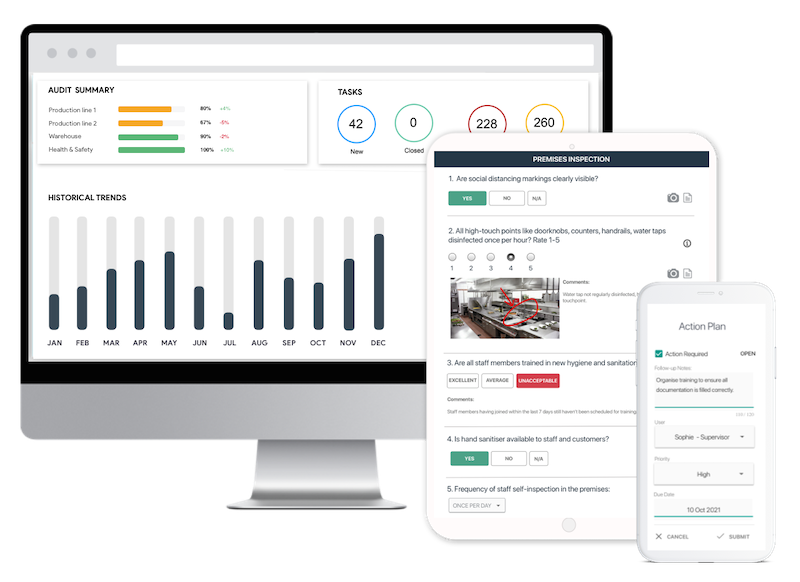
Save Time with Digital Inspections
- Easily capture & attach photos, directly on your mobile device.
- Instantly generate and share detailed reports after the inspection.
- Track corrective actions, view historical trends, improve standards.


What Is a Snagging Checklist?
A snagging checklist is a document that records all defects, incomplete work, and items that fail to meet the agreed specification at the end of a construction project. It is compiled during a final walkthrough by a site manager, quantity surveyor, or professional snagging surveyor, and used to request remedial work from the contractor or developer before handover and final payment.
The term “snagging” is standard in the UK construction industry and refers to the process of identifying these defects. In the United States, the equivalent is a punch list. The documents serve the same purpose; only the terminology differs.
Snagging list vs. snagging report
A snagging list is the working document completed during the inspection. A snagging report is the formal output issued to the contractor or developer following the walkthrough. The report includes all items from the snagging list, plus photographs, severity ratings, the responsible party for each defect, a target completion date, and current status.
New build snagging vs. renovation snagging
New build snagging is carried out at or near practical completion, before the buyer takes ownership. The focus is on finishing quality: paintwork, joinery, tiling, MEP commissioning, and external works.
The average new-build home has 157 snagging issues, and 95% of new-build buyers reported defects to their builder after moving in. A structured snagging checklist template and formal snagging report give buyers the documentation needed to get issues resolved under the developer’s warranty.
Renovation and fit-out snagging focuses on the quality of new work against the agreed specification. The inspector checks whether installed elements match the design drawings, whether services have been tested and commissioned, and whether the finish quality is consistent throughout.
What the data shows about new-build defects
New-build quality data makes the case for structured snagging hard to argue with:
- 157 defects per home on average (BuildScan data, reported by Property Reporter)
- 95% of new-build buyers reported problems to their builder after moving in (HBF National New Homes Customer Satisfaction Survey, 2024)
- Just 2% of new-build homes reach the market completely snag-free (HouseScan, via Mortgage Introducer)

Why Snagging Is Critical Before Project Handover
Snagging is the last line of defence before a client takes ownership of defects the contractor was responsible for fixing. A thorough inspection, backed by a formal snagging report, keeps the burden of remediation where it belongs and gives both sides a clear, evidenced starting point for closeout.
The cost of defects discovered after handover
Once practical completion is certified and handover takes place, the balance of responsibility shifts. Defects identified beforehand sit with the developer or contractor under the terms of the contract and any applicable warranty. Defects discovered after handover are far harder to attribute and more costly to pursue. A detailed snagging report with photo evidence protects both parties and gives the remediation process a clear, timestamped starting point.
On commercial projects, incomplete MEP commissioning, fire safety deficiencies, and substandard finishes are the most common handover-stage issues. All three carry cost and liability implications if left undocumented.
Why documented snagging protects contractors too
Structured snagging protects contractors as much as clients. Clear, timestamped records of what was inspected, what passed, and what was flagged reduce the risk of spurious post-handover claims. Formal snagging reports produced by a digital tool like GoAudits carry a full audit trail covering inspector, date, photos, and status, making them far more defensible than handwritten notes or spreadsheet lists.
👉 Case Study: How Woodside Homes uses GoAudits to manage construction quality control across new build sites
When Should a Snagging Inspection Be Carried Out?
The timing of a snagging inspection depends on the project type, but the general rule is: before the client takes ownership and before the final payment is released.
New Build Residential
For new build homes, the snagging inspection should take place after the developer issues a practical completion notice but before legal completion, where possible. This gives the buyer the strongest position to request repairs before the contract closes.
If the developer does not allow access before legal completion, the inspection should happen as soon as possible after the keys are handed over, while the two-year warranty period is still active and trades are still on site nearby.
Commercial Construction
On commercial projects, snagging typically begins at or just before the practical completion date. The best practice is to run a rolling construction snag list throughout the final stages of the build rather than waiting for a single end-of-project walkthrough.
This approach keeps defect volumes manageable at closeout, keeps subcontractors accountable while they are still on site, and reduces the risk of a prolonged snagging period delaying the certificate of practical completion.
Renovation and Fit-out Projects
For renovation and fit-out projects, the snagging inspection should be timed to coincide with the practical completion of each trade package, with a final whole-property walkthrough before sign-off. Checking each trade’s work before the next one covers it over (for example, checking floor screed before floor finishes go down) prevents defects from being hidden and makes remediation far cheaper.
Read the construction handover guide for a full breakdown of what documentation you need at practical completion and how to manage the sign-off process.
👉 GoAudits Tasks & Workflows: The GoAudits tasks and workflows feature lets you assign each snag to the responsible trade the moment it is logged, set deadlines, and track closure without chasing emails or separate spreadsheets.
What Does a Snagging List Template Include?
A well-structured snagging checklist template is organised by area or room, so inspectors can work through the property systematically and avoid missing items. For commercial projects with multiple subcontractors, a trade-organised format may be more appropriate, making it easier to assign defects to the right discipline.
A thorough snagging list should cover eight areas:
- Walls, ceilings, and floors – Paintwork, plasterwork, skirting boards, floor coverings, and whether ceilings sit level. These are high-visibility items that the client will notice immediately.
- Windows and doors – Operation, draught seals, locks, handles, glazing quality, and frame condition. Check every unit individually; do not rely on a sample.
- Fixtures and fittings – Light switches, sockets, light fittings, and whether all circuits are live and correctly labelled at the consumer unit.
- Kitchen – Surfaces, cupboard doors and drawers, integrated appliances, sink and taps, tiling, grouting, and extraction. One of the most defect-prone areas on new builds.
- Bathrooms and WCs – Sanitary ware condition, tile and grout quality, mastic seals around baths and showers, and confirmation that all plumbing connections are leak-free.
- Mechanical, electrical, and plumbing (MEP) – Boiler operation, radiators, hot water delivery, drainage flows, and consumer unit labelling. MEP defects are the most costly to fix after handover, so check them first.
- Exterior – Brickwork, render, guttering, drainage, driveways, paths, fencing, and roof condition where safely accessible. External snags are often left until last and easy to overlook.
- Defect classification and sign-off – Severity rating for each snag (cosmetic, functional, or structural/compliance), the responsible trade or subcontractor, target completion date, and space for client or architect sign-off. This section drives the remediation and payment process.
Each item on the template should capture the defect description, its exact location, at least one annotated photograph, and the action required. That information feeds directly into the snagging report once the walkthrough is complete.
👉 GoAudits Instant Reports feature turns a completed snagging walkthrough into a formatted PDF snagging report automatically. No manual write-up, no formatting time, ready to send to the developer or contractor the moment the inspection ends.
How GoAudits Replaces Your Paper Snagging Template
GoAudits is a snagging app that gives site managers, quality inspectors, and project managers a mobile platform to run walkthroughs and produce professional snagging reports across residential and commercial projects.
- Customisable snagging checklists: build templates by room, trade, or area; add severity ratings and custom fields to match your project scope
- Photo capture with annotations: attach multiple photos to each snag directly from your phone, mark up defects, and keep a timestamped audit trail
- Instant snagging reports: generate a branded PDF snagging report the moment the inspection is complete, without any manual formatting
- Task assignment on site: assign each snag to the responsible subcontractor or trade as you go, with automatic notifications so nothing sits unactioned
- Re-inspection tracking: follow up on open snags in a single tap; the platform tracks which defects are open, in progress, or closed across every project
Frequently Asked Questions
What is a snagging list template?
A snagging list template is a pre-structured checklist used to record defects and incomplete work in a building before handover. It organises inspection items by area (walls, windows, fixtures, MEP systems, exterior) so inspectors can work through a property systematically and produce a consistent, comparable record across projects. Digital snagging report templates let inspectors capture photos on a mobile device and generate a formal snagging report at the end.
What is the difference between a snagging list and a snagging report?
A snagging list is the working document completed during the inspection. A snagging report is the formal document issued to the contractor or developer after the inspection, requesting that defects be rectified. The report includes all items from the snagging list plus photos, severity ratings, responsible parties, and completion deadlines. According to BSRIA BG 78/2021, the snagging report should be issued to the client following practical completion.
How many snags does the average new build have?
According to BuildScan, the average new-build home has 157 snagging issues, up from 80 in 2005, a 96% increase over two decades. The Home Builders Federation’s 2024 National New Homes Customer Satisfaction Survey found that 95% of new-build buyers reported problems to their builder after moving in. A structured snagging checklist template and formal snagging report give buyers the documentation needed to get defects addressed under the developer’s warranty.
Can I use a snagging list template for commercial projects?
Yes. The same snagging list structure applies to commercial projects, with additional sections for MEP commissioning, fire safety systems, access control, and compliance documentation. Commercial snagging checklists are often organised by trade or building system rather than room by room. The resulting snagging report forms part of the formal handover pack alongside O&M manuals, test certificates, and as-built drawings.
What format should a snagging report be in?
A snagging report should include a unique reference number for each defect, its location, a description, photo evidence, a severity rating, the responsible party, a target completion date, and current status. A summary section covering the project name, inspection date, inspector details, and total snag count should appear at the top. Most contractors and developers accept PDF format. GoAudits generates this snag report format automatically at the end of each inspection.

Other Popular Snagging List Templates:

Digitize your Site Inspections
- Easily perform audits anywhere on the site using a mobile device, even offline
- Attach photos to document issues or prove compliance
- Assign tasks, set deadlines and track progress - all within a single app
- Analyze data from audits to identify trends, pinpoint recurring issues, and assess compliance levels.