In healthcare, even the smallest mistake can have serious consequences. So, what about the incidents and accidents that almost happened –– the ones that could have harmed a patient but were prevented just in time? These are known as ‘near misses’, and while they don’t result in harm, they offer valuable insights into potential risks within the system. Near misses in healthcare reveal gaps in processes that might otherwise go unnoticed until a real error occurs.
This blog will explore how healthcare professionals have a great opportunity to strengthen patient safety and create a culture that prioritizes learning over blame by paying attention to these close calls.
- Understanding Near Miss Events in Healthcare
- Importance of Reporting Near Misses in Healthcare
- Types & Examples of a Near Miss in Healthcare Settings
- Simplify Near Miss Incident Reporting with GoAudits
- Ensure Safety with Free Care Audit Checklists
- How to Prevent & Report Near Misses in Healthcare Facilities
- FAQs
Understanding Near Miss Events in Healthcare
In healthcare, a ‘near miss’ refers to an event that could have led to patient harm but was averted before any injury occurred. These incidents serve as critical opportunities for healthcare systems to identify vulnerabilities and implement preventive measures, enhancing patient safety.
Common Causes of Near Misses
- Overcrowding and Staffing Issues: High patient volumes and insufficient staffing can overwhelm healthcare providers, increasing the likelihood of errors. Inadequate nurse-to-patient ratios, for instance, have been linked to higher rates of patient mortality and nurse burnout.
- Lack of Standard Procedures: The absence of standardized protocols can lead to inconsistent practices, resulting in errors.
- Communication Breakdowns: Failures in communication, such as unclear instructions or misinterpretation of information, can lead to near misses. In fact, inadequate communication has been identified as a root cause of serious adverse events in hospitals.
- Patient Identification Errors: Mistakes in verifying patient identity can result in treatments or medications being prepared for the wrong individual. Double-checking patient IDs often prevents these errors from reaching the patient.
- Documentation Mistakes: Incomplete medical records or delayed documentation can create confusion between healthcare teams, increasing the likelihood of near miss incidents.
Adverse Events vs Near Misses in Healthcare
While a near miss event in healthcare involves an incident that could have caused harm but was prevented in time, an adverse event occurs when a patient is actually harmed due to a medical error or system failure.
| Near Miss | Adverse Event |
| No patient harm occurs | Patient harm occurs |
| The error reaches the patient | Error reaches the patient |
| Serves as an early warning signal | Requires treatment or intervention |
Understanding this difference helps healthcare organizations treat near miss incidents in hospitals as valuable learning opportunities rather than minor mistakes.

Importance of Reporting Near Misses in Healthcare
Reporting near misses is vital for improving patient safety in hospitals, nursing homes, and other healthcare settings. Key benefits include:
- Identifies potential hazards before they cause harm.
- Reveals system weaknesses and supports better training and processes.
- Encourages transparent reporting without fear of blame.
- Promotes teamwork in identifying causes and solutions.
- Helps organizations analyze trends and focus on high-risk areas.
- Involving staff increases commitment to safety initiatives.
- Focuses on fixing systems rather than blaming individuals.
- Prevents adverse events and potential malpractice costs.
- Each report helps stop similar incidents from happening again.
- Demonstrates a strong commitment to patient safety and transparency.
Types & Examples of a Near Miss in Healthcare Settings
Below are common types of near misses in healthcare, along with illustrative examples:
1. Medication-Related Near Misses
These occur when errors in prescribing, dispensing, or administering medications are caught before reaching the patient.
Example: A nurse notices that a prescribed medication dosage exceeds the standard limit and consults the physician, who corrects the order, preventing a potential overdose.
2. Surgical and Procedure-Related Near Misses
These involve mistakes during surgeries or medical procedures that are identified and rectified before causing harm.
Example: A surgical team realizes just before incision that the patient is prepped for surgery on the wrong site, prompting a verification that averts the error.
3. Diagnostic Errors
Near misses in diagnostics happen when an incorrect or delayed diagnosis is corrected in time to avoid adverse outcomes.
Example: A radiologist initially misses a hairline fracture on an X-ray, but catches the oversight during a secondary review, ensuring the patient receives appropriate treatment.
4. Patient Care Near Misses
These involve lapses in routine patient care that are intercepted before affecting the patient.
Example: A patient is almost administered food despite being scheduled for surgery requiring fasting. A nurse double-checks the schedule and withholds the meal, preventing complications.
5. Communication Failures
Near misses due to miscommunication among healthcare providers or between providers and patients.
Example: A lab result indicating a critical condition is initially miscommunicated, but a follow-up call clarifies the correct information, leading to timely patient intervention.
6. Equipment Failures
These occur when medical equipment malfunctions or is used incorrectly, but the issue is detected before causing harm.
Example: A nurse discovers that a defibrillator is not functioning during a routine check and arranges for its repair, ensuring it’s operational when needed.
7. Environmental Hazards
Near misses arising from unsafe conditions within the healthcare environment.
Example: A spill in a hospital corridor is promptly cleaned up before anyone slips, preventing potential injuries.
8. Maternal Health Near Misses in Obstetric Care
These involve situations where pregnant or postpartum women experience severe complications that could have resulted in serious harm or death, but did not.
Example: A woman undergoing a cesarean section experiences unexpected heavy bleeding due to a uterine rupture. The surgical team quickly identifies the issue and performs an emergency hysterectomy, successfully controlling the bleeding and saving the patient’s life.
👉 Free Resources
→ Medication Audit 1
→ Medication Audit 2
→ Surgical Site SSI Prevention Bundle Checklist
→ Patient Care Checklist
→ Patient Fall Risk Assessment
→ Patient Satisfaction Survey Template
→ Laboratory Equipment Checklist
→ Medical Equipment Maintenance Checklist
→ Biomedical Equipment Maintenance Checklist
→ Nursing Home Safety Checklist
Examples of Near Misses in Hospital Settings
- A radiologist identifies a potential mislabeling of imaging results before they are reported, ensuring the correct patient receives the appropriate diagnosis.
- A lab technician catches a sample labeling error, preventing incorrect test results from being assigned to a patient.
Near Miss Examples in Nursing Homes
- A nurse double-checks a medication order and discovers a potential allergy interaction, preventing an adverse reaction.
- Before administering treatment, a nurse realizes that two patients with similar names are on the same ward and ensures correct identification to prevent errors.
- A nurse enters a patient’s room and notices that the bed rails are lowered, and the patient is attempting to stand up unassisted despite being at high risk for falls. The nurse quickly intervenes, assisting the patient back into bed. Additional fall prevention measures are implemented after the incident is reported to prevent future incidents.
Simplify Near Miss Incident Reporting with GoAudits
GoAudits healthcare compliance software is an all-in-one platform for inspection, audits, and compliance. Tailored for different healthcare settings, including hospitals, nursing homes, care homes, etc., it can help you simplify and streamline the process of near miss incident reporting.
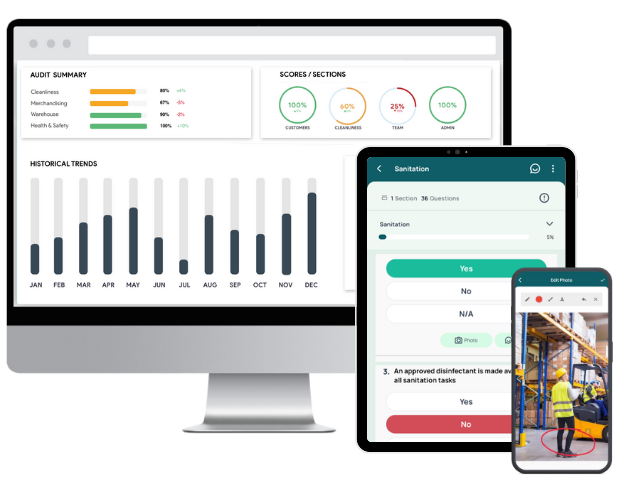
- Conduct inspections up to 5 times faster, with an intuitive mobile app, available on the web, Android, and iOS, and operational both online and offline.
- Generate detailed, professional reports immediately after inspections. These reports can be customized to reflect your organization’s branding and are automatically populated with essential data, including photos, timestamps, and geolocation, facilitating prompt sharing and review.
- Assign corrective actions directly during inspections, specifying responsible team members, priorities, and due dates.
- Set up workflows and rules for approvals, tasks, report distribution, and reminders to involve the right people at the right time.
- Gain comprehensive insights into your operations and audit scores with interactive dashboards that display audit scores, historical trends, and areas needing improvement.
Ensure Safety with Free Care Audit Checklists
GoAudits offers a range of medical audit checklists for different healthcare settings. You can sign up for free and start using these checklists or customize them to meet your unique needs.
- Near Miss Incident Report
- Maintenance, Health & Safety
- Monthly Fire Safety Inspection
- Workplace Safety Audit Checklist
- Nursing Home Safety Checklist
- Home Safety Assessment for the Elderly
- Care Home Safety Checklist
- Home Health Care Worker Safety Checklist

How to Prevent & Report Near Misses in Healthcare Facilities
Preventing and reporting near misses in healthcare facilities are essential steps for improving patient safety and reducing the risk of adverse events. Below are key strategies healthcare facilities can use to both reduce the occurrence of near misses and ensure they are properly reported when they occur.
1. Establish a Culture of Safety
Creating a safety-focused culture encourages healthcare professionals to speak openly about mistakes and near misses. A non-punitive environment ensures staff feel comfortable reporting incidents without fear of blame or disciplinary action.
2. Enhance Communication
Effective communication among healthcare professionals plays a crucial role in preventing errors. Clear handoff procedures, interdisciplinary collaboration, and standardized communication methods help reduce misunderstandings that could lead to near miss events.
3. Continuous Training and Education
Ongoing training ensures healthcare providers remain updated on safety protocols, best practices, and emerging healthcare risks. Simulation exercises, competency assessments, and continuing education programs help staff develop the skills needed to identify and respond to potential errors before they affect patients.
4. Identify and Document Near Miss Incidents
When a near miss occurs, healthcare staff should promptly recognize and document the event. Important details such as the time, location, individuals involved, and circumstances surrounding the incident should be recorded accurately. Proper documentation ensures the incident can be analyzed and addressed effectively.
5. Implement Incident Reporting Systems
Healthcare facilities should provide easy-to-use and confidential reporting systems that allow staff to submit near miss reports quickly. Anonymous reporting options can further encourage participation and transparency. A reporting system also helps organizations collect data that can reveal patterns and recurring safety risks.
6. Conduct Root Cause Analysis (RCA)
After a near miss is reported, safety teams should conduct a root cause analysis to identify the underlying causes of the incident. Root cause analysis examines system failures, workflow issues, or human factors that contributed to the event. The insights gained from RCA help healthcare organizations develop targeted solutions to prevent similar incidents in the future.
7. Conduct Regular Audits and Safety Reviews
Regular audits and reviews of clinical processes and outcomes help identify potential safety hazards. Incident reporting software like GoAudits can enable healthcare facilities to perform internal audits up to 5 times faster and implement corrective actions promptly.
8. Recognize and Reward Reporting
Acknowledging and rewarding staff for reporting near misses fosters a proactive approach to patient safety. Recognition programs can motivate employees to remain vigilant and engaged in safety initiatives.
9. Engage in Continuous Monitoring and Feedback
Regularly reviewing reported near misses and providing feedback to healthcare teams promotes continuous learning and system improvement. It helps in adapting strategies to emerging challenges in patient safety.
FAQs
Healthcare facilities track near miss incidents using digital reporting systems that capture incident details, identify patterns, and trigger corrective actions. Platforms like GoAudits allow teams to log incidents quickly, assign follow-up actions, and monitor safety trends across departments in real time.
Hospitals reduce near miss events by improving communication protocols, strengthening patient identification procedures, conducting routine safety audits, and encouraging non-punitive reporting. Using structured inspection and reporting platforms such as GoAudits can also help teams detect risks early and implement preventive actions faster.
Near miss incidents are sometimes underreported because staff may view them as minor or fear blame. Establishing a supportive reporting culture and using simple reporting tools can encourage staff to document incidents and help organizations learn from potential safety risks.
Healthcare organizations analyze near miss data to identify recurring risks and process failures. By reviewing trends and implementing corrective actions through incident reporting software like GoAudits, hospitals can strengthen procedures and prevent future adverse events before they occur.
Nurses prevent near miss events in healthcare by verifying medications and allergies, confirming patient identity, closely monitoring high-risk patients, and promptly reporting safety concerns. These actions help detect potential errors early, strengthen safety processes, and significantly reduce the risk of adverse events.