GoAuditsGoAudits
  • FEATURES
    • Mobile Auditing
    • Instant Reports
    • Tasks & Workflows
    • Smart Dashboards
    • Template Library
  • INDUSTRIES
    • Hospitality
    • Food & Beverage
    • Health & Safety
    • Retail
    • Healthcare
    • Manufacturing
    • Facility Management
    • Construction & Real Estate
    • Logistics
    • Other Use Cases
      • Mystery Shopping
      • Cleaning Inspections
      • Property Inspections
      • Public Sector
      • Covid-19 Checks
      • Supplier Audits
      • Care Home Audits
      • Parking Inspections
      • Gym Inspections
      • Packaging Manufacturing Inspection App
  • PRICING
  • CUSTOMERS
  • ABOUT
    • Call us
      • 🇺🇸   +1 509-653-5051
      • 🇬🇧   +44 20 3966 7776
      • 🇦🇺   +61 2 7908 2658
      • 🇸🇬   +65 3174 6529
      • 🇦🇪   +971-48-718601
    • Schedule a Demo
    • News & Blog
    • Help Center
    • About Us
  • LOGIN
GET A DEMO

Supplier Audit Checklist: Free Templates for Quality & Compliance

Template Library >  Manufacturing Inspections > Supplier Audit Checklist

Supplier audit checklists for quality managers, procurement teams, and auditors. Evaluate vendor QMS compliance, production quality, and regulatory standards with ready-to-use templates. Available in PDF or in-app.
SIGN UP TO USE TEMPLATE

What These Supplier Audit Checklists Cover

A supplier audit checklist is a structured template used to evaluate a vendor’s quality management system, production processes, and regulatory compliance during an on-site or remote audit. These templates help you standardize how you assess suppliers, so every auditor covers the same ground and every vendor is measured against the same criteria.

Our supplier audit checklist templates cover areas including:

  • Quality management systems: ISO 9001 alignment, document control, internal audit processes
  • Production quality: incoming material checks, in-process controls, final inspection
  • Vendor compliance: procurement procedures, sub-tier supplier management, traceability
  • Health, safety, and environment: PPE, hazardous materials, facility compliance

With the GoAudits Supplier Audit App, you can:

  • Eliminate paperwork: conduct efficient digital audits
  • Customize this template or easily create your own
  • Save time with instant reports and assign corrective actions
Goaudits checklist report example
Sample Supplier Evalution Checklist Report

With the GoAudits Inspection App, you can:

  • Eliminate paperwork: conduct efficient digital audits, add photos from mobile device
  • Customize this template or easily create your own
  • Save time with instant reports & assign corrective actions
SIGN UP TO USE
PREVIEW FULL TEMPLATE
General Factory Information

1. Factory Name:


Photo Comment


Upload

2. Factory Address:


Photo Comment


Upload

3. Factory Representative (Title):


Photo Comment


Upload

4. Production Area / Blocks / Floors:


Photo Comment


Upload

5. Number of Staff / Production Workers:


Photo Comment


Upload

6. Years in Operation:


Photo Comment


Upload

7. Major Types of Produced:


Photo Comment


Upload

8. Major Production Facilities:


Photo Comment


Upload

Summary Of Major Audit Findings

1. Finding 1


Photo Comment


Upload

2. Finding 2


Photo Comment


Upload

3. Finding 3


Photo Comment


Upload

Conclusion

1. Overall Rating


Photo Comment


Upload

Quality Management System And Document Control

1. Has the factory established a quality management system covering applicable elements of the ISO9000 standards?


Photo Comment


Upload

2. Is the quality management system certified by third party?


Photo Comment


Upload

3. Is the quality functional head of the factory independent of other production functions?


Photo Comment


Upload

4. Are quality records available, complete and update?


Photo Comment


Upload

5. Are internal audits planned and documented?


Photo Comment


Upload

6. Are internal audits conducted to verify compliance and effectiveness of the quality management system? Are corrective actions proposed and implemented?


Photo Comment


Upload

7. Does factory management periodically review the quality management systems and set targets for continuous improvement?


Photo Comment


Upload

8. Are quality trends reported and analyzed to find out the root cause of major quality problems? Are corrective and prevention actions proposed and implemented?


Photo Comment


Upload

9. Has the factory established a document control procedure for quality related manuals, procedures, work instructions, specifications, records, etc.?


Photo Comment


Upload

Procurement

1. Is there a dedicated department for procurement of raw materials and other indirect materials used for production?


Photo Comment


Upload

2. Is there a complete bill of materials (BOM) or part list available for each item manufactured?


Photo Comment


Upload

3. Are approved specifications available for raw materials and components purchased?


Photo Comment


Upload

4. Does the raw material or component specification include requirements of applicable safety standards and client’s specific requirements?


Photo Comment


Upload

5. Are purchasing staff aware of the safety and client specific requirements in the specifications and able to communicate them effectively to the suppliers?


Photo Comment


Upload

6. Does the purchase order or sales contract always include or make reference to the relevant requirements of the approved raw material specifications?


Photo Comment


Upload

7. Is there procedure for approving suppliers and tracking of their quality performance? Are supplier evaluation records available and complete?


Photo Comment


Upload

8. Is an approved supplier list maintained? Are purchase orders placed on the approved suppliers only?


Photo Comment


Upload

Management Of Supplier/Subcontractors

1. Has the factory established procedure and criteria for selection and approval of subcontractors? Is an approved supplier/subcontractor list maintained?


Photo Comment


Upload

2. Has the factory communicated with the supplier/subcontractors all product requirements to ensure they understand and are capable of meeting them?


Photo Comment


Upload

3. Are supplier/subcontractors provided with update safety and quality specifications, approval samples and other relevant quality information for production?


Photo Comment


Upload

4. Where materials and components are consigned for subcontractors, are they inspected or verified for acceptance before delivery? Are inspection and testing records maintained?


Photo Comment


Upload

5. Where materials and components are sourced by subcontractors, are inspection and testing reports provided by the supplier/subcontractors for showing conformance to the quality and safety specifications?


Photo Comment


Upload

6. Is procedure established for incoming inspection and testing of production lots from supplier/subcontractors? Are inspection and testing records maintained?


Photo Comment


Upload

7. Are supplier/subcontractors evaluated regularly for performance and quality? Are evaluation records available and complete?


Photo Comment


Upload

Incoming Quality Control

1. Has the factory established incoming inspection procedures to assure all incoming materials conform to approval samples or specifications?


Photo Comment


Upload

2. Is there a segregated area with sufficient space, appropriate equipment and environment to perform incoming inspection?


Photo Comment


Upload

3. Are inspection criteria clearly defined and available for immediate reference? Do they match with the approved specifications?


Photo Comment


Upload

4. Where it is not possible to verify the quality and safety characteristics by inspection, is there procedure for suppliers to provide testing documents for lot acceptance?


Photo Comment


Upload

5. Are procedure and criteria established for raw materials and components exempt for incoming inspection check? Can the exemption criteria adequately safeguard the final product safety?


Photo Comment


Upload

6. Are incoming QC staff properly trained and knowledgeable to perform incoming inspection?


Photo Comment


Upload

7. Are inspection records available, complete and with conclusion of acceptance or reject?


Photo Comment


Upload

8. Are records maintained for incoming raw material lot verification, disposition or return to suppliers?


Photo Comment


Upload

9. Are incoming materials come from the approved suppliers only?


Photo Comment


Upload

In-Process Quality Control

1. Is there a manufacturing flowchart or production plan for each product?


Photo Comment


Upload

2. Are all materials, production operations and check points included?


Photo Comment


Upload

3. Are work instructions posted for each operation and approval samples available in the work area for immediate reference by the production workers and QC staff?


Photo Comment


Upload

4. Are machine settings and parameters defined and checked regularly by in-process QC? Are check records available?


Photo Comment


Upload

5. Are critical manufacturing processes defined with proper operation set-up and quality control measures to ensure output quality?


Photo Comment


Upload

6. Does the factory have effective measures in the assembly lines for preventing missing part defects in the finished products?


Photo Comment


Upload

7. Does the factory have a procedure for controlling the use of regrind materials in the injection molding process?


Photo Comment


Upload

8. Are in-process inspection criteria clearly defined and available for immediate reference by in-process QC? Are they matched with the safety standards and client’s requirements?


Photo Comment


Upload

9. Are in-process QC staff properly trained and knowledgeable to perform incoming inspection?


Photo Comment


Upload

10. Are in-process inspection records available, complete, traceable to the production lot, and with conclusion of acceptance or reject?


Photo Comment


Upload

Final Quality Control

1. Are inspection procedures established for final inspection?


Photo Comment


Upload

2. Do the acceptance criteria match with applicable safety standards and clients’ requirements?


Photo Comment


Upload

3. Are approval samples and product specifications available for immediate reference by QC?


Photo Comment


Upload

4. Is the sampling plan used for final inspection adequate for assurance of product quality and safety?


Photo Comment


Upload

5. Are inspection staff properly trained and knowledgeable to perform final inspection?


Photo Comment


Upload

6. Are final inspection records available, complete, traceable to production lots, and with conclusion of acceptance or reject?


Photo Comment


Upload

Control Of Measurement And Test Equipment

1. Has the organization a documented procedure to ensure control, calibration and maintenance of inspection, measuring and test equipment? (This includes gages and test equipment used by operators, inspectors, testers, tool-room, maintenance and labs.)


Photo Comment


Upload

2. Are testing and measuring equipment able to meet the precision and tolerances of the intended testing methods?


Photo Comment


Upload

3. Are calibration program with schedule setup for regular checking of testing equipment? Are labels showing the calibration status available on each piece of testing equipment?


Photo Comment


Upload

4. Are equipment calibrated either in-house with proper calibration procedures or through outside competent bodies? Are calibration reports maintained and traceable to national or international standards?


Photo Comment


Upload

5. Are laboratory staff properly trained and knowledgeable to perform testing and calibration?


Photo Comment


Upload

Control Of Non-Conforming Products

1. Are procedures established for control of non-conforming raw material lots?


Photo Comment


Upload

2. Are rejected lots or lots pending for rework, sorting or scrap clearly identified with labels or tags and segregated from other accepted lots?


Photo Comment


Upload

3. Are designated areas assigned for holding non-conforming lots and clearly marked?


Photo Comment


Upload

4. Is there procedure for releasing non-conforming lots for production or shipment? Are the releasing criteria do not compromise product safety in any way?


Photo Comment


Upload

5. Are records for releasing of non-conforming lots for production or shipment maintained and with proper approval?


Photo Comment


Upload

6. Is there procedure established for rework and sorting of rejected lots to ensure they are properly re-inspected or verified by testing for acceptance?


Photo Comment


Upload

7. Are records available for scrap with quantity matching with the rejected lot?


Photo Comment


Upload

8. Is there control to prevent any defect parts or process throw-offs from being mixed or returned to the normal production output?


Photo Comment


Upload

Lot Identification And Traceability

1. Are lot numbers or batch codes assigned and clearly marked on raw material, semi-finished, and finished product lots for traceability purpose?


Photo Comment


Upload

2. Are production records maintained for identifying all raw materials for each lot?


Photo Comment


Upload

Production Facilities And Equipment

1. Does the factory possess production facilities for the major manufacturing processes of the type of toys to produce?


Photo Comment


Upload

2. Are machines and equipment in good working conditions and well maintained? Are they capable and properly set up to perform the operation as intended?


Photo Comment


Upload

3. Are appropriate tools and fixtures available to perform the operation as intended?


Photo Comment


Upload

4. Are production machines and equipment periodically maintained, calibrated and checked for proper running?


Photo Comment


Upload

5. Does the factory have a maintenance team with adequate skills and technical knowledge? Are they ready for any emergency repair works at the production areas?


Photo Comment


Upload

6. Has the factory established a preventive maintenance program for all major production facilities?


Photo Comment


Upload

7. Are machines, equipment or work stations under maintenance properly identified for work stoppage?


Photo Comment


Upload

Plant Layout, Housekeeping And Workflow

1. Are manufacturing processes and production lines set up with adequate space, proper layout and workflow as necessary?


Photo Comment


Upload

2. Is the work areas clean, tidy and free of excessive dust and odors?


Photo Comment


Upload

3. Is there adequate space for aisles, transportation of materials, and storage areas available in the production areas?


Photo Comment


Upload

4. Is there adequate lighting and ventilation in production areas? Is temperature and environment control exercised in areas where special process requirements are necessary?


Photo Comment


Upload

5. Are designated containers available in the work areas to store defect parts or throw-offs from the workstations or production lines?


Photo Comment


Upload

6. Are raw materials, semi-finished goods and packed cartons stored away from walls and off the floor on pallets?


Photo Comment


Upload

7. Are designated areas for employees’ eating, drinking or smoking well identified and separated from production areas?


Photo Comment


Upload

8. Are drinking cups, eating utensils or other personal belongings stored properly and away from the work areas?


Photo Comment


Upload

Material Handling And Storage

1. Are materials warehouses enclosed, clean and tidy?


Photo Comment


Upload

2. Are materials stored in appropriate containers with adequate protection from damage or contamination?


Photo Comment


Upload

3. Are materials properly marked with identification labels in the storage areas?


Photo Comment


Upload

4. Are materials in the warehouse in good conditions without damage, dirt, rust or other defects?


Photo Comment


Upload

5. Are hazardous chemicals stored separately in a dangerous goods warehouse with restricted access?


Photo Comment


Upload

6. Has shelf-life been established for degradable raw materials such as paints and chemicals? Are expiry dates marked on the containers?


Photo Comment


Upload

7. Does the factory adopt First-In-First-Out (FIFO) policy for raw materials consumption?


Photo Comment


Upload

8. Are proper inventory records maintained?


Photo Comment


Upload

Material Safety Control

1. Supplier should establish appropriate procedures to the control limit of toxic substances to meet LC’s requirement.


Photo Comment


Upload

2. The supplier shall define and implement procedures to ensure all materials meet all quality and safety requirements.


Photo Comment


Upload

3. Whether the supplier signed the DOC to ensure all materials conform to LC’s requirements.


Photo Comment


Upload

4. Has Certificate of Compliance from Supplier for every raw material Batch


Photo Comment


Upload

5. Every batch of raw material must have a passing 3rd party test report


Photo Comment


Upload

6. Is there a specified area for quarantining incoming?


Photo Comment


Upload

7. Every paint batch must have individual batch code


Photo Comment


Upload

8. Follow receiving quality control procedures including; inspection, labeling, recording and verifying


Photo Comment


Upload

9. Follow batch paint segregation procedures including; identification and labeling


Photo Comment


Upload

10. Only passed material allowed in factory production floor


Photo Comment


Upload

11. Follow record keeping procedures including traceability and filing for 5 years minimum


Photo Comment


Upload

General Factory Information

1. Factory Name:


Photo Comment


Upload

2. Factory Address:


Photo Comment


Upload

3. Factory Representative (Title):


Photo Comment


Upload

4. Production Area / Blocks / Floors:


Photo Comment


Upload

5. Number of Staff / Production Workers:


Photo Comment


Upload

6. Years in Operation:


Photo Comment


Upload

7. Major Types of Produced:


Photo Comment


Upload

8. Major Production Facilities:


Photo Comment


Upload

Summary Of Major Audit Findings

1. Finding 1


Photo Comment


Upload

2. Finding 2


Photo Comment


Upload

3. Finding 3


Photo Comment


Upload

Conclusion

1. Overall Rating


Photo Comment


Upload

Quality Management System And Document Control

1. Has the factory established a quality management system covering applicable elements of the ISO9000 standards?


Photo Comment


Upload

2. Is the quality management system certified by third party?


Photo Comment


Upload

3. Is the quality functional head of the factory independent of other production functions?


Photo Comment


Upload

4. Are quality records available, complete and update?


Photo Comment


Upload

5. Are internal audits planned and documented?


Photo Comment


Upload

6. Are internal audits conducted to verify compliance and effectiveness of the quality management system? Are corrective actions proposed and implemented?


Photo Comment


Upload

7. Does factory management periodically review the quality management systems and set targets for continuous improvement?


Photo Comment


Upload

8. Are quality trends reported and analyzed to find out the root cause of major quality problems? Are corrective and prevention actions proposed and implemented?


Photo Comment


Upload

9. Has the factory established a document control procedure for quality related manuals, procedures, work instructions, specifications, records, etc.?


Photo Comment


Upload

Procurement

1. Is there a dedicated department for procurement of raw materials and other indirect materials used for production?


Photo Comment


Upload

2. Is there a complete bill of materials (BOM) or part list available for each item manufactured?


Photo Comment


Upload

3. Are approved specifications available for raw materials and components purchased?


Photo Comment


Upload

4. Does the raw material or component specification include requirements of applicable safety standards and client’s specific requirements?


Photo Comment


Upload

5. Are purchasing staff aware of the safety and client specific requirements in the specifications and able to communicate them effectively to the suppliers?


Photo Comment


Upload

6. Does the purchase order or sales contract always include or make reference to the relevant requirements of the approved raw material specifications?


Photo Comment


Upload

7. Is there procedure for approving suppliers and tracking of their quality performance? Are supplier evaluation records available and complete?


Photo Comment


Upload

8. Is an approved supplier list maintained? Are purchase orders placed on the approved suppliers only?


Photo Comment


Upload

Management Of Supplier/Subcontractors

1. Has the factory established procedure and criteria for selection and approval of subcontractors? Is an approved supplier/subcontractor list maintained?


Photo Comment


Upload

2. Has the factory communicated with the supplier/subcontractors all product requirements to ensure they understand and are capable of meeting them?


Photo Comment


Upload

3. Are supplier/subcontractors provided with update safety and quality specifications, approval samples and other relevant quality information for production?


Photo Comment


Upload

4. Where materials and components are consigned for subcontractors, are they inspected or verified for acceptance before delivery? Are inspection and testing records maintained?


Photo Comment


Upload

5. Where materials and components are sourced by subcontractors, are inspection and testing reports provided by the supplier/subcontractors for showing conformance to the quality and safety specifications?


Photo Comment


Upload

6. Is procedure established for incoming inspection and testing of production lots from supplier/subcontractors? Are inspection and testing records maintained?


Photo Comment


Upload

7. Are supplier/subcontractors evaluated regularly for performance and quality? Are evaluation records available and complete?


Photo Comment


Upload

Incoming Quality Control

1. Has the factory established incoming inspection procedures to assure all incoming materials conform to approval samples or specifications?


Photo Comment


Upload

2. Is there a segregated area with sufficient space, appropriate equipment and environment to perform incoming inspection?


Photo Comment


Upload

3. Are inspection criteria clearly defined and available for immediate reference? Do they match with the approved specifications?


Photo Comment


Upload

4. Where it is not possible to verify the quality and safety characteristics by inspection, is there procedure for suppliers to provide testing documents for lot acceptance?


Photo Comment


Upload

5. Are procedure and criteria established for raw materials and components exempt for incoming inspection check? Can the exemption criteria adequately safeguard the final product safety?


Photo Comment


Upload

6. Are incoming QC staff properly trained and knowledgeable to perform incoming inspection?


Photo Comment


Upload

7. Are inspection records available, complete and with conclusion of acceptance or reject?


Photo Comment


Upload

8. Are records maintained for incoming raw material lot verification, disposition or return to suppliers?


Photo Comment


Upload

9. Are incoming materials come from the approved suppliers only?


Photo Comment


Upload

In-Process Quality Control

1. Is there a manufacturing flowchart or production plan for each product?


Photo Comment


Upload

2. Are all materials, production operations and check points included?


Photo Comment


Upload

3. Are work instructions posted for each operation and approval samples available in the work area for immediate reference by the production workers and QC staff?


Photo Comment


Upload

4. Are machine settings and parameters defined and checked regularly by in-process QC? Are check records available?


Photo Comment


Upload

5. Are critical manufacturing processes defined with proper operation set-up and quality control measures to ensure output quality?


Photo Comment


Upload

6. Does the factory have effective measures in the assembly lines for preventing missing part defects in the finished products?


Photo Comment


Upload

7. Does the factory have a procedure for controlling the use of regrind materials in the injection molding process?


Photo Comment


Upload

8. Are in-process inspection criteria clearly defined and available for immediate reference by in-process QC? Are they matched with the safety standards and client’s requirements?


Photo Comment


Upload

9. Are in-process QC staff properly trained and knowledgeable to perform incoming inspection?


Photo Comment


Upload

10. Are in-process inspection records available, complete, traceable to the production lot, and with conclusion of acceptance or reject?


Photo Comment


Upload

Final Quality Control

1. Are inspection procedures established for final inspection?


Photo Comment


Upload

2. Do the acceptance criteria match with applicable safety standards and clients’ requirements?


Photo Comment


Upload

3. Are approval samples and product specifications available for immediate reference by QC?


Photo Comment


Upload

4. Is the sampling plan used for final inspection adequate for assurance of product quality and safety?


Photo Comment


Upload

5. Are inspection staff properly trained and knowledgeable to perform final inspection?


Photo Comment


Upload

6. Are final inspection records available, complete, traceable to production lots, and with conclusion of acceptance or reject?


Photo Comment


Upload

Control Of Measurement And Test Equipment

1. Has the organization a documented procedure to ensure control, calibration and maintenance of inspection, measuring and test equipment? (This includes gages and test equipment used by operators, inspectors, testers, tool-room, maintenance and labs.)


Photo Comment


Upload

2. Are testing and measuring equipment able to meet the precision and tolerances of the intended testing methods?


Photo Comment


Upload

3. Are calibration program with schedule setup for regular checking of testing equipment? Are labels showing the calibration status available on each piece of testing equipment?


Photo Comment


Upload

4. Are equipment calibrated either in-house with proper calibration procedures or through outside competent bodies? Are calibration reports maintained and traceable to national or international standards?


Photo Comment


Upload

5. Are laboratory staff properly trained and knowledgeable to perform testing and calibration?


Photo Comment


Upload

Control Of Non-Conforming Products

1. Are procedures established for control of non-conforming raw material lots?


Photo Comment


Upload

2. Are rejected lots or lots pending for rework, sorting or scrap clearly identified with labels or tags and segregated from other accepted lots?


Photo Comment


Upload

3. Are designated areas assigned for holding non-conforming lots and clearly marked?


Photo Comment


Upload

4. Is there procedure for releasing non-conforming lots for production or shipment? Are the releasing criteria do not compromise product safety in any way?


Photo Comment


Upload

5. Are records for releasing of non-conforming lots for production or shipment maintained and with proper approval?


Photo Comment


Upload

6. Is there procedure established for rework and sorting of rejected lots to ensure they are properly re-inspected or verified by testing for acceptance?


Photo Comment


Upload

7. Are records available for scrap with quantity matching with the rejected lot?


Photo Comment


Upload

8. Is there control to prevent any defect parts or process throw-offs from being mixed or returned to the normal production output?


Photo Comment


Upload

Lot Identification And Traceability

1. Are lot numbers or batch codes assigned and clearly marked on raw material, semi-finished, and finished product lots for traceability purpose?


Photo Comment


Upload

2. Are production records maintained for identifying all raw materials for each lot?


Photo Comment


Upload

Production Facilities And Equipment

1. Does the factory possess production facilities for the major manufacturing processes of the type of toys to produce?


Photo Comment


Upload

2. Are machines and equipment in good working conditions and well maintained? Are they capable and properly set up to perform the operation as intended?


Photo Comment


Upload

3. Are appropriate tools and fixtures available to perform the operation as intended?


Photo Comment


Upload

4. Are production machines and equipment periodically maintained, calibrated and checked for proper running?


Photo Comment


Upload

5. Does the factory have a maintenance team with adequate skills and technical knowledge? Are they ready for any emergency repair works at the production areas?


Photo Comment


Upload

6. Has the factory established a preventive maintenance program for all major production facilities?


Photo Comment


Upload

7. Are machines, equipment or work stations under maintenance properly identified for work stoppage?


Photo Comment


Upload

Plant Layout, Housekeeping And Workflow

1. Are manufacturing processes and production lines set up with adequate space, proper layout and workflow as necessary?


Photo Comment


Upload

2. Is the work areas clean, tidy and free of excessive dust and odors?


Photo Comment


Upload

3. Is there adequate space for aisles, transportation of materials, and storage areas available in the production areas?


Photo Comment


Upload

4. Is there adequate lighting and ventilation in production areas? Is temperature and environment control exercised in areas where special process requirements are necessary?


Photo Comment


Upload

5. Are designated containers available in the work areas to store defect parts or throw-offs from the workstations or production lines?


Photo Comment


Upload

6. Are raw materials, semi-finished goods and packed cartons stored away from walls and off the floor on pallets?


Photo Comment


Upload

7. Are designated areas for employees’ eating, drinking or smoking well identified and separated from production areas?


Photo Comment


Upload

8. Are drinking cups, eating utensils or other personal belongings stored properly and away from the work areas?


Photo Comment


Upload

Material Handling And Storage

1. Are materials warehouses enclosed, clean and tidy?


Photo Comment


Upload

2. Are materials stored in appropriate containers with adequate protection from damage or contamination?


Photo Comment


Upload

3. Are materials properly marked with identification labels in the storage areas?


Photo Comment


Upload

4. Are materials in the warehouse in good conditions without damage, dirt, rust or other defects?


Photo Comment


Upload

5. Are hazardous chemicals stored separately in a dangerous goods warehouse with restricted access?


Photo Comment


Upload

6. Has shelf-life been established for degradable raw materials such as paints and chemicals? Are expiry dates marked on the containers?


Photo Comment


Upload

7. Does the factory adopt First-In-First-Out (FIFO) policy for raw materials consumption?


Photo Comment


Upload

8. Are proper inventory records maintained?


Photo Comment


Upload

Material Safety Control

1. Supplier should establish appropriate procedures to the control limit of toxic substances to meet LC’s requirement.


Photo Comment


Upload

2. The supplier shall define and implement procedures to ensure all materials meet all quality and safety requirements.


Photo Comment


Upload

3. Whether the supplier signed the DOC to ensure all materials conform to LC’s requirements.


Photo Comment


Upload

4. Has Certificate of Compliance from Supplier for every raw material Batch


Photo Comment


Upload

5. Every batch of raw material must have a passing 3rd party test report


Photo Comment


Upload

6. Is there a specified area for quarantining incoming?


Photo Comment


Upload

7. Every paint batch must have individual batch code


Photo Comment


Upload

8. Follow receiving quality control procedures including; inspection, labeling, recording and verifying


Photo Comment


Upload

9. Follow batch paint segregation procedures including; identification and labeling


Photo Comment


Upload

10. Only passed material allowed in factory production floor


Photo Comment


Upload

11. Follow record keeping procedures including traceability and filing for 5 years minimum


Photo Comment


Upload

PREVIEW FULL TEMPLATE

Save Time with Digital Inspections

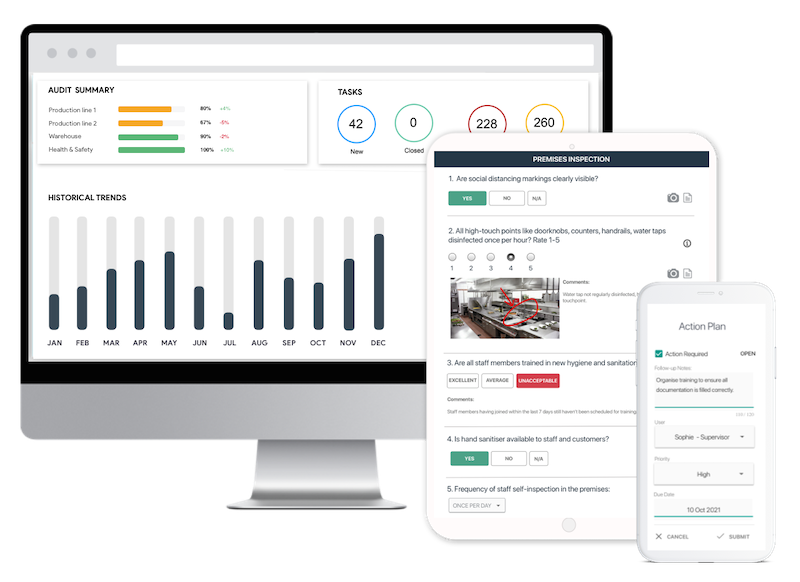
  • Easily capture & attach photos, directly on your mobile device.
  • Instantly generate and share detailed reports after the inspection.
  • Track corrective actions, view historical trends, improve standards.
GET A DEMO
START FREE TRIAL
GoAudits care app

What Is a Supplier Audit Checklist?

A supplier audit checklist is a standardized form that guides auditors through the evaluation of a supplier’s operations, quality systems, and compliance. It turns a subjective walkthrough into a structured, repeatable, and scoreable process.

Demand for these checklists is rising as companies diversify their sourcing. QIMA’s Q1 2026 supply chain barometer reported a 42% year-over-year increase in inspection and audit demand across Southeast Asia alone. More suppliers across more regions means more audits to manage, and that puts a premium on having a reliable, repeatable checklist.

The purpose of a supplier audit checklist is simple: give your team a consistent way to assess every supplier against defined standards. These checklists are a core component of broader supply chain compliance software programs. For a deeper look, see our guide to supplier quality management.

get started with inspection templates

Why Use a Supplier Audit Checklist Template?

Starting from a proven template means your team doesn’t need to build an audit form from scratch for every new supplier or standard. Here’s what a good template gives you:

Consistency across auditors and suppliers. When every auditor follows the same checklist, results are comparable. You can score Supplier A against Supplier B using the same criteria, which is hard to do with informal notes.

Documented evidence for ISO compliance. ISO 9001:2015 Clause 8.4 requires organizations to control externally provided processes, products, and services. A structured checklist creates the paper trail registrars expect during certification reviews.

Faster corrective action follow-up. A structured checklist links findings directly to specific audit areas. When a non-conformance shows up under “incoming material inspection,” the corrective action is targeted, not vague.

👉 Corrective Action Workflows: Assign audit findings to suppliers with deadlines, track resolution progress, and verify close-out, all within GoAudits.

Reduced audit preparation time. A vendor audit template with pre-built sections means your auditor can focus on reviewing supplier documentation before the visit, not designing the form. For teams auditing dozens of suppliers per year, this adds up. And with a tool like GoAudits, you can compare supplier scores across auditors and sites on a single inspection dashboard to spot patterns over time.

What Should a Vendor Audit Checklist Include?

A good supplier audit checklist covers seven core areas. The exact items vary by industry and standards, but these sections appear in most templates and form the backbone of any supplier audit checklist format.

Quality Management System (QMS) Checks

Start with the supplier’s quality management system. This section verifies whether the supplier has a documented QMS, whether it’s certified, and whether it’s actually being followed.

Key checklist items:

  • Is the QMS certified by a third party (ISO 9001 or equivalent)?
  • Are internal audits planned, conducted, and documented?
  • Does senior management review quality performance and set improvement targets?
  • Are quality records available, complete, and current?

Your checklist should probe beyond “do you have a QMS?” and ask “is it working?” Look for evidence of management reviews, trend analysis on quality data, and corrective actions from previous internal audits.

Procurement and Incoming Material Checks

This section evaluates how the supplier manages its own supply chain. Your product quality depends on what your supplier buys, so weak incoming controls at their end will show up as defects at yours.

Key checklist items:

  • Does the supplier maintain an approved supplier list for raw materials?
  • Are material specifications documented and referenced in purchase orders?
  • Is incoming inspection performed against approved specs, with lot acceptance/rejection records?
  • Do supplier evaluation records exist for sub-tier vendors?

A common gap: the supplier has specs on file but purchasing staff aren’t aware of client-specific requirements. Your checklist should test whether procurement communicates the right requirements to their own vendors.

Production and In-Process Quality Control Items

In-process controls are where defects get caught or missed. This section of the supplier quality audit checklist verifies that production is planned, monitored, and documented at each stage.

Key checklist items:

  • Are manufacturing flowcharts or production plans in place for each product?
  • Are work instructions posted and accessible at each workstation?
  • Are machine settings defined, monitored by QC, and recorded?
  • Do in-process inspections happen at defined checkpoints with documented acceptance criteria?

Pay attention to critical processes specifically. A checklist item asking “are critical processes defined with proper controls?” is more useful than a generic “is production monitored?”

👉 Case Study: How Nissin Foods achieves 96%+ GMP audit completion rates with GoAudits

Final Inspection and Testing Criteria

Final inspection is the last gate before product ships. Your checklist needs to verify it’s a real gate, not a formality.

Key checklist items:

  • Are final inspection procedures established with clear acceptance criteria?
  • Does the sampling plan align with applicable safety standards and client requirements?
  • Are QC staff trained and qualified?
  • Are inspection records complete, traceable to production lots, and conclusive (accept or reject)?

A weak sampling plan is one of the most common findings. If the supplier uses AQL levels that are too loose for your product risk, the checklist should flag that.

Equipment Calibration and Maintenance Items

If the measurement tools are off, every quality check built on them is unreliable. This section verifies the supplier’s calibration and maintenance program.

Key checklist items:

  • Is there a documented calibration procedure for all inspection and test equipment?
  • Are calibration labels current on each piece of equipment?
  • Is equipment precision adequate for the tolerances being measured?
  • Are calibration records traceable to national or international standards?

Don’t limit this to the QC lab. Calibration applies to gauges used by operators on the production floor, maintenance teams, and tool rooms. Your checklist should specify this scope.

Document Control and Traceability Requirements

Document control and traceability are required by ISO 9001 and most industry-specific standards. Without them, a product recall becomes impossible to scope.

Key checklist items:

  • Does the supplier have a document control procedure covering manuals, specs, and work instructions?
  • Can products be traced from raw material lot through to finished goods?
  • Is there a procedure for handling non-conforming products (quarantine, disposition, root cause)?

Test whether the system works in practice. Can the supplier demonstrate a mock trace during the audit? Are obsolete documents actually removed from the shop floor? Practical tests reveal more than a policy review.

Health, Safety, and Environmental Compliance Checks

Safety and environmental violations create legal and reputational risk for both the supplier and your organization.

Key checklist items:

  • Are PPE requirements defined and enforced?
  • Are emergency action plans posted and accessible?
  • Does hazardous material handling follow documented procedures?
  • Does the facility meet local environmental and labor regulations?

For industries with specific environmental requirements, extend this section to cover waste management, emissions, and sustainability certifications. Some organizations also add ethical sourcing and labor rights items, especially for suppliers in higher-risk regions.

👉 ISO Audit Checklists: Browse the full GoAudits library of ISO audit checklists covering 9001, 14001, and 45001 standards.

How to Use a Supplier Audit Checklist: 5 Steps

Having a good supplier audit template is only half the job. Here’s how to put it to work.

Step 1: Define the Audit Scope and Objectives

Decide what the checklist needs to cover before you arrive. Are you running a full QMS audit for a new supplier, or a focused re-audit of previous findings? A clear scope keeps the audit efficient and prevents scope creep.

Step 2: Customize the Checklist to Your Requirements

Adapt the template to your industry, standards, and contractual obligations. Whether you start from a vendor audit checklist template or build one from scratch, add scoring criteria that match how you evaluate suppliers:

  • Pass/fail for compliance-critical items
  • Weighted numeric scores for benchmarking
  • N/A for items that don’t apply

A vendor audit questionnaire with irrelevant sections wastes time and undermines auditor credibility.

Step 3: Conduct the Audit On-Site or Remotely

Work through the checklist sections systematically. Record evidence as you go: photos of non-conformances, names of documents reviewed, notes from staff interviews.

Don’t save documentation for later. Capture it in the moment while context is fresh.

Step 4: Score Findings and Classify Non-Conformances

Rate each section and calculate an overall supplier score. Classify findings into three categories:

  • Major non-conformance: requires corrective action before the supplier can be approved or continue shipping
  • Minor non-conformance: needs a fix within a defined timeframe
  • Observation: improvement opportunity, not a failure

Step 5: Generate the Report and Assign Corrective Actions

Share the audit report with the supplier promptly. Include:

  • Scores by section
  • Summary of findings with photo evidence
  • Assigned corrective actions with deadlines

Schedule a follow-up to verify that corrective actions have been implemented and are effective.

👉 Inspection Report Software: GoAudits auto-generates scored audit reports with photos, comments, and e-signatures the moment an audit is finished. Share directly with suppliers.

How to Choose the Right Vendor Audit Template for Your Industry

Different industries and standards call for different checklist structures. Picking the right supplier audit checklist format saves rework and ensures your audit covers what regulators and customers expect.

ISO 9001 audits are the most common starting point. A general supplier audit checklist aligned to Clause 8.4 covers QMS, document control, corrective actions, and management review. For manufacturing companies, the GoAudits ISO 9001 supplier audit checklist for manufacturing adds sections for process control, incoming material, and equipment calibration.

Food and beverage supplier audits add HACCP compliance, sanitation, allergen control, pest management, and product traceability. If you’re auditing food suppliers, our guide to HACCP checklists covers what your checklist needs to include. The GoAudits food supplier audit checklist is built for this purpose.

Manufacturing checklists emphasize production process controls, equipment maintenance, incoming inspection, and in-process quality. If your suppliers make components or raw materials, your checklist needs to go deeper on process capability than a generic template. For more on how to structure these, see our guide to manufacturing audits.

Medical devices and automotive have their own standards. ISO 13485 requires design controls and risk management. IATF 16949 adds layered process audits and PPAP requirements. Start with a general supplier audit checklist and add standard-specific sections.

Inspection Reporting Image CTA

Choosing the Right Format: PDF, Excel, or App

A supplier audit checklist PDF or vendor audit checklist PDF works for simple, one-off references. Supplier audit checklist Excel files add scoring and basic analysis but require manual handling. A digital audit app combines checklist structure with real-time data capture, automatic scoring, instant reports, and corrective action tracking.

For teams running audits across multiple suppliers, the app format pays for itself in time saved. Browse the full range of templates in the factory audit checklist library, where all templates are available free as PDF or in-app.

How GoAudits Helps With Supplier Audits

GoAudits gives quality and procurement teams a mobile platform to run structured supplier audits across their entire vendor base.

  • Conduct audits on-site or remotely using iOS or Android, even offline in facilities with poor connectivity
  • Customize any supplier audit checklist template to match your standards, or build your own from scratch with the drag-and-drop form builder
  • Auto-generate scored PDF reports with photos, comments, and e-signatures the moment an audit is complete
  • Assign corrective actions to suppliers with deadlines and track resolution through to verified close-out
  • Compare supplier scores and trends across your vendor base with dashboard analytics

GoAudits review 2025

FAQs

How often should you run a supplier audit checklist?

Most organizations audit critical suppliers annually and new suppliers before onboarding. High-risk or underperforming vendors may need quarterly reviews. ISO 9001 expects a risk-based approach, so frequency should reflect past performance and criticality of supply.

What is the difference between a supplier audit checklist and a vendor assessment checklist?

A supplier audit checklist focuses on on-site evaluation of processes, quality systems, and compliance. A vendor assessment checklist is broader, often covering financial stability, delivery performance, and commercial factors. Many organizations use both: a vendor assessment for screening, then a supplier audit checklist for detailed evaluation.

Can you use a supplier audit checklist for remote or desktop audits?

Yes. Remote audits use the same checklist structure but rely on document reviews, video calls, and supplier self-assessments instead of physical walkthroughs. Digital checklist tools make this easier because suppliers can upload evidence directly into the form.

What format works best for a supplier audit checklist: PDF, Excel, or app?

A supplier audit checklist PDF works for one-off references. Supplier audit checklist Excel adds scoring but requires manual handling. A mobile audit app combines checklist structure with real-time data capture, automatic scoring, and corrective action tracking, making it the strongest option for teams auditing multiple suppliers. GoAudits offers a 14-day free trial so you can test the difference before committing.

Other Popular Supplier Checklists:

Goaudits logo

Audit Supplier Checklist

Goaudits logo

Supplier Quality Audit

Goaudits logo

Vendor Quality Audit Checklist

Goaudits logo

ISO 9001:2015 Supplier Audit Checklist - Manufacturing

Goaudits logo

Supplier Self Assessment Form

Goaudits logo

Vendor Assessment Checklist - Food Industry

Goaudits logo

Food Supplier Audit Checklist

Goaudits logo

Supplier Audit Checklist for Food Industry

Goaudits logo

Packaging Material Vendor Audit Checklist

Goaudits logo

Supply Chain Audit Checklist

More Supplier Checklists

Digitize your Quality Inspections

  • Easily perform audits anywhere on the site using a mobile device, even offline
  • Attach photos to document issues or prove compliance
  • Assign tasks, set deadlines and track progress - all within a single app
  • Analyze data from audits to identify trends, pinpoint recurring issues, and assess compliance levels.
GET A DEMO
START FREE TRIAL
GoAudits care app
goaudits inspection app

US Office
2810 N Church St, DE 19802
+1 509-653-5051

UK & Europe Office
1 Brunel Way, London, SL1 1FQ
+44 20 3966 7776

Australia Office
+61 2 7908 2658

Singapore Office
+65 3174 6529

Middle East Office
+971-48-718601

USE CASES

  • Inspection Checklists
  • Safety Inspections
  • Quality Inspections
  • Cleaning Inspections
  • Other Inspections

  • GDPR Compliant

RESOURCES

  • Pricing
  • FAQ & Help Center
  • Blog & News
  • Book your demo

GET STARTED

download on app store
download on google play
Sign up from computer
© GoAudits. All Rights Reserved.