- Library
- Food & Hospitality
- Supplier Evaluation Checklist
Supplier Evaluation Checklist
110 questions in 16 sectionsInteractive preview: try the answers
Section 1 of 16 · 1 questionConclusion
Overall Rating
Section 2 of 16 · 8 questionsGeneral Factory Information
Factory Name:
Factory Address:
Factory Representative (Title):
Production Area / Blocks / Floors:
Number of Staff / Production Workers:
Years in Operation:
Major Types of Produced:
Major Production Facilities:
Section 3 of 16 · 3 questionsSummary Of Major Audit Findings
Finding 1
Finding 2
Finding 3
Section 4 of 16 · 9 questionsQuality Management System And Document Control
Has the factory established a quality management system covering applicable elements of the ISO9000 standards?
Is the quality management system certified by third party?
Is the quality functional head of the factory independent of other production functions?
Are quality records available, complete and update?
Are internal audits planned and documented?
Are internal audits conducted to verify compliance and effectiveness of the quality management system? Are corrective actions proposed and implemented?
Does factory management periodically review the quality management systems and set targets for continuous improvement?
Are quality trends reported and analyzed to find out the root cause of major quality problems? Are corrective and prevention actions proposed and implemented?
Has the factory established a document control procedure for quality related manuals, procedures, work instructions, specifications, records, etc.?
Section 5 of 16 · 8 questionsProcurement
Is there a dedicated department for procurement of raw materials and other indirect materials used for production?
Is there a complete bill of materials (BOM) or part list available for each item manufactured?
Are approved specifications available for raw materials and components purchased?
Does the raw material or component specification include requirements of applicable safety standards and client’s specific requirements?
Are purchasing staff aware of the safety and client specific requirements in the specifications and able to communicate them effectively to the suppliers?
Does the purchase order or sales contract always include or make reference to the relevant requirements of the approved raw material specifications?
Is there procedure for approving suppliers and tracking of their quality performance? Are supplier evaluation records available and complete?
Is an approved supplier list maintained? Are purchase orders placed on the approved suppliers only?
Section 6 of 16 · 7 questionsManagement Of Supplier/Subcontractors
Has the factory established procedure and criteria for selection and approval of subcontractors? Is an approved supplier/subcontractor list maintained?
Has the factory communicated with the supplier/subcontractors all product requirements to ensure they understand and are capable of meeting them?
Are supplier/subcontractors provided with update safety and quality specifications, approval samples and other relevant quality information for production?
Where materials and components are consigned for subcontractors, are they inspected or verified for acceptance before delivery? Are inspection and testing records maintained?
Where materials and components are sourced by subcontractors, are inspection and testing reports provided by the supplier/subcontractors for showing conformance to the quality and safety specifications?
Is procedure established for incoming inspection and testing of production lots from supplier/subcontractors? Are inspection and testing records maintained?
Are supplier/subcontractors evaluated regularly for performance and quality? Are evaluation records available and complete?
Section 7 of 16 · 9 questionsIncoming Quality Control
Has the factory established incoming inspection procedures to assure all incoming materials conform to approval samples or specifications?
Is there a segregated area with sufficient space, appropriate equipment and environment to perform incoming inspection?
Are inspection criteria clearly defined and available for immediate reference? Do they match with the approved specifications?
Where it is not possible to verify the quality and safety characteristics by inspection, is there procedure for suppliers to provide testing documents for lot acceptance?
Are procedure and criteria established for raw materials and components exempt for incoming inspection check? Can the exemption criteria adequately safeguard the final product safety?
Are incoming QC staff properly trained and knowledgeable to perform incoming inspection?
Are inspection records available, complete and with conclusion of acceptance or reject?
Are records maintained for incoming raw material lot verification, disposition or return to suppliers?
Are incoming materials come from the approved suppliers only?
Section 8 of 16 · 10 questionsIn-Process Quality Control
Is there a manufacturing flowchart or production plan for each product?
Are all materials, production operations and check points included?
Are work instructions posted for each operation and approval samples available in the work area for immediate reference by the production workers and QC staff?
Are machine settings and parameters defined and checked regularly by in-process QC? Are check records available?
Are critical manufacturing processes defined with proper operation set-up and quality control measures to ensure output quality?
Does the factory have effective measures in the assembly lines for preventing missing part defects in the finished products?
Does the factory have a procedure for controlling the use of regrind materials in the injection molding process?
Are in-process inspection criteria clearly defined and available for immediate reference by in-process QC? Are they matched with the safety standards and client’s requirements?
Are in-process QC staff properly trained and knowledgeable to perform incoming inspection?
Are in-process inspection records available, complete, traceable to the production lot, and with conclusion of acceptance or reject?
Section 9 of 16 · 6 questionsFinal Quality Control
Are inspection procedures established for final inspection?
Do the acceptance criteria match with applicable safety standards and clients’ requirements?
Are approval samples and product specifications available for immediate reference by QC?
Is the sampling plan used for final inspection adequate for assurance of product quality and safety?
Are inspection staff properly trained and knowledgeable to perform final inspection?
Are final inspection records available, complete, traceable to production lots, and with conclusion of acceptance or reject?
Section 10 of 16 · 5 questionsControl Of Measurement And Test Equipment
Has the organization a documented procedure to ensure control, calibration and maintenance of inspection, measuring and test equipment? (This includes gages and test equipment used by operators, inspectors, testers, tool-room, maintenance and labs.)
Are testing and measuring equipment able to meet the precision and tolerances of the intended testing methods?
Are calibration program with schedule setup for regular checking of testing equipment? Are labels showing the calibration status available on each piece of testing equipment?
Are equipment calibrated either in-house with proper calibration procedures or through outside competent bodies? Are calibration reports maintained and traceable to national or international standards?
Are laboratory staff properly trained and knowledgeable to perform testing and calibration?
Section 11 of 16 · 8 questionsControl Of Non-Conforming Products
Are procedures established for control of non-conforming raw material lots?
Are rejected lots or lots pending for rework, sorting or scrap clearly identified with labels or tags and segregated from other accepted lots?
Are designated areas assigned for holding non-conforming lots and clearly marked?
Is there procedure for releasing non-conforming lots for production or shipment? Are the releasing criteria do not compromise product safety in any way?
Are records for releasing of non-conforming lots for production or shipment maintained and with proper approval?
Is there procedure established for rework and sorting of rejected lots to ensure they are properly re-inspected or verified by testing for acceptance?
Are records available for scrap with quantity matching with the rejected lot?
Is there control to prevent any defect parts or process throw-offs from being mixed or returned to the normal production output?
Section 12 of 16 · 2 questionsLot Identification And Traceability
Are lot numbers or batch codes assigned and clearly marked on raw material, semi-finished, and finished product lots for traceability purpose?
Are production records maintained for identifying all raw materials for each lot?
Section 13 of 16 · 7 questionsProduction Facilities And Equipment
Does the factory possess production facilities for the major manufacturing processes of the type of toys to produce?
Are machines and equipment in good working conditions and well maintained? Are they capable and properly set up to perform the operation as intended?
Are appropriate tools and fixtures available to perform the operation as intended?
Are production machines and equipment periodically maintained, calibrated and checked for proper running?
Does the factory have a maintenance team with adequate skills and technical knowledge? Are they ready for any emergency repair works at the production areas?
Has the factory established a preventive maintenance program for all major production facilities?
Are machines, equipment or work stations under maintenance properly identified for work stoppage?
Section 14 of 16 · 8 questionsPlant Layout, Housekeeping And Workflow
Are manufacturing processes and production lines set up with adequate space, proper layout and workflow as necessary?
Is the work areas clean, tidy and free of excessive dust and odors?
Is there adequate space for aisles, transportation of materials, and storage areas available in the production areas?
Is there adequate lighting and ventilation in production areas? Is temperature and environment control exercised in areas where special process requirements are necessary?
Are designated containers available in the work areas to store defect parts or throw-offs from the workstations or production lines?
Are raw materials, semi-finished goods and packed cartons stored away from walls and off the floor on pallets?
Are designated areas for employees’ eating, drinking or smoking well identified and separated from production areas?
Are drinking cups, eating utensils or other personal belongings stored properly and away from the work areas?
Section 15 of 16 · 8 questionsMaterial Handling And Storage
Are materials warehouses enclosed, clean and tidy?
Are materials stored in appropriate containers with adequate protection from damage or contamination?
Are materials properly marked with identification labels in the storage areas?
Are materials in the warehouse in good conditions without damage, dirt, rust or other defects?
Are hazardous chemicals stored separately in a dangerous goods warehouse with restricted access?
Has shelf-life been established for degradable raw materials such as paints and chemicals? Are expiry dates marked on the containers?
Does the factory adopt First-In-First-Out (FIFO) policy for raw materials consumption?
Are proper inventory records maintained?
Section 16 of 16 · 11 questionsMaterial Safety Control
Supplier should establish appropriate procedures to the control limit of toxic substances to meet LC’s requirement.
Checklist by GoAudits. This checklist is an example: we do not guarantee compliance with the laws applicable to your territory or industry. Seek professional advice to adapt it to your workplace or jurisdiction.
Free PDF
Download the Supplier Evaluation Checklist
By downloading this checklist you agree to the GoAudits privacy policy and terms of service.
NEW! Try generating a custom checklist with our free AI tool:
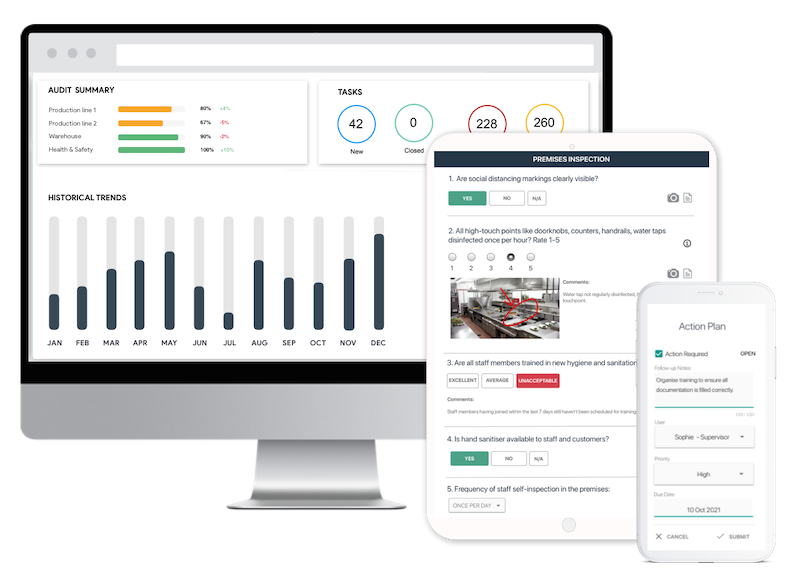
Easy inspection app for your digital checklists
- Conduct inspections anytime, anywhere - even offline
- Capture photos as proof of compliance or areas needing attention
- Instantly generate and share detailed reports after the inspections
- Assign & track follow-up tasks, view historical trends on a centralized dashboard