

PUWER Checklist Templates
Template Library > Safety Inspections > PUWER Checklist Templates
Simplify Equipment Safety Inspections With PUWER Inspection Checklists
PUWER (Provision and Use of Work Equipment Regulations) inspections are essential for ensuring that work equipment is safe, properly maintained, and suitable for its intended use. A PUWER checklist helps standardise inspections, prevent equipment-related accidents, and ensure compliance with regulatory requirements.
With a PUWER inspection template, you can:
- Verify that equipment is safe, maintained, and fit for purpose.
- Standardise equipment inspections across sites and teams.
- Keep audit-ready compliance records.
- Show new supervisors exactly what to check on each machine.

With the GoAudits Safety Inspection App, you can:
- Eliminate paperwork: conduct efficient digital audits, add photos from mobile device
- Customize this template or easily create your own
- Save time with instant reports & assign corrective actions
Reg. 10 – Conformity With EC Requirements (New Equipment Only)
Reg. 11 – Dangerous Parts Of Machinery
Reg. 12 – Protection Against Specified Hazards
1. So far as is reasonably practicable, have the risks associated with the following hazards been adequately controlled by means other than PPE, information, instruction, training, or supervision? The hazards to be considered are: An article or substance being ejected from the equipment Rupture or disintegration of parts Fire or overheating Unintended discharge of article or gas, dust, liquid, vapor, or other substance Unintended explosion of equipment or article or substance used or stored in the equipment
|
Photo
Comment
|
Reg. 13 – High Or Very Low Temperature
Reg. 4 – Suitability Of Work Equipment
Reg. 5 – Maintenance
Reg. 6 – Inspection
Reg. 7 – Specific Risks And Restrictions On Use
Reg. 8/9 – Information, Instruction And Training
Reg. 14 – Starting Controls
Reg. 15 – Stop Controls
Reg. 16 – Emergency Stop Controls
Reg. 17 – Controls
Reg. 18 – Control Systems
Reg. 19 – Isolation
Reg. 20 – Stability
Reg. 21 – Lighting
Reg. 22 – Maintenance Operations
Reg. 23 – Markings
Reg. 10 – Conformity With EC Requirements (New Equipment Only)
Reg. 11 – Dangerous Parts Of Machinery
Reg. 12 – Protection Against Specified Hazards
1. So far as is reasonably practicable, have the risks associated with the following hazards been adequately controlled by means other than PPE, information, instruction, training, or supervision? The hazards to be considered are: An article or substance being ejected from the equipment Rupture or disintegration of parts Fire or overheating Unintended discharge of article or gas, dust, liquid, vapor, or other substance Unintended explosion of equipment or article or substance used or stored in the equipment
|
Photo
Comment
|
Reg. 13 – High Or Very Low Temperature
Reg. 4 – Suitability Of Work Equipment
Reg. 5 – Maintenance
Reg. 6 – Inspection
Reg. 7 – Specific Risks And Restrictions On Use
Reg. 8/9 – Information, Instruction And Training
Reg. 14 – Starting Controls
Reg. 15 – Stop Controls
Reg. 16 – Emergency Stop Controls
Reg. 17 – Controls
Reg. 18 – Control Systems
Reg. 19 – Isolation
Reg. 20 – Stability
Reg. 21 – Lighting
Reg. 22 – Maintenance Operations
Reg. 23 – Markings
Save Time with Digital Inspections
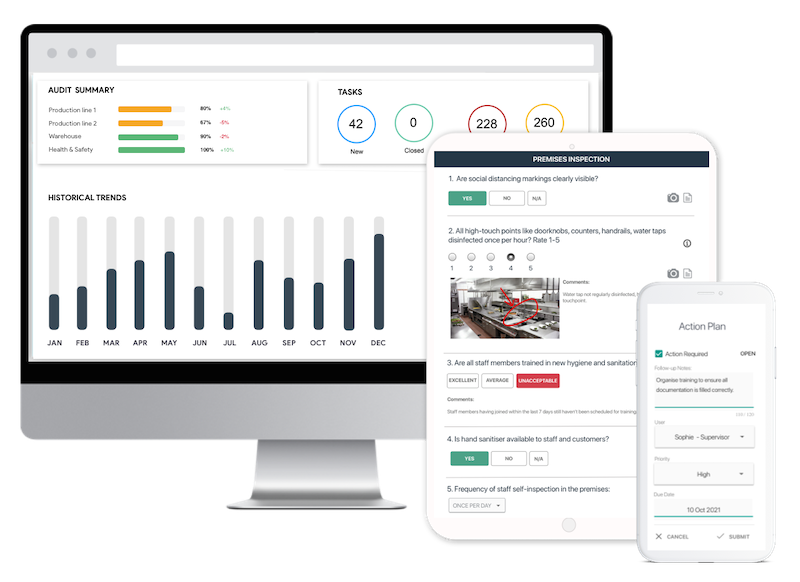
- Easily capture & attach photos, directly on your mobile device.
- Instantly generate and share detailed reports after the inspection.
- Track corrective actions, view historical trends, improve standards.


Why PUWER Inspections Are Essential for Workplace Safety
PUWER inspections are a legal duty, and they also keep equipment running. Employers must make sure all work equipment is properly inspected, maintained and safe to use. According to the HSE guidance on equipment inspections, inspections must be carried out by competent people at suitable intervals, set through risk assessment.
- Protects workers: Ensures equipment is safe, reducing accidents and injuries.
- Minimises downtime: Regular checks prevent equipment breakdowns, improve performance and extend equipment lifespan.
- Reduces costs & legal risks: Avoids penalties, incidents, and reputational damage.
- Builds trust: proactive rather than reactive risk management gives employees confidence in the tools and machinery they use.
By embedding PUWER inspections into routine operations, organisations not only comply with the law but also create a stronger safety culture and more reliable workplace.
👉 Case study: Discover how Miniclipper Logistics embedded safety checks seamlessly into their daily operations, saving paperwork time and increasing inspection compliance.
What is a PUWER Inspection Checklist?
A PUWER checklist is a structured guide used to inspect work equipment and make sure it complies with the Provision and Use of Work Equipment Regulations (PUWER). Following a step-by-step PUWER form enables employers, safety officers, and inspectors to verify that machinery and tools are safe, suitable for use, properly maintained, and operated by trained personnel.
The checklist typically covers aspects such as equipment condition, guarding and safety controls, inspection frequency, and operator competence. By following it, organisations can reduce risks linked to faulty or unsafe equipment.
Using a PUWER checklist template helps:
- Confirm that machinery and equipment meet legal safety requirements.
- Identify hazards before they cause accidents or breakdowns.
- Provide documented evidence of compliance for audits and inspections.

PUWER Checklist, Risk Assessment or Register: Which Do You Need?
A PUWER checklist records whether one piece of equipment meets each regulation on the day it is inspected. A PUWER risk assessment and a PUWER register do different jobs, and most sites need all three.
PUWER Risk Assessment
A PUWER risk assessment identifies the hazards a piece of equipment creates and the controls needed to manage them. The duty to assess risk comes from Regulation 3 of the Management of Health and Safety at Work Regulations 1999, and PUWER relies on that assessment to decide what to inspect and how often.
Many teams use the regulation-by-regulation checklist above as their PUWER assessment template. They add a risk rating and control notes to each item that fails.
PUWER Register
A PUWER register is a list of every item of work equipment on site, with its ID, location, inspection interval, last inspection date and next due date. PUWER does not require a register by name, but a register is the simplest way to show that no equipment has missed an inspection.
Keep the register alongside your equipment maintenance log so Regulation 5 maintenance and Regulation 6 inspections sit side by side.
PUWER Inspection Records and Certificates
PUWER does not require an inspection certificate. It requires the result of each inspection to be recorded and kept at least until the next inspection of that equipment.
When equipment leaves your site, or arrives from a hire company, it should carry physical evidence of its last inspection, such as a report, tag or label.
What Should a PUWER Checklist Include?
A PUWER compliance checklist, sometimes called a PUWER inspection form, should cover eight areas that map to the regulations.
Equipment Suitability and Purpose (Reg 4)
Every piece of equipment must be appropriate for the job it’s used for. This section confirms that the right tool or machine is being used in the right way.
Installation and Positioning (Regs 6 and 20)
Improper setup or placement of equipment can create serious hazards. This part of the checklist ensures equipment is safely installed, positioned and stabilised.
Safety Devices and Guards (Regs 11 and 16)
Machines and tools must have the right protective measures in place to keep operators safe. This section ensures guards and emergency stops are present and functional.
Maintenance and Inspection Records (Regs 5 and 6)
Regular maintenance keeps equipment reliable and reduces breakdowns or accidents. This section checks that servicing routines are followed and that inspection results are recorded.
Training and Competence of Operators (Regs 8 and 9)
Even safe equipment can be dangerous if handled by untrained staff. This part verifies that users are capable of operating machinery safely.
Safe Operating Controls (Regs 14 to 18)
Equipment must have controls that are easy to access, clearly marked and safe to use. Clearly labelled switches, start and stop controls, emergency shut-offs and safeguards against accidental activation help ensure safe use of machinery.
Electrical, Mechanical and Other Hazards (Regs 12 and 19)
A PUWER checklist should assess any risks posed by the equipment’s operation, including moving parts, ejected material, hot surfaces and isolation from energy sources.
Compliance with Regulations and Standards (Reg 10)
The checklist must confirm that all equipment meets legal and industry requirements. Areas to verify include UKCA or CE marking on new machinery, adherence to the manufacturer’s safety guidelines, and records of risk assessments.

Who Should Carry Out PUWER Inspections and How Often?
PUWER inspections need to be carried out by competent individuals who understand both the equipment and the safety standards that apply. The frequency of these inspections depends on how the equipment is used, the risks involved, and legal requirements.
Roles Responsible for PUWER Inspections
PUWER requires inspections to be done by someone with the right knowledge, training, and experience to identify hazards and assess equipment safety:
- Operators & supervisors: Quick pre-use safety checks to spot obvious defects or unsafe conditions
- Health & safety officers: Routine scheduled inspections and record-keeping
- External specialists: For complex or high-risk machinery
Frequency of PUWER Inspections
PUWER sets no fixed inspection frequency. Regulation 6 requires inspection at suitable intervals, decided through risk assessment and the manufacturer’s recommendations.
- Routine inspections: weekly or monthly checks of guards, safety devices and wear on equipment exposed to conditions that cause deterioration.
- Periodic inspections: more detailed examinations every few months or longer, for items such as ladders, harnesses and portable electrical equipment.
- Event-driven inspections: after installation, relocation, major modification, suspected damage or a significant change in use, before the equipment returns to service.
Lifting equipment and pressure systems also have separate statutory examination duties under LOLER and PSSR.
Which Other Regulations Should a PUWER Checklist Cross-Reference?
A PUWER checklist covers all work equipment, but some equipment also falls under a specific regulation with its own inspection duty. Flag these items on your checklist so the specialist inspection is scheduled alongside the PUWER one.
PUWER sits under the Health and Safety at Work etc. Act 1974, within the wider health and safety standards every site must meet. The regulations that most often overlap with a PUWER checklist are:
- LOLER 1998: cranes, hoists, forklift trucks and passenger lifts need thorough examination by a competent person, usually every 6 or 12 months depending on the equipment.
- PSSR 2000: boilers, air compressors and other pressure systems need a written scheme of examination.
- Electricity at Work Regulations 1989: electrical equipment must be maintained to prevent danger, which overlaps with PUWER’s isolation and control checks.
- Supply of Machinery (Safety) Regulations 2008: these place design duties on manufacturers, so your checklist should record the UKCA or CE marking and declaration of conformity for new machinery.
Equipment used in explosive atmospheres (DSEAR), with hazardous substances (COSHH), for work at height or as PPE has its own requirements too. Keep those checks in dedicated checklists and cross-reference them, rather than folding them into your PUWER checklist.

How GoAudits Helps with PUWER Inspections
For safety managers running PUWER inspection checklist templates across several sites, GoAudits turns each inspection into a record you can find, act on and show to an inspector.
- Schedule recurring PUWER inspections by site and equipment type, so weekly checks and periodic inspections don’t slip.
- Attach timestamped photos to any failed item, so a missing guard or damaged cable is on record with the date it was found.
- Assign corrective actions with an owner and a due date, and track each one until it is closed.
- Customise the template for each type of equipment, from abrasive wheels to lift trucks, and add LOLER or PSSR references where they apply.
- Complete inspections offline in plant rooms and yards with no signal, then sync results when the device reconnects.
Our guide to equipment inspection software covers what to look for when comparing tools.
FAQs
What Does PUWER Stand For?
PUWER stands for the Provision and Use of Work Equipment Regulations 1998. The regulations apply across Great Britain and cover any machinery, tool, appliance or installation used at work. Northern Ireland has its own equivalent, the Provision and Use of Work Equipment Regulations (Northern Ireland) 1999.
Is There a Free PUWER Checklist Template in PDF, Word or Excel?
The PUWER checklist on this page is free to preview and download as a PDF, or to use in the GoAudits app. Some teams print it as a PUWER check sheet or inspection sheet for the shop floor. Running it in the app adds timestamps, photo evidence against each item and corrective actions with owners, and completed inspection data can be exported to Excel for your own records.
Does HSE Publish an Official PUWER Checklist?
HSE does not set a mandatory PUWER checklist format. Its guidance says checklists can help, but they should be tailored to each type of equipment and cover only what is necessary for safety. If you are looking for an HSE PUWER checklist, use HSE’s Approved Code of Practice, L22, as the reference and adapt any template to your own equipment.
Do Simple Pre-Use Checks Need to Be Recorded Under PUWER?
Records are not normally required for the simplest pre-use checks, such as looking over a power tool’s cable before use. Formal inspections under Regulation 6 do need a record. Many sites still log pre-use checks for higher-risk equipment, because a record shows the check actually happened.

Other Popular Safety Checklists:

Digitize your Safety Inspections
- Easily perform audits anywhere on the site using a mobile device, even offline
- Attach photos to document issues or prove compliance
- Assign tasks, set deadlines and track progress - all within a single app
- Analyze data from audits to identify trends, pinpoint recurring issues, and assess compliance levels.