

Fitness Center Cleaning Checklists & Templates
Template Library > Fitness Centers & Spa > Fitness Center Cleaning Checklists
Maintain Hygiene Standards with Ready-to-Use Fitness Center Cleaning Checklists
The gym cleaning checklists turn cleaning from a vague routine into a documented, repeatable process. Use them to keep equipment sanitized between sessions, prevent slip hazards on training floors, and pass health inspections without scrambling.
Key components of a working fitness center cleaning checklist:
- Sanitize touchpoints on every cardio machine, strength station, and free weight set between uses.
- Disinfect mats, benches, and yoga props after each session, not at the end of the day.
- Keep locker rooms, showers, and restrooms cleaned and restocked to a documented daily schedule.
- Check rubber matting and gym floors for spills, sweat residue, and trip hazards before opening.
- Document every clean with a signed, dated record ready for auditor and insurer review.

With the GoAudits Gym & Fitness Inspection App, you can:
- Eliminate paperwork: run digital cleaning audits across every zone
- Customize this template or create your own from scratch
- Save time with instant reports and assigned corrective actions
Welcoming Entrances
Inviting Workout Areas
Clean, Safe Equipment
Fresh Gym Mats
Well-kept Floors
Sanitary Locker Rooms
Sparkling Showers
Disinfected Bathrooms
Clean Office Spaces
Welcoming Entrances
Inviting Workout Areas
Clean, Safe Equipment
Fresh Gym Mats
Well-kept Floors
Sanitary Locker Rooms
Sparkling Showers
Disinfected Bathrooms
Clean Office Spaces
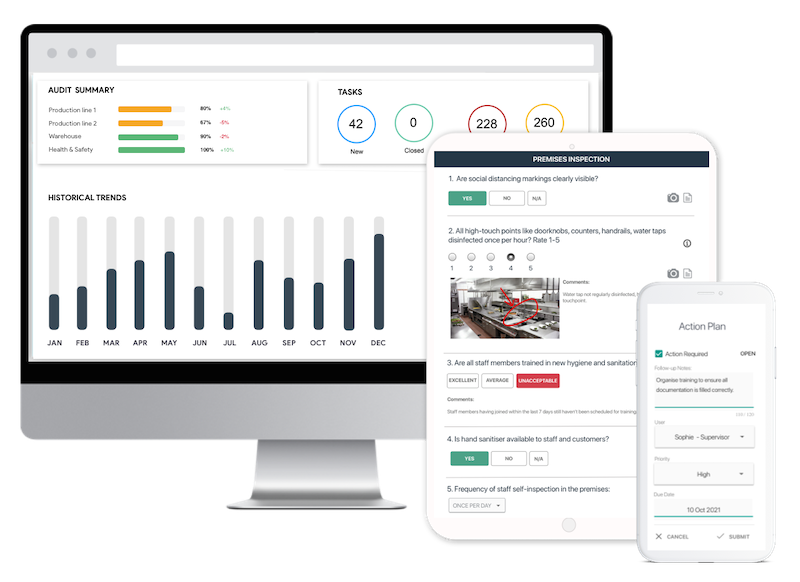
Save Time with Digital Inspections
- Easily capture & attach photos, directly on your mobile device.
- Instantly generate and share detailed reports after the inspection.
- Track corrective actions, view historical trends, improve standards.


What is a Gym Cleaning Checklist?
A fitness center cleaning checklist is a structured list of cleaning tasks tied to specific facility zones, mapped to a frequency, and assigned to staff. It tells whoever is cleaning what to do, where to do it, how often, and what evidence to capture.
A working gym cleaning checklist covers all zones: entrances, workout floors, equipment touchpoints, mats, gym floors, locker rooms, showers, bathrooms, office spaces, and shared touchpoints like door handles, light switches, and POS terminals. Daily tasks sit alongside weekly and monthly tasks in the same document, so nothing falls through the cracks.
A working gym sanitation routine sits on top of this checklist: it turns ad-hoc wiping into systematic, dated, verifiable work. A checklist removes the guesswork and creates the paper trail an inspector or insurer will ask for.

Who Needs Gym Cleaning Checklist Templates?
Gym cleaning checklist templates work for any team responsible for keeping a fitness facility clean and compliant. Five groups use them most:
- Gym owners and managers: Cleaning checklists give owners proof the work was done. Useful for insurer audits, brand standard reviews, and resolving member complaints with evidence rather than apology.
- Cleaning staff, in-house and contracted: A checklist tells the cleaner exactly what to do in what order. It removes ambiguity around “deep clean” vs “daily clean” and creates accountability when work is signed off.
- Health club and multi-location fitness center operators: Standardized cleaning checklists keep quality consistent across 5 or 50 locations. Central dashboards then show which sites are running checks on time and which are slipping.
- Boutique fitness studio and CrossFit box owners: Smaller facilities face the same hygiene risks and often carry more equipment variety (chalk, rigs, sleds, gymnastic rings). A targeted checklist handles the differences a generic template misses.
- Health inspectors and facility auditors: External inspectors use cleaning checklists as the baseline for facility evaluation. When internal checks align with the regulator’s, audits stop being stressful events.
How to Choose the Right Gym Cleaning Checklist for Your Facility
The right checklist depends on the type of gym, daily footfall, and how cleaning work is split across the team. A 24-hour commercial gym with 3,000 members needs different scoping from a boutique HIIT studio that closes between sessions.
Most operators run a layered fitness facility cleaning checklist setup: one base template that runs daily, plus specialized checklists for deep cleans, equipment maintenance, and wet areas. Group them by frequency, location, or facility type.
👉 Use the GoAudits app to run your gym cleaning audits digitally.

Daily, Weekly, and Monthly Gym Cleaning Checklists
A gym cleaning schedule template splits tasks across three frequencies. Daily tasks cover touchpoints, mats, floors, and restrooms. Weekly tasks add equipment deep clean, mirror polishing, and detailed locker room hygiene. Monthly tasks pick up HVAC filters, behind-the-equipment dust, grout, and full disinfection of less-frequented zones. Get started with one of these templates:
- Daily Inspection Gym
- Gym Inspection Checklist Weekly
- Gym Safety Checklist Monthly
- Inventory Supplies Cleaning Checklist
Commercial Gym Cleaning Checklist
A commercial gym cleaning checklist scales up to handle high-volume facilities: heavy footfall, 16-20 hour operating days, dozens of cardio machines, and locker rooms running through cycles every couple of hours. Touchpoints get sanitized continuously rather than once at the end of day. Restrooms move to multi-times-daily checks. The checklist is also where cleaning supplies inventory and EPA-registered disinfectant batch records sit, ready for a health authority spot check.
CrossFit and Boutique Gym Cleaning Checklists
CrossFit boxes and boutique studios have a different cleaning profile from a traditional gym. Chalk dust gets everywhere. Rigs, rings, and pull-up bars need wiping but rarely sit still. Olympic platforms and rubber tiles need a different approach from carpet or hardwood. Barbells, dumbbells, kettlebells, plyo boxes, sleds, and conditioning equipment all carry sweat and chalk between every WOD. A targeted CrossFit gym cleaning checklist replaces cardio-machine sections with rig, ring, and chalk-control zones.
Locker Room, Restroom, and Shower Cleaning
Locker rooms and showers are the highest-risk zones in any gym for microbial contamination. Damp, warm, high-touch, shared. These zones need a daily deep clean rather than a wipe-and-go, with attention to grout, drain hygiene, and bench sanitization using EPA-registered disinfectants. The base fitness center cleaning checklist covers these zones; pair it with a general deep cleaning template for periodic resets.
- Fitness Center Cleaning Checklist (covers all gym zones, including locker rooms)
- General Cleaning Checklist
Spa, Sauna, and Pool Cleaning Checklists for Gyms
Gyms with wet leisure facilities pick up a separate set of cleaning and hygiene obligations. A dedicated spa cleaning checklist covers treatment rooms, relaxation areas, and product-handling surfaces. Saunas and steam rooms need surface sanitization plus humidity and temperature checks. Pools require water chemistry logs, deck slip checks, and (in most jurisdictions) Legionella risk documentation. Run these checklists alongside the main gym cleaning routine, not after it.
Other Gym Operations and Safety Checklists
Cleaning is part of a broader inspection routine. Equipment maintenance, risk assessments, and operational audits use a similar format and can run on the same day as a deep clean, often by the same team.
For deeper context on gym operational standards (IHRSA, CIMSPA, ISPA) and how cleaning fits into the broader audit picture, see the parent library page on fitness facility inspection checklists.
👉 Case study: How 10 Fitness uses GoAudits to standardize cleaning, equipment, and safety audits across its locations.
A printed checklist works for one club. It breaks the moment you’re running several. You lose visibility across sites, equipment checks live in scattered spreadsheets, and when a member is injured you need documented proof of inspection, not a booklet someone may or may not have filled in.
GoAudits runs your gym’s cleaning, equipment, and operational checks on mobile, so every club reports against the same standard and every check is timestamped, signed, and stored in one place. When a complaint, an inspection, or an incident claim lands, the record is already there.
- Create an account for free, then pick from prebuilt fitness and cleaning templates or build your own with drag-and-drop. Or send the team your existing paper checklist and we will digitize it for you.
- Run cleaning audits up to 5x faster on any device, even offline in basement locker rooms or signal-poor pool decks.
- Generate signed PDF audit reports the moment the inspection is finished.
- Assign corrective actions directly from flagged items, track them to completion on a central dashboard.
- See cleaning scores across every site, team, and zone in one view.
FAQs
How often should each area of a gym be cleaned according to the cleaning checklist?
High-touch surfaces, including equipment handles, touchscreens, bench pads, and door handles, need attention continuously throughout opening hours. A full daily clean covers all gym zones once per day. Deep cleaning runs weekly for equipment, mats, and mirrors, and monthly for HVAC filters, grout, and behind-equipment dust. Restrooms and locker rooms sit higher than the general baseline: clean at least three times during a 12-hour day, plus a full deep clean weekly. A gym cleaning checklist groups these frequencies into separate sections so cleaners and managers know which tasks belong to which shift.
Can the same gym cleaning checklist work for commercial gyms, CrossFit boxes, and hotel fitness facilities?
The base cleaning structure stays the same across facility types: zone-by-zone tasks, frequencies, and touchpoint sanitization. What changes is the equipment list and traffic profile. A commercial gym cleaning checklist increases touchpoint sanitization frequency and adds locker room cycle checks. A CrossFit gym cleaning checklist swaps cardio-machine sections for rig, ring, plyo box, and chalk-control sections. A hotel gym checklist adds towel restocking, water station refills, and a check rhythm tied to guest patterns rather than peak workout hours. Pick the variant that fits your facility, then customize the zones.
What is the best inspection software for gyms looking to digitize their cleaning checklists?
The best inspection software for gyms covers five things: offline operation so cleaners don’t lose work in signal-poor zones, photo evidence on every check item, automatic corrective-action assignment, multi-site dashboards, and signed PDF reports for audit records. Industry-agnostic platforms work if they cover those five; gym-specific configuration cuts setup time. GoAudits handles all five out of the box and includes prebuilt templates for fitness center cleaning, equipment inspection, gym safety, and the spa and pool checks that paired wet leisure facilities require.
What should daily opening and closing gym cleaning checks include in addition to cleaning tasks?
Daily opening and closing gym cleaning checks combine cleaning verification with safety and operational verification. The opening check should cover a walk of every zone (gym floor, free weights, cardio deck, locker rooms, restrooms, pool or spa if present), power-on of all cardio machines to verify no error codes, slip-hazard check on wet area entries, AED units in place and charged, emergency exits clear, fire extinguishers visible and in-date, and restock of cleaning stations. The closing check should add: inspect equipment for damage picked up during the day, rack all free weights, tag any machine showing faults, confirm locker rooms are clean and stocked for next morning, and secure all external doors. Cleaning is part of this walk, not separate from it.
Can I download the gym cleaning checklist in PDF or Excel format?
Yes. Each gym cleaning checklist template on GoAudits is available as a free PDF download, and the in-app version exports to Excel and CSV for teams that want to customize columns, add formulas, or import data into existing reporting systems. Most operators use the PDF for printing wall-mounted reference copies and the digital app version for the actual daily checks, since the app captures timestamps, photos, and signatures automatically.

Other Fitness Center Checklists:

Digitize your Building Inspections
- Easily perform audits anywhere in the facility using a mobile device.
- Attach photos to document issues or prove compliance
- Assign tasks, set deadlines and track progress - all within a single app
- Analyze data from audits to identify trends, pinpoint recurring issues, and assess compliance levels.