

Confined Space Checklists
Template Library > Safety Inspections > Confined Space Checklists
Simplify Permit-to-Work Processes With Confined Space Checklists
Confined space work involves multiple hazards, including limited access, poor ventilation, and the presence of hazardous substances. A confined space checklist helps standardize safety checks, control risks at each stage of work, and ensure compliance.
With a comprehensive confined space entry checklist, you can:
- Identify and control confined space hazards before entry.
- Standardize permit checks, equipment use, and safety procedures.
- Document inspections and controls for compliance and audits.

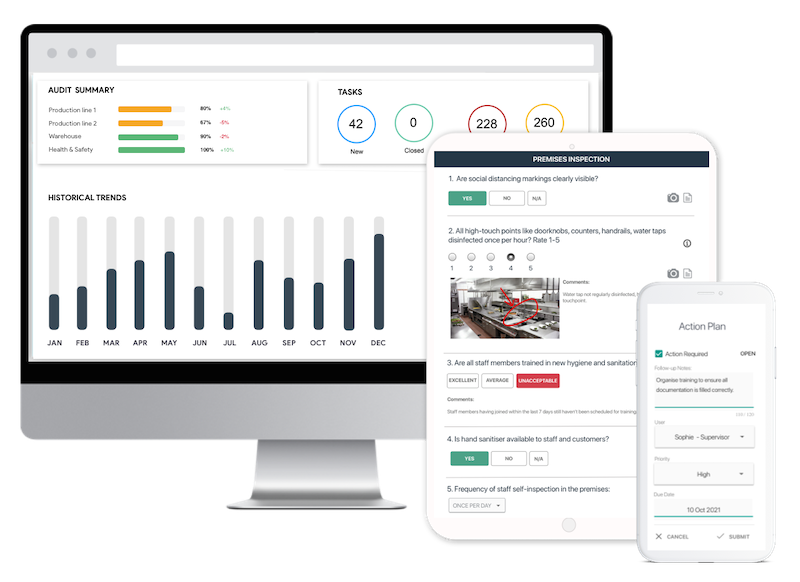
With the GoAudits Safety Inspection App, you can:
- Eliminate paperwork: conduct efficient digital audits, add photos from mobile device
- Customize this template or easily create your own
- Save time with instant reports & assign corrective actions
Scope, Planning, And Competence
Hazard Identification
Planned Controls And Isolation
Atmospheric Risk And Ventilation Planning
Equipment And PPE Readiness
Rescue And Emergency Planning
Readiness Confirmation
Scope, Planning, And Competence
Hazard Identification
Planned Controls And Isolation
Atmospheric Risk And Ventilation Planning
Equipment And PPE Readiness
Rescue And Emergency Planning
Readiness Confirmation
Save Time with Digital Inspections
- Easily capture & attach photos, directly on your mobile device.
- Instantly generate and share detailed reports after the inspection.
- Track corrective actions, view historical trends, improve standards.


Identifying Confined Spaces in the Workplace
Confined space checklists are used once a space is identified as requiring entry controls. Some spaces may appear low risk during normal operations but become hazardous when work such as cleaning, inspection, or maintenance begins.
Common confined spaces include:
- Tanks, silos, and storage vessels
- Pits, trenches, and excavations
- Ducts, tunnels, and enclosed service corridors
- Sewers, manholes, and underground chambers
- Boilers, pressure vessels, and enclosed machinery spaces
A space typically requires confined space controls when it is enclosed or partially enclosed, not designed for continuous occupancy, and presents occupational health and safety risks such as hazardous atmospheres, restricted access, or harmful substances.
This is why confined space risk assessment, permit, and entry checklists are used to verify conditions before entry and whenever circumstances change.

What is a Confined Space Checklist?
A confined space checklist is a structured safety tool used to identify hazards and verify controls before, during, and after work in confined spaces. These spaces may have limited entry or exit, poor ventilation, or the potential for hazardous atmospheres, making them especially high risk.
The confined space permit checklist typically covers hazard identification, atmospheric testing, isolation procedures, ventilation, permits, rescue arrangements, and worker authorization. It helps ensure that all required precautions are in place before entry is allowed and that conditions are continuously monitored.
Using a confined space entry checklist helps:
- Ensure confined space hazards are identified and controlled systematically.
- Confirm that entry requirements and permits are completed correctly.
- Maintain clear records for compliance, audits, and incident investigations.
Key Hazards Covered in a Confined Space Checklist
Confined space checklists are designed to verify controls for the most common hazards associated with enclosed and permit-required work environments. Rather than explaining hazards in detail, the checklist confirms that appropriate controls are in place before and during entry.
Confined space checklists typically address:
- Atmospheric hazards such as oxygen deficiency, toxic gases, or flammable atmospheres through gas testing and monitoring checks
- Physical and mechanical hazards including moving equipment, pressurised systems, or stored energy through isolation and lockout-tagout procedure verification
- Engulfment and access risks caused by liquids, bulk materials, or restricted entry and exit points
- Chemical and biological exposure risks from residues, vapours, or contaminants through cleaning, ventilation, and PPE checks
- Emergency and rescue risks by confirming rescue plans, equipment availability, and communication methods
By consolidating these checks into a structured checklist, confined space hazards are controlled consistently, documented clearly, and reassessed whenever conditions change.

Types of Confined Space Safety Checklists
No single checklist can cover every confined space scenario. Different checklists are used at different stages of confined space work, depending on the task, risks, and controls required.
Confined Space Identification Checklist
Used to determine whether a space meets the definition of a confined space.
- Confirms enclosure, access limitations, and occupancy design
- Identifies potential atmospheric, physical, or process-related hazards
- Helps decide if confined space controls or permits are required
Confined Space Risk Assessment Checklist
Used before entry to evaluate specific hazards and controls.
- Assesses oxygen levels, toxic or flammable atmospheres
- Reviews risks such as engulfment, mechanical hazards, or heat
- Confirms control measures like ventilation, isolation, and PPE
Confined Space Permit-to-Work Checklist
Used to authorise and control entry into confined spaces.
- Verifies that all safety conditions are met before entry
- Confirms roles, responsibilities, and time limits
- Documents gas testing results and emergency arrangements
Pre-Entry Confined Space Safety Checklist
Completed immediately before workers enter the space.
- Confirms isolation of energy sources
- Verifies ventilation and atmospheric testing
- Ensures communication systems and rescue equipment are ready
Confined Space Work Activity Checklist
Used during the task to ensure controls remain effective.
- Monitors changing conditions inside the space
- Confirms continuous gas monitoring where required
- Ensures supervision and communication are maintained
Emergency and Rescue Preparedness Checklist
Used to confirm rescue arrangements before and during work.
- Verifies trained rescue personnel are available
- Confirms access to rescue equipment and first aid
- Ensures emergency procedures are clearly understood
Post-Work Confined Space Exit and Closure Checklist
Used after work is completed to close out the activity safely.
- Confirms all workers have exited the space
- Ensures tools and equipment are removed
- Verifies the space is secured and permits are closed
Pre-Entry Enclosed Space Safety Checks
Before anyone enters an enclosed or confined space, a final set of safety checks must be completed. These checks confirm that hazards have been identified, controls are in place, and entry is formally authorised.
Entry Permits and Authorization
- Confirm that a valid confined space or permit-to-work has been issued
- Ensure roles are clearly defined (entrant, attendant, supervisor)
- Verify time limits, task scope, and emergency procedures are documented
- Check that all required approvals and signatures are in place
Isolation and Lockout Measures
- Isolate all energy sources, including electrical, mechanical, hydraulic, and pneumatic systems
- Lock out valves, switches, and moving parts to prevent accidental activation
- Confirm isolation points are identified, secured, and tested
- Ensure isolation remains in place for the full duration of the work
Ventilation and Gas Monitoring
- Ventilate the space to remove hazardous gases or vapours before entry
- Test the atmosphere for oxygen levels, toxic substances, and flammable gases
- Confirm continuous or periodic gas monitoring is in place where required
- Record test results and ensure conditions remain safe throughout entry

How Often Should Confined Space Checks Be Conducted?
Confined space conditions can change rapidly, which is why checks must be performed at multiple stages of the work and not just before entry. A structured inspection schedule helps ensure hazards are identified, controlled, and reassessed throughout the task.
Before Each Entry – Conditions must be checked every time a worker enters a confined space, even if the space was previously inspected. This includes atmospheric testing, ventilation setup, access points, permits, and emergency equipment.
Continuous Monitoring During Work – While work is ongoing, air quality and surrounding conditions should be continuously monitored. Changes in oxygen levels, toxic gases, or work activities can introduce new risks that require immediate action.
After Work Completion – Once work is finished, a final check confirms the space is safe to close or return to service. This includes verifying that tools are removed, access points are secured, and permits are closed out properly.
Roles Covered by Confined Space Checklists
Confined space checklists are used to confirm that all required roles are assigned and available before entry is authorized. Clear role designation ensures responsibilities are defined, conditions are monitored, and emergency response can be activated if needed.
Authorized Entrants
The checklist verifies that entrants are authorized to enter the confined space and are equipped to do so safely.
- Confirmed authorization and permit approval
- Required PPE and safety equipment issued
- Communication methods in place
- Entry and exit conditions acknowledged
Attendants and Supervisors
Checklists confirm that attendants and supervisors are assigned to monitor conditions and control the entry process.
- Entrants accounted for at all times
- Atmospheric conditions monitored
- Communication maintained with entrants
- Unauthorized entry prevented
- Permits, isolation, and controls verified
Rescue and Emergency Support
Confined space checklists verify that rescue arrangements are in place before entry begins.
- Rescue personnel identified and available
- Rescue equipment and retrieval systems ready
- Emergency procedures confirmed
Using Confined Space Checklists to Support Compliance
Confined space work is heavily regulated because of the high risk involved. Confined space checklists help translate all regulatory requirements into consistent, repeatable safety checks.
Instead of relying on informal processes or memory, checklists ensure that entry conditions, controls, and approvals are verified and documented every time confined space work is performed. In practice, confined space checklists support compliance by confirming that:
- Confined spaces are identified and risks assessed before entry
- Entry permits and authorizations are issued and closed correctly
- Atmospheric testing, isolation, and ventilation are verified
- Roles, responsibilities, and rescue arrangements are in place
- Records are available for audits, inspections, or investigations
This structured approach helps organizations align daily operations with expectations set by regulators such as OSHA, while also supporting internal safety procedures and audit readiness.
Manage Safety Inspections With GoAudits
GoAudits makes it easier to apply safety checklists consistently across sites, teams, and contractors. Safety teams can complete confined space entry, permit, and inspection checklists digitally, ensuring critical checks are not missed before or during high-risk work.
With GoAudits, teams can:
- Easily complete safety checklists on mobile or tablet
- Record gas readings, notes, photos, and approvals in real time
- Flag non-compliance and assign corrective actions immediately
- Maintain a clear audit trail for confined space work and inspections
Using inspection checklists in GoAudits helps standardize safety inspections, provide on-the-job safety training, improve visibility into high-risk activities, and support ongoing compliance as part of everyday operations – not just during audits.

Other Popular Safety Checklists:

Digitize your Safety Inspections
- Easily perform audits anywhere on the site using a mobile device, even offline
- Attach photos to document issues or prove compliance
- Assign tasks, set deadlines and track progress - all within a single app
- Analyze data from audits to identify trends, pinpoint recurring issues, and assess compliance levels.