

Free Playground Safety Inspection Checklists & Templates
Template Library > Facility Inspection Templates > Playground Safety Checklists
Ensure Equipment Safety With Playground Inspection Checklists
A playground safety checklist gives inspectors and staff a clear structure for reviewing equipment, surfaces, and surrounding areas during routine checks. It helps ensure inspections are consistent, recorded, and easy to follow without relying on memory.
With a comprehensive playground safety checklist, you can:
- Verify each piece of equipment is inspected the same way every time.
- Catch wear, damage, or hazards during routine checks.
- Record issues and corrective actions in a single place.
- Maintain inspection records for accountability and reporting.

With the GoAudits Facility Inspection App, you can:
- Eliminate paperwork: conduct efficient digital audits, add photos from mobile device
- Customize this template or easily create your own
- Save time with instant reports & assign corrective actions
Playground Safety Checks
Playground Safety Checks
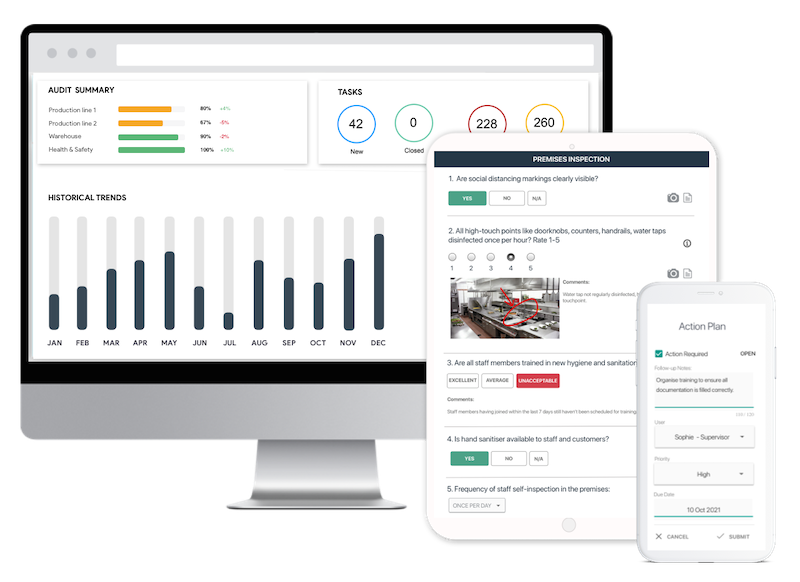
Save Time with Digital Inspections
- Easily capture & attach photos, directly on your mobile device.
- Instantly generate and share detailed reports after the inspection.
- Track corrective actions, view historical trends, improve standards.


What Is a Playground Safety Checklist?
A playground safety checklist is a structured inspection tool used to assess whether play areas and equipment remain safe for children over time. It guides staff, inspectors, or facility managers through a systematic review of:
- Swings, slides, climbers, and overhead equipment
- Guardrails and protective barriers
- Protrusions and entrapment openings
- Protective surfacing depth
- Site conditions and supervision visibility
Rather than performing informal walk-throughs, teams follow defined inspection criteria aligned with industry standards. Findings are documented, prioritized, and tracked until resolved.

What Should Be Included in a Playground Safety Inspection Checklist
A playground equipment inspection checklist helps inspectors, schools, and facility managers identify hazards early and ensure equipment and surroundings remain safe for children. It supports routine inspections, timely repairs, and compliance with safety standards.
1. Play Equipment Condition
- Structural integrity of swings, slides, climbing frames, and moving parts.
- Sharp edges, protruding bolts, or exposed hardware.
- Loose fasteners, cracked plastics, rusted metal, or splintered wood.
- Worn chains, ropes, or connectors that may fail under load.
2. Surfacing and Fall Protection
- Adequate depth of impact-absorbing materials like rubber, sand, or mulch.
- Even distribution of surfacing under and around equipment.
- Trip hazards such as exposed footings or displaced mats.
- Proper drainage to prevent pooling water or erosion.
3. Access Points and Boundaries
- Secure gates and well-maintained fencing.
- No gaps that create head or limb entrapment risks.
- Safe and clearly defined entry and exit routes.
- Separation from roads, parking lots, or restricted areas.
4. Surrounding Environment
- Removal of debris, litter, broken glass, or sharp objects.
- Overgrown vegetation that may block visibility or create hiding spots.
- Clear sightlines for supervision.
- Identification of nearby hazards such as water bodies or construction zones.
5. Signage and Safety Information
- Clearly displayed age-appropriateness signs.
- Posted playground rules and safe-use guidance.
- Emergency contact details or location identifiers.
- Maintenance reporting information for damage or concerns.
What Are the Common Playground Hazards Covered in a Playground Inspection Checklist?
Playgrounds are designed to be safe, but wear and environmental exposure can quickly create hidden risks. A structured playground equipment safety checklist helps identify hazards early and ensures equipment, surfacing, and surroundings remain safe for children.
- Entrapment Gaps and Pinch Points – Gaps between bars, guardrails, or moving components can trap a child’s head, fingers, or clothing. Inspections check spacing, openings, and moving parts to prevent entrapment risks.
- Corrosion and Rust – Metal components exposed to weather can corrode over time, weakening structural integrity. Routine checks identify rust, sharp edges, and deteriorating hardware before failure occurs.
- Unstable Anchors and Foundations – Play equipment that shifts, wobbles, or leans may have loose or failing anchors. Inspections verify that structures are securely fixed and stable.
- Worn or Inadequate Surfacing – Impact-absorbing surfaces can thin out, compact, or shift away from high-use areas. Checklists ensure surfacing depth and coverage remain adequate to reduce fall injuries.
- Damaged or Loose Components – Cracked panels, broken swings, loose bolts, or missing caps increase injury risk. Regular checks confirm all parts are intact and properly secured.
- Trip Hazards Around Equipment – Uneven ground, exposed footings, tree roots, or debris create avoidable fall risks. Inspections help keep play zones and walkways clear.
- Poor Visibility and Supervision Gaps – Overgrown vegetation, poor layout, or obstructed sightlines can limit adult supervision. Routine checks ensure clear visibility across the playground area.
- Vandalism or Sharp Objects – Broken glass, graffiti damage, or exposed metal edges pose immediate hazards. Regular inspections allow for quick identification and removal.

Why Routine Playground Inspections Are Critical
Without a structured playground safety checklist, small defects such as loose fasteners or worn surfacing can go unnoticed until an injury occurs. Children run, climb, and jump unpredictably, increasing exposure to fall and entrapment risks. Routine inspections reduce the likelihood that minor wear turns into serious incidents.
High Risk Exposure in Active Play Areas
Play equipment is constantly in motion, supporting climbing, swinging, and balancing activities. This frequent and often unsupervised use increases the risk of:
- Trips and falls from height.
- Entrapment in gaps or openings.
- Contact with sharp edges or protruding components.
Heavy Usage Accelerates Wear and Tear
Public and school playgrounds often experience daily, high-volume use. Over time, this leads to:
- Loose bolts and unstable anchors
- Worn surfacing and reduced impact absorption
- Damaged or weakened structural components
Weather and Environmental Exposure
Outdoor playgrounds are exposed to rain, heat, wind, and corrosion. Weather conditions can cause:
- Rust and material degradation
- Slippery surfaces
- Ground erosion or shifting foundations
Reducing Liability and Legal Risk
Failure to inspect and invest in playground equipment maintenance can expose organisations to legal claims, reputational damage, and regulatory action. Documented inspection checklists demonstrate due diligence and show that reasonable steps were taken to maintain a safe environment.
Proactive Safety Over Reactive Response
The most important reason for routine inspections is prevention. Waiting for an incident to highlight a hazard often results in avoidable injury. A structured playground inspection checklist shifts the focus from reacting to accidents to proactively identifying and correcting risks.
How Often Should Playground Safety Inspections Be Conducted?
A structured playground safety inspection checklist helps schools, parks, and facility managers schedule the right level of inspection at the right time. By breaking checks into daily, monthly, and annual reviews, the checklist ensures no safety gaps are overlooked.
Daily or Pre-Use Visual Checks
The checklist supports short, routine walk-throughs before children use the playground. It guides staff to quickly identify visible risks such as:
- Broken or damaged equipment.
- Debris, litter, or sharp objects.
- Trip hazards or displaced surfacing.
- Obvious vandalism or loose components.
Using a daily checklist keeps inspections consistent, even when performed by different staff members, and ensures immediate hazards are addressed before use.
Monthly Operational Inspections
The monthly section of the checklist prompts a closer review of equipment condition and wear. It helps users:
- Check moving parts for wear or malfunction.
- Inspect anchors, bolts, and connectors.
- Assess surfacing depth and impact protection.
- Identify corrosion, cracks, or structural stress.
This level of inspection allows gradual deterioration to be identified and corrected before it becomes a safety risk.
Annual Comprehensive Inspections
The annual portion of the checklist supports a thorough evaluation of overall structural integrity and regulatory compliance. It helps document:
- Structural stability of major components.
- Compliance with current safety standards.
- Long-term wear patterns or recurring issues.
- Required repairs, replacements, or upgrades.
By using a frequency-based checklist, organizations can maintain safer play areas, demonstrate due diligence, and keep maintenance planning organized year-round.
Who Is Responsible for Playground Safety Inspections?
Responsibility for playground safety inspections depends on who owns, operates, or manages the site. While the organization holds overall accountability, inspections are typically shared across several roles to ensure nothing is overlooked.
Schools and Educational Institutions
Schools are responsible for ensuring playground equipment is safe for students. This includes scheduling routine inspections, addressing hazards quickly, and maintaining documentation for compliance and liability purposes.
Local Councils and Park Authorities
Public playgrounds are usually managed by local councils or park authorities. They are responsible for regular inspections, long-term maintenance planning, and ensuring equipment meets safety standards for community use.
Childcare Providers
Childcare centers must conduct frequent checks due to the age and vulnerability of the children using the equipment. Daily visual inspections and documented periodic reviews are typically required.
Property Managers, HOAs, and Facility Managers
In residential complexes or shared community spaces, property managers or homeowners’ associations oversee playground safety. Their responsibilities include arranging inspections, coordinating repairs, and ensuring vendors meet safety requirements.
Caretakers and On-Site Staff
Caretakers and grounds staff often perform daily or pre-use visual checks. They look for obvious hazards such as broken components, sharp edges, debris, or unsafe surfacing conditions.
Maintenance Teams
Maintenance personnel handle structural repairs, hardware tightening, surfacing upkeep, and replacement of worn components. They ensure identified issues are resolved before the equipment is used again.
Certified or External Inspectors
For annual or comprehensive inspections, organizations may hire certified playground inspectors. These professionals conduct in-depth assessments of structural integrity, compliance, and long-term safety risks.
Clear assignment of responsibilities ensures inspections are not missed and hazards are addressed promptly, helping reduce injury risks and liability exposure.
Using Inspection Checklists to Support Playground Safety Compliance
Routine playground inspections are not just best practice but are guided by recognised standards that set clear expectations for design, installation, inspection, and maintenance.
ASTM International Standards
In the United States and many other regions, ASTM F1487 (Standard Consumer Safety Performance Specification for Playground Equipment for Public Use) sets safety requirements for public playground equipment. It covers:
- Entrapment and entanglement hazards.
- Guardrails and protective barriers.
- Protrusions and sharp edges.
- Equipment spacing and fall zones.
ASTM standards also include ASTM F1292, which focuses on impact attenuation of playground surfacing to reduce head injury risk.
Routine inspections help ensure equipment continues to meet these standards long after installation.
CPSC Public Playground Safety Handbook
The U.S. Consumer Product Safety Commission (CPSC) provides guidance aligned with ASTM standards. The handbook outlines recommendations for:
- Age-appropriate equipment design.
- Surfacing depth and maintenance.
- Equipment layout and supervision considerations.
Inspection checklists help verify that these guidelines are consistently followed in schools, parks, and childcare settings.
EN 1176 and EN 1177 (European Standards)
In Europe and many other regions, EN 1176 governs playground equipment safety, while EN 1177 addresses impact-absorbing playground surfacing. These standards focus on:
- Structural integrity.
- Fall heights and protective surfacing.
- Entrapment and entanglement prevention.
Routine inspections ensure playgrounds remain compliant as equipment ages or environmental conditions change.
Local Authority and School Safety Requirements
Beyond international standards, local councils, school boards, and regulatory bodies often require documented inspection records. These may include:
- Daily visual checks.
- Monthly operational inspections.
- Annual comprehensive inspections.
A playground safety checklist translates these standards into specific inspection points, ensuring entrapment gaps, fall zones, surfacing depth, and structural integrity are actively verified and recorded.
Digitize Your Playground Safety Inspections
Paper checklists create gaps: lost records, delayed repairs, and limited oversight across multiple sites.
With GoAudits playground inspection software, you can:
- Complete inspections on mobile
- Attach photos to hazards
- Assign corrective actions instantly
- Track recurring issues across locations
- Generate compliance-ready reports in seconds
👉 Download the free template or run inspections digitally across all your facilities.
FAQs
1. What are the 10 safety rules on a playground?
Here are 10 widely recommended playground safety rules that schools, parks, and childcare providers commonly enforce:
- Use equipment only as intended.
- Go down the slides feet first, one person at a time.
- Hold onto handrails and climbing structures firmly.
- Do not push, shove, or roughhouse on equipment.
- Wait your turn and be aware of others around you.
- Wear proper footwear. Avoid loose shoelaces.
- Remove drawstrings, scarves, or loose clothing that could get caught.
- Stay within designated play areas.
- Use age-appropriate equipment.
- Report broken equipment or hazards to an adult immediately.
These rules focus on preventing falls, entanglement, collisions, and improper use of equipment, which are the most common causes of playground injuries.
2. What are the 5S of playground safety?
The “5 S” framework is often used in child safety education to make playground safety easy to remember:
Supervision – Active adult monitoring at all times.
Safe Surfacing – Impact-absorbing surfaces like engineered wood fiber, rubber mats, or poured-in-place rubber.
Safe Equipment – Well-maintained structures with no sharp edges, loose bolts, or corrosion.
Suitable Age Design – Equipment matched to specific age groups.
Safe Behavior – Teaching children how to play responsibly and respectfully.
This framework aligns closely with guidance from organizations like the U.S. Consumer Product Safety Commission and the National Program for Playground Safety.
3. What is the number one cause of death on playgrounds?
While playground fatalities are rare, fatal incidents have most often involved strangulation or entanglement hazards, which modern standards aim to eliminate through strict protrusion and gap limitations.
Strangulation risks increase when:
- Clothing drawstrings or scarves get caught on equipment.
- Ropes or openings create head and neck entrapment hazards.
- Protruding bolts or hardware snag clothing.
Falls are the most common cause of non-fatal injuries, but entanglement incidents are more likely to result in severe outcomes.
4. What are the playground safety standards for different age groups?
Playground safety standards vary by developmental stage. Guidelines from the U.S. Consumer Product Safety Commission and ASTM International generally recommend:
Ages 6–23 months
- Separate, enclosed play areas.
- Low platforms and ramps.
- No climbing equipment above recommended heights.
Ages 2–5 years
- Lower platform heights than school-age areas.
- Guardrails and protective barriers.
- Smaller climbing structures.
Ages 5–12 years
- More complex climbing systems.
- Higher platforms within regulated limits.
- Overhead equipment like monkey bars.
The key difference across age groups is fall height limits, equipment complexity, and required protective surfacing depth. Mixing age groups without proper design separation increases injury risk.
5. How often should playgrounds be inspected?
Most safety programs recommend:
- Daily visual checks.
- Monthly operational inspections.
- Annual comprehensive inspections.
Higher-traffic playgrounds may require more frequent checks.
6. What surface is safest for playgrounds?
Loose-fill materials like engineered wood fiber, rubber mulch, or poured-in-place rubber are considered effective when installed at proper depths. Concrete and asphalt are not suitable for play equipment.
7. Are playgrounds legally required to meet safety standards?
In many regions, public playgrounds must comply with recognized safety standards and local regulations. Private facilities such as schools and HOAs are typically expected to follow national safety guidelines to reduce liability risk.

Other Playground Checklists:

Digitize your Building Inspections
- Easily perform audits anywhere in the facility using a mobile device.
- Attach photos to document issues or prove compliance
- Assign tasks, set deadlines and track progress - all within a single app
- Analyze data from audits to identify trends, pinpoint recurring issues, and assess compliance levels.