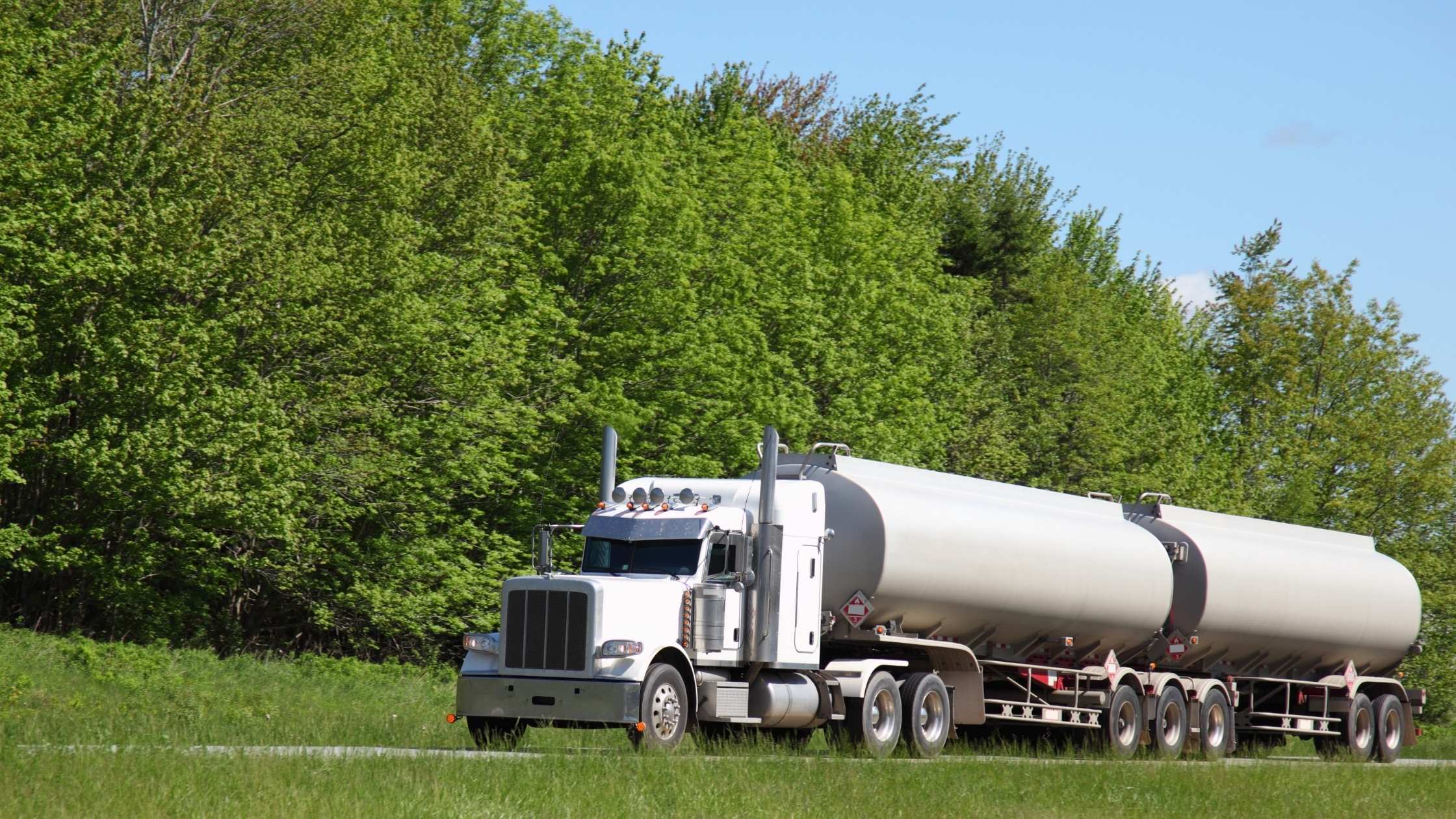
A tanker inspection app should do four things a general vehicle app does not:
- Check the cargo tank and its discharge equipment, not just the chassis
- Capture driver vehicle inspection reports that meet 49 CFR 396.11
- Track the 49 CFR 180.407 test dates marked on each tank
- Store wash-out and cleaning records. A tanker inspection app must also work offline at a loading rack.
- What Does a Tanker Safety Inspection App Need to Cover Beyond a Standard Truck Walkaround?
- How Should a Tanker Inspection App Handle Driver Vehicle Inspection Reports (DVIR)?
- Does Tanker Inspection Software Work Offline at Loading Racks and Terminals?
- How Should Defects Found On a Tanker be Escalated Before It Loads?
- Can a Tanker Inspection App Record Wash-Out and Cleaning Certificates?
- How Do Multi-Terminal Tanker Fleets Keep Inspections Consistent?
- How Does GoAudits Work as a Tanker Inspection App?
What Does a Tanker Safety Inspection App Need to Cover Beyond a Standard Truck Walkaround?
A tanker safety inspection app needs to cover the cargo tank and its product-handling equipment as well as the standard chassis walkaround. The chassis items stay the same. The tank items are what a general fleet checklist leaves out.
| Area | Items checked on a tanker |
| Tank shell | Shell and heads, visible damage, corrosion, leaks |
| Openings | Manholes and man lids, gaskets, covers, vents |
| Valves | Internal valves, emergency shutoff, outlet caps and plugs |
| Product handling | Hoses, couplings, bonding and grounding cables |
| Markings | Placards, specification plate, test and inspection markings |
Most tanker fleets start from an existing form and add their own items by tank specification. GoAudits carries a tanker inspection checklist and a fuel tanker inspection checklist that teams edit rather than build from scratch.

Should A Tanker Inspection App Track DOT Cargo Tank Test Due Dates?
A tanker inspection app does not perform or schedule 49 CFR 180.407 testing, which a Registered Inspector performs, but it can catch a lapsed test during the daily check. Each completed test is stamped on the tank under 49 CFR 180.415 as V, I, P, L, or T with the month and year.
| Test | Typical interval |
| External visual (V) | Annually |
| Leakage test (K) | Annually |
| Internal visual (I) | Every 5 years |
| Pressure test (P) | Every 5 years |
| Thickness test (T) | Every 2 years, unlined tanks |
Intervals vary by tank specification and service, so operators work from the table in 180.407 rather than from one rule. Because the markings are visible on the tank, “test markings present and in date” works as a fail item on the tanker checklist itself. Requalification due dates are usually tracked in a fleet maintenance or compliance system rather than in an inspection app.
How Should a Tanker Inspection App Handle Driver Vehicle Inspection Reports (DVIR)?
A tanker inspection app should produce a DVIR that meets 49 CFR 396.11: the vehicle identified, defects listed, the driver’s signature, and a certification that defects were repaired. Electronic DVIRs are permitted, and 49 CFR 390.32 governs how electronic records are kept. For a comparison of tools built around this one form, see our guide to electronic DVIR options.
Can a Tanker Inspection App Produce Records for a DOT Compliance Review?
An inspection app should let a safety manager pull every record for one tanker over a date range in a few minutes. Carriers keep DVIRs, repair certifications, and the driver’s review for three months under 49 CFR 396.11, and annual inspection reports for fourteen months under 49 CFR 396.17. Photos, timestamps, and signatures stay attached to each record.
Does a Tanker Inspection App Replace an ELD Or HOS System?
A tanker inspection app does not record hours of service and does not replace an ELD. An inspection app records what was checked, what failed, and what was fixed. Most tanker fleets run both systems and keep them separate.

Does Tanker Inspection Software Work Offline at Loading Racks and Terminals?
Tanker inspection software has to work offline, because racks, remote terminals, and tank farms often have no usable signal. GoAudits runs fully offline on iOS and Android and syncs when the device reconnects, so no check is lost.
Driver adoption decides whether any of this holds. A tanker check that takes longer on a phone than on paper gets rushed. Photo capture, tap-to-fail items, and signature on the device keep the check close to the time a paper form takes, and the record is finished the moment the driver signs.
How Should Defects Found On a Tanker be Escalated Before It Loads?
A failed item on a tanker should trigger a load or no-load decision before the vehicle moves, not a note someone reads later. Fleets in bulk haulage describe chasing corrective actions by phone and email, with no record of who agreed to what.
In practice, that means three things: a named owner on every failed item, a due date, and photo proof at closure. Items that affect the tank or its discharge equipment go to a supervisor rather than into a maintenance queue, because the consequence is a product release, not a breakdown.
Can a Tanker Inspection App Record Wash-Out and Cleaning Certificates?
A tanker inspection app does not issue or store wash-out certificates, which come from the cleaning station, but a pre-load check can capture the certificate number and a photo of the document before product goes in.
Under the FDA Sanitary Transportation of Human and Animal Food rule at 21 CFR 1.908, a carrier using a bulk vehicle must tell the shipper, on request, what the previous cargo was and when the vehicle was last cleaned.
Carriers usually keep the certificates themselves in a document or TMS system. Adding a wash-out field and a photo to the pre-load inspection gives the loader a dated record that the check happened, attached to the same inspection as the tank and valve items. Chemical and food carriers running into Europe work the same way with the EFTCO Cleaning Document, issued by the cleaning station with coded entries for the work done.
How Do Multi-Terminal Tanker Fleets Keep Inspections Consistent?
Multi-terminal tanker fleets keep inspections consistent by owning one set of checklists centrally and varying them by tank specification, not by terminal. A terminal that writes its own form produces scores no one can compare.
Central dashboards then show which terminals complete checks on time, which fail the same item repeatedly, and where open defects are sitting. Teams usually adapt one master version, built from the vehicle inspection checklist template library.
How Does GoAudits Work as a Tanker Inspection App?
GoAudits is logistics inspection software used for vehicle, tank, cargo, and site checks in the same app, with offline inspections, instant reports, and corrective actions tracked to closure. GoAudits suits fleets that want their own checklists rather than a fixed form.
Miniclipper Logistics, a UK road haulage operator with more than 40 vehicles, moved off Excel forms and raised audit responsiveness from 65% to 97%, auditing monthly instead of every six months.