Construction Safety Checklists & Templates
Template Library > Construction Inspection > Construction Safety Inspection
Ensure Safety and Compliance With Construction Site Safety Audit Checklists
A comprehensive construction safety checklist helps ensure your site remains compliant with safety regulations, while proactively identifying and addressing potential hazards. It should cover various topics such as safety training, PPE, electrical and fire safety, scaffolding, housekeeping, documentation & more.
Using a construction safety inspection template, you can:
- Spot potential risks before they escalate into incidents.
- Facilitate clear communication among site workers and supervisors.
- Identify areas for training or improvement in safety practices.

With the GoAudits Construction Inspection App, you can:
- Eliminate paperwork: conduct efficient digital audits, add photos from mobile device
- Customize this template or easily create your own
- Save time with instant reports & assign corrective actions
270 questions in 29 sectionsInteractive preview: try the answers
Section 1 of 29 · 10 questionsJobsite (General)
Are posters and safety signs or warnings in place?
Are safety meetings held periodically?
Is a first-aid kit available and adequately stocked?
Has job-related safety training been completed?
Has an accident reporting procedure been established?
Is a substance abuse policy in place?
Are injury records kept?
Are emergency telephone numbers posted?
Are traffic routes identified?
Are there procedures to handle hazardous waste?
Section 2 of 29 · 11 questionsHousekeeping And Sanitation
Are work area(s) generally neat and clean?
Are waste and trash regularly disposed of?
Are passageways and walkways clear?
Is the work area well-lighted?
Are waste containers provided and used?
Are sanitary facilities adequate and clean?
Is there an adequate potable water supply?
Are there adequate drinking cups?
Have nails, boards, and debris been removed?
Are eye-flushing facilities available?
Are emergency showers available?
Section 3 of 29 · 7 questionsHazard Communication
Is there a written program?
Are employees trained?
Are safety data sheets on file and readily available?
Are control and disposal measure(s) established?
Are material(s) properly stored and labeled?
Is a log of all chemicals on site available?
Are labels legible?
Section 4 of 29 · 15 questionsFire Prevention
Are an adequate number and types of fire extinguisher(s) available?
Is fire prevention/extinguisher training performed?
Are inspections of fire extinguishers performed periodically?
Is the telephone number of the fire department posted?
Are fire extinguisher(s) provided on appropriate equipment?
Are flammable liquids stored in approved containers and correctly labeled?
Are flammable liquids properly stored?
Is a fire alarm available?
Is a fire evacuation plan established?
Are fuel supplies protected from accidental impact?
Is fire training given to appropriate personnel?
Is equipment shut down prior to refueling?
Is equipment properly grounded to fuel trucks before refueling?
Are no-smoking signs posted and enforced?
Are hydrants clear and access to public thoroughfare open?
Section 5 of 29 · 6 questionsFlammable Liquids And Materials
Are empty containers removed?
Are only approved containers being used?
Are containers stored in approved and appropriate area(s)?
Is outside storage bermed for containment?
Are storage tanks properly grounded and bonded, and is pressure relief provided?
Are cylinders stored or secured in an upright position?
Section 6 of 29 · 10 questionsElectrical
Do electrical devices have a current inspection and coding?
Is electrical equipment properly maintained?
Is equipment properly grounded?
Is an assured equipment grounding program established?
Are ground fault circuit interrupters used and tested where required?
Are fuses provided?
Are electrical dangers posted?
Are proper fire extinguisher(s) provided?
Are terminal boxes equipped with required covers, and is the cover used?
Are circuits labeled in terminal boxes?
Section 7 of 29 · 16 questionsPersonal Protective Equipment (PPE)
Have hazard evaluations been performed and certified?
Is protective equipment adequate for exposure?
Are employees issued PPE where needed?
Is PPE being used?
Are employees trained in the use of PPE?
Are inspections being conducted before and after the use of PPE?
Is adequate maintenance and sanitary storage available and used?
Is adequate fall protection provided?
Is eye protection available?
Is face protection (glasses, goggles, shields) available?
Is hearing protection available?
Are respirators and masks provided?
Are respirators used to protect against harmful dust, asbestos, sandblasting, and welding (lead, paint, and galvanized zinc or cadmium)?
Is head protection available?
Is hand and foot protection available?
Are physical exams performed as required?
Section 8 of 29 · 4 questionsHand Tools
Are proper tool(s) used for the job?
Are handles free of cracks and properly attached to tools?
Are inspections and proper maintenance performed prior to use?
Are tools neatly stored and safely carried?
Section 9 of 29 · 10 questionsPower Tools
Is proper housekeeping conducted where tools are used?
Are inspections and proper maintenance of tools performed?
Are tools grounded properly or double-insulated?
Are tool guards in place and used correctly?
Are damaged or malfunctioning tools tagged out until repaired or replaced?
Are tools in compliance with local laws and ordinances?
Are all operators qualified?
Are tools protected from unauthorized use?
Is competent instruction and supervision provided?
Are cords included in the electrical inspection?
Section 10 of 29 · 10 questionsLadders
Are ladders inspected and in good condition?
Are ladders used properly?
Are ladders secured to prevent slipping, sliding, or falling?
Do side rails extend 36 inches above the top of the landing?
Are any ladders spliced?
Are rungs or cleats not over 12 inches at center?
Are ladders properly maintained and stored?
Are any ladders painted?
Is fall protection provided for fixed ladders in excess of 20 feet long?
Are aluminum ladders of sufficient strength for the task?
Section 11 of 29 · 11 questionsScaffolds
Is erecting the scaffold properly supervised?
Checklist by GoAudits. This checklist is an example: we do not guarantee compliance with the laws applicable to your territory or industry. Seek professional advice to adapt it to your workplace or jurisdiction.
Save Time with Digital Inspections
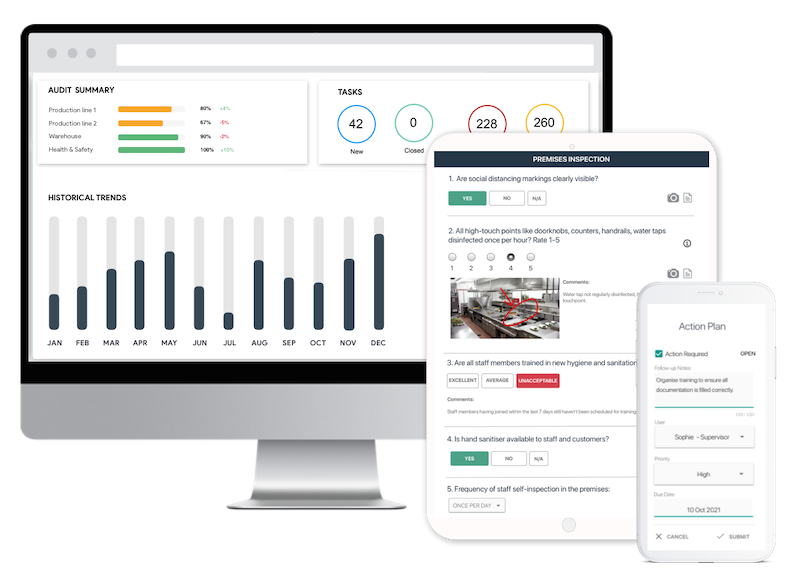
- Easily capture & attach photos, directly on your mobile device.
- Instantly generate and share detailed reports after the inspection.
- Track corrective actions, view historical trends, improve standards.


What is a Construction Safety Checklist?
A construction safety checklist is a structured tool for assessing and ensuring that all safety protocols are being followed on a construction site. It serves as a guide for inspectors and site supervisors to systematically evaluate various aspects of the site, including equipment, procedures, and worker behaviors as per the safety standards.
Importance of Using Construction Site Safety Checklists
Utilizing construction safety inspection forms is crucial for several reasons:
- Hazard Identification: They help in the early detection of potential risks, allowing for timely interventions.
- Regulatory Compliance: Building site health and safety checklists ensures all activities adhere to OSHA regulations and other relevant safety standards.
- Accident Prevention: By systematically monitoring safety protocols, the likelihood of workplace injuries and accidents is significantly reduced.
- Enhanced Communication: They facilitate clear communication of safety expectations and procedures among all team members.

Types of Construction Safety Inspection Checklist Templates
Various checklists are tailored to address specific safety concerns on construction sites:
Construction Site Safety Inspection Checklist Template
A comprehensive construction job site safety checklist covers multiple safety aspects, including personal protective equipment (PPE), housekeeping, electrical safety, and emergency procedures. It serves as a general guide for routine site inspections.
Construction Safety Audit Form
A construction safety audit checklist form thoroughly examines the entire construction site. Unlike regular inspection checklists, which may focus on specific areas or tasks, a construction safety audit template provides a holistic assessment of the site’s safety performance. It evaluates construction compliance with safety regulations and the effectiveness of safety programs and identifies areas for improvement.
Construction Health and Safety Forms
These forms are designed to document various health and safety aspects, such as incident reports, hazard assessments, and safety meeting minutes. They play a vital role in maintaining records and ensuring continuous monitoring of health and safety practices on the site.
👉 HSE Checklist for Construction Site: Use the template to ensure health and safety compliance, covering hazards, PPE, housekeeping, and more.
Construction Inspection Checklists: Explore our library of free construction templates.
What to Include in a Construction Site Safety Checklist
An effective building site health and safety checklist should encompass the following elements:
PPE Compliance
Ensure that all workers are equipped with and correctly using appropriate personal protective equipment, such as helmets, gloves, safety glasses, and high-visibility clothing. Regular checks should be conducted to confirm compliance.
Site Conditions and Housekeeping
Maintain a clean and organized work environment. This includes proper storage of materials, timely removal of debris, and ensuring that walkways are free from obstructions to prevent slips, trips, and falls.
👉 Construction Site Housekeeping Checklist: Ensure storage, disposals, sanitation, and workplace practices comply with construction inspections.
Equipment and Machinery Safety
Regularly inspect all equipment and machinery to ensure they are in good working condition. Check for any signs of wear and tear, ensure that safety guards are in place, and verify that only trained personnel operate the machinery.
Proper maintenance schedules should be adhered to, and any defective equipment should be tagged and removed from service until repaired.
Electrical Safety
Inspect all electrical installations for compliance with safety standards. Check that wiring is properly insulated, circuits are not overloaded, and all electrical panels are accessible and clearly labeled. In areas with potential exposure to moisture, ground-fault circuit interrupters (GFCIs) are recommended.
Fire Safety and Emergency Preparedness
Verify that fire extinguishers are readily available, clearly marked, and inspected regularly. Ensure that all workers are familiar with emergency evacuation routes and procedures.
Conduct regular fire drills and check that emergency contact numbers are prominently displayed. Flammable materials should be stored properly, and ignition sources should be controlled to prevent fire hazards.
Fall Protection Measures
Implement appropriate fall protection systems, such as guardrails, safety nets, and personal fall arrest systems, especially when working at heights above six feet. Ensure that ladders and scaffolding are in good condition and used correctly.
Conduct training sessions to educate workers on the proper use of fall protection equipment and the recognition of fall hazards.
👉 Learn More: How Woodside Homes leverages digital checklists to ensure safety and quality for their construction projects.
Importance of Construction Safety Reports
Construction safety reports are crucial for ensuring that safety standards are consistently met on-site. They provide a documented record of safety observations, helping to identify hazards and track improvements.
These reports not only aid in regulatory compliance but also enhance risk management by spotting potential dangers early. Regular construction safety inspection reports foster clear communication between workers and management, ensuring everyone is aware of safety issues and the actions taken to address them.
They also serve as legal protection in the event of accidents, proving that proper safety protocols were followed. By reviewing these construction safety audit reports, teams can improve safety practices and prevent future incidents.

Types of Construction Safety Reports
- Daily Safety Report on Construction Site: Documents daily safety observations, incidents, and corrective actions taken.
- Monthly Safety Report for Construction Site: Provides a comprehensive overview of safety performance over the month, including trends, recurring issues, and progress on safety goals.
- Safety Observation Report in Construction Site: Focuses on specific safety observations, noting both safe practices and areas needing attention, to address potential hazards proactively.
How to Use Construction Site Safety Checklists and Reports Effectively
Implementing construction site safety inspection checklists and reports is essential for maintaining a safe and compliant work environment. Here’s how to utilize them effectively with a construction safety software:
- Develop Comprehensive Checklists: Create detailed construction site health and safety checklists covering all aspects, including PPE compliance, site conditions, equipment safety, electrical safety, fire safety, and fall protection measures. Update these checklists regularly to reflect current regulations and site-specific requirements.
- Conduct Regular Inspections: Use the checklists during routine site inspections to systematically assess safety conditions. Ensure that all team members are trained to perform self-inspections consistently.
- Document Findings and Actions: Record all observations, including identified hazards and corrective actions taken. This documentation is vital for tracking safety performance and ensuring accountability.
- Leverage Digital Tools: Utilize digital checklist applications like GoAudits to streamline inspection. These platforms allow for real-time data collection, photo attachments, and instant report generation, enhancing efficiency and accuracy.
- Analyze Reports for Continuous Improvement: Review safety reports regularly to identify trends, recurring issues, and areas for improvement. Use this analysis to refine safety protocols and implement preventive measures.
Other Popular Construction Inspection Templates:

Digitize your Safety Inspections
- Easily perform audits anywhere on the site using a mobile device, even offline
- Attach photos to document issues or prove compliance
- Assign tasks, set deadlines and track progress - all within a single app
- Analyze data from audits to identify trends, pinpoint recurring issues, and assess compliance levels.