- Library
- Property Inspection
- Underground Plumbing Inspection Checklist
Underground Plumbing Inspection Checklist
36 questions in 9 sectionsInteractive preview: try the answers
Section 1 of 9 · 4 questionsGeneral Information & Site Access
Is the project name, location, and permit number recorded before inspection?
Is access to all underground plumbing areas safe and clearly marked?
Is the site free from obstructions that could hinder inspection?
Are utility maps or as-built drawings available and reviewed before beginning?
Section 2 of 9 · 5 questionsPipe Material & Installation
Are all underground pipes made from approved materials (e.g., PVC, HDPE, copper, cast iron)?
Are pipes properly sized according to plumbing code and load requirements?
Are pipe joints secure, watertight, and installed according to manufacturer specifications?
Are pipes laid on proper bedding material and with a consistent slope?
Is the trench depth appropriate for frost line and load-bearing requirements?
Section 3 of 9 · 4 questionsSlope, Flow & Alignment
Is the pipe slope adequate to allow gravity flow (typically 1/4 inch per foot for drainage)?
Are there any signs of reverse slope, bellies, or sags in the line?
Are directional changes made with appropriate fittings (e.g., 45° or 90° elbows)?
Are cleanouts installed at the correct intervals and accessible from grade level?
Section 4 of 9 · 4 questionsLeak Testing & Water Tightness
Has a hydrostatic or air pressure test been performed before backfilling?
Are there any signs of leakage, pressure loss, or drop during the test?
Are manholes, catch basins, or connections properly sealed and watertight?
Has a video camera inspection been performed (if required) for line integrity?
Section 5 of 9 · 3 questionsBackflow & Venting
Are backwater valves installed where required to prevent sewage backup?
Are vent pipes properly routed to maintain air circulation and pressure balance?
Are check valves, traps, or interceptors correctly installed and accessible?
Section 6 of 9 · 4 questionsDrainage & Sewer Connections
Are connections to municipal sewer or septic systems properly sloped and sealed?
Are sump pumps or stormwater lines properly separated from sewage lines?
Are grease traps, oil separators, or filters installed where necessary?
Are floor drains and perimeter drainage pipes directed to approved discharge points?
Section 7 of 9 · 4 questionsWater Supply Lines (if Applicable)
Are underground potable water lines installed with the required separation from sewer lines?
Are pipes adequately insulated or buried to prevent freezing?
Is a shut-off valve or curb stop box installed and clearly marked?
Has a pressure test been conducted and passed for water lines?
Section 8 of 9 · 4 questionsBackfilling & Marking
Was backfill material free from debris, rocks, and organic matter?
Was proper compaction performed in layers to prevent settlement?
Are warning tapes or tracer wires placed above non-metallic pipes for future detection?
Are access points like manholes, cleanouts, and valve boxes clearly labeled and visible?
Section 9 of 9 · 4 questionsDocumentation & Final Approval
Have photos or inspection videos been captured before covering the pipes?
Has the inspection passed local building/plumbing code requirements?
Are all test results and inspection notes documented and signed by the inspector?
Has approval been granted before proceeding with backfilling or concrete pouring?
Checklist by GoAudits. This checklist is an example: we do not guarantee compliance with the laws applicable to your territory or industry. Seek professional advice to adapt it to your workplace or jurisdiction.
Free PDF
Download the Underground Plumbing Inspection Checklist
By downloading this checklist you agree to the GoAudits privacy policy and terms of service.
NEW! Try generating a custom checklist with our free AI tool:
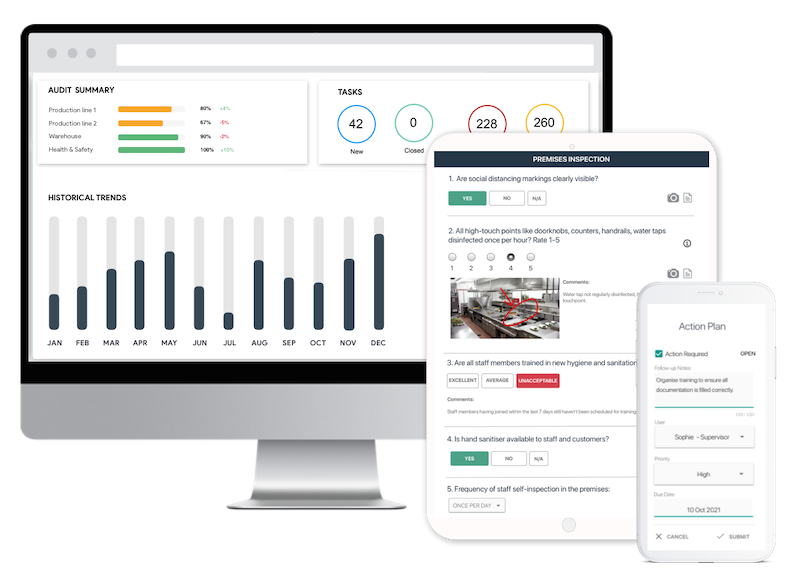
Easy inspection app for your digital checklists
- Conduct inspections anytime, anywhere - even offline
- Capture photos as proof of compliance or areas needing attention
- Instantly generate and share detailed reports after the inspections
- Assign & track follow-up tasks, view historical trends on a centralized dashboard