- Library
- IT & Data Center
- Patch Management Checklist
Patch Management Checklist
34 questions in 6 sectionsInteractive preview: try the answers
Section 1 of 6 · 4 questionsPreparation
Has a patch management policy been created?
Have backups of all critical systems been created or tested?
Is there a roll-back plan in place to reverse the patches if something goes wrong quickly?
Has patch management software been set up to implement updates?
Section 2 of 6 · 12 questionsPre-Deployment Research
Has an inventory of all assets been completed?
Has the scope of patch management been defined or updated (e.g., identifying which assets need to be patched)?
Have the endpoints been split into groups based on the operating system type (e.g., test environment for Windows servers, test environment for Linux servers, production environment for Windows servers)?
Have the systems been split into groups based on application updates?
Have the systems been grouped based on SLA (low, medium, and high availability)?
Have all software, information, objects, databases, and hardware in the system requiring updates been identified?
Have the core stakeholders for each system been identified?
Have maintenance days for each system been identified?
Have system downtime periods for each asset been identified?
Have exceptions to patching been identified?
Has formal approval been obtained from the system stakeholders for patching and system downtime before starting the update process?
Has temporary remote access been gained to the target system for patch updates?
Section 3 of 6 · 2 questionsProcuring Patches
Have the necessary patches been uploaded to the patch management system?
Has the patch management system been set as a network proxy hub for patches?
Section 4 of 6 · 6 questionsPre-Deployment Patch Testing
Has a test environment been created containing all types of systems in the scope?
Have the relevant patches been deployed to the test environment on the scheduled date and time?
Has it been confirmed that the test system works as intended?
If problems are found, have they been recorded in detail, along with their criticality?
Has the security team and system owner analyzed the problems, assessed the risk, and determined whether to install the update in the production environment? Is the decision and reasoning recorded?
Has the system owner reviewed and approved the results of the updates tested in the test environment and granted permission to implement the updates in the production environment?
Section 5 of 6 · 6 questionsPatch Implementation
Has advance notice of at least 24 hours been provided for any planned system unavailability resulting from upgrades?
On the scheduled maintenance day, have updates been implemented on the designated systems or system groups in accordance with their SLA, starting with systems that have the lowest SLA?
Have updates been deployed to the production environment?
Has the system’s proper functioning been verified after the updates are applied?
If issues are identified, has the severity of the problem been evaluated by the system owner, and has approval been granted for rolling back the update if necessary?
Have the successful patch deployment results been recorded?
Section 6 of 6 · 4 questionsPost Implementation Process
Has the technical documentation for the system been updated after each update is completed?
Is a monthly check performed for new updates, with a special focus on Patch Tuesday?
Are monthly vulnerability scans conducted to identify new security vulnerabilities?
Is the audit checklist regularly reviewed depending on process changes?
Checklist by GoAudits. This checklist is an example: we do not guarantee compliance with the laws applicable to your territory or industry. Seek professional advice to adapt it to your workplace or jurisdiction.
Free PDF
Download the Patch Management Checklist
By downloading this checklist you agree to the GoAudits privacy policy and terms of service.
NEW! Try generating a custom checklist with our free AI tool:
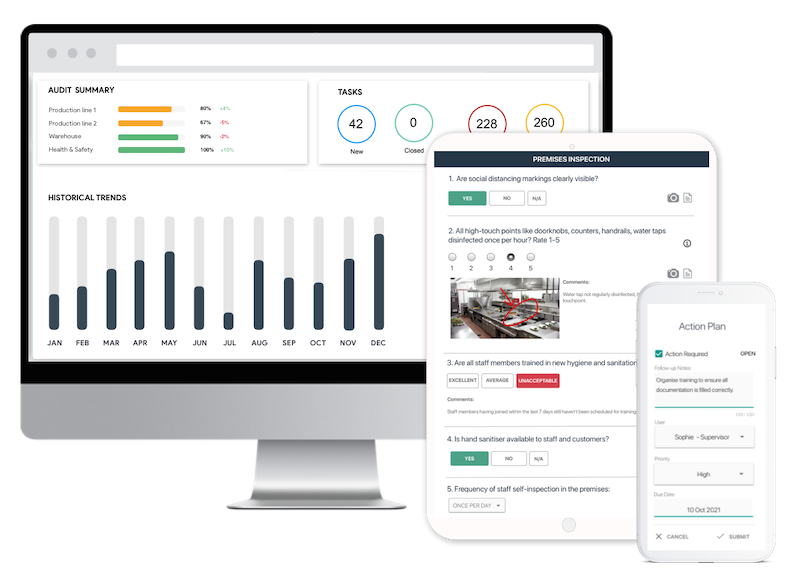
Easy inspection app for your digital checklists
- Conduct inspections anytime, anywhere - even offline
- Capture photos as proof of compliance or areas needing attention
- Instantly generate and share detailed reports after the inspections
- Assign & track follow-up tasks, view historical trends on a centralized dashboard