- Library ›
- ISO Standards ›
- ISO 9001 2015 Audit Checklist
ISO 9001 2015 Audit Checklist
284 questions in 59 sectionsInteractive preview: try the answers
Section 1 of 59 · 2 questions4.1 Understanding The Organization And Its Context
Has the organization determined external and internal issues that are relevant to its purpose and its strategic direction, and that affect its ability to achieve the intended result(s) of its quality management system?
Does the organization monitor and review information about these external and internal issues?
Section 2 of 59 · 3 questions4.2 Understanding The Needs And Expectations Of Interested Parties
Has the organization determined the interested parties that are relevant to the quality management system?
Has the organization determined the requirements of these interested parties that are relevant to the quality management system?
Does the organization monitor and review information about these interested parties and their relevant requirements?
Section 3 of 59 · 8 questions4.3 Determining The Scope Of The Quality Management System
Has the organization determined the boundaries and applicability of the quality management system to establish its scope?
Has the organization considered the external and internal issues?
Has the organization considered the requirements of relevant interested parties?
Has the organization considered the products and services of the organization?
Has the organization applied all the requirements of ISO 9001 if they are applicable within the determined scope of its quality management system?
Is the scope of the organization’s quality management system available and maintained as documented information?
Does the scope state the types of products and services covered and provide justification for any requirement of ISO 9001 that the organization determines is not applicable to the scope of its quality management system?
Do any requirements determined by the organization as not being applicable not affect the organization’s ability or responsibility to ensure the conformity of its products and services and the enhancement of customer satisfaction?
Section 4 of 59 · 11 questions4.4 Quality Management System And Its Processes
Has the organization established, implemented, maintained, and continually improved a quality management system, including the processes needed and their interactions, in accordance with the requirements of ISO 9001?
Has the organization determined the processes needed for the quality management system and their application throughout the organization?
Has the organization determined the inputs required and the outputs expected from these processes?
Has the organization determined the sequence and interaction of these processes?
Has the organization determined and applied the criteria and methods (including monitoring, measurements, and related performance indicators) needed to ensure the effective operation and control of these processes?
Has the organization determined the resources needed for these processes and ensured their availability?
Has the organization assigned the responsibilities and authorities for these processes?
Has the organization addressed the risks and opportunities as determined in accordance with the requirements of?
Has the organization evaluated these processes and implemented any changes needed to ensure that these processes achieve their intended results?
Has the organization improved the processes and the quality management system?
To the extent necessary, does the organization: • maintain documented information to support the operation of its processes? • retain documented information to have confidence that the processes are being carried out as planned?
Section 5 of 59 · 10 questions5.1 Leadership And Commitment - 5.1.1 General
Has top management taken accountability for the effectiveness of the quality management system?
Has top management ensured that the quality policy and quality objectives are established for the quality management system and are compatible with the context and strategic direction of the organization?
Has top management ensured the integration of the quality management system requirements into the organization’s business processes?
Has top management promoted the use of the process approach and risk-based thinking?
Has top management ensured that the resources needed for the quality management system are available?
Has top management communicated the importance of effective quality management and conformed to the quality management system requirements?
Has top management ensured that the quality management system achieves its intended results?
Has top management engaged, directed, and supported persons to contribute to the effectiveness of the quality management system?
Has top management ensured in promoting improvement?
Has top management ensured in supporting other relevant management roles to demonstrate their leadership as it applies to their areas of responsibility?
Section 6 of 59 · 3 questions5.1 Leadership And Commitment - 5.1.2 Customer Focus
Has top management ensured customer and applicable statutory and regulatory requirements are determined, understood, and consistently met?
Has top management assessed the risks and opportunities that can affect the conformity of products and services and the ability to enhance customer satisfaction are determined and addressed?
Has top management ensured the focus on enhancing customer satisfaction is maintained?
Section 7 of 59 · 4 questions5.2 Policy - 5.2.1 Developing The Quality Polic
Has top management developed a quality policy that is appropriate to the purpose and context of the organization and supports its strategic direction?
Has top management developed a quality policy that provides a framework for setting quality objectives?
Has top management developed a quality policy that includes a commitment to satisfy applicable requirements?
Has top management developed a quality policy that includes a commitment to continual improvement of the quality management system?
Section 8 of 59 · 3 questions5.2 Policy - 5.2.2 Communicating The Quality Policy
Is the quality policy available and maintained as documented information?
Is the quality policy communicated, understood, and applied within the organization?
Is the quality policy available to relevant interested parties, as appropriate?
Section 9 of 59 · 4 questions6.1 Actions To Address Risks And Opportunities - 6.1.1 Considering Issues
Has the organization given assurance that the quality management system can achieve its intended result(s)?
Has the organization enhanced desirable effects?
Has the organization prevented, or reduced, undesired effects?
Has the organization achieved improvement?
Section 10 of 59 · 4 questions6.1 Actions To Address Risks And Opportunities - 6.1.2 Organization Planning
Has the organization planned actions to address risks and opportunities?
Has the organization planned to integrate and implement the actions into its quality management system processes?
Has the organization evaluated the effectiveness of these actions?
Are actions taken to address risks and opportunities proportionate to the potential impact on the conformity of products and services?
Section 11 of 59 · 10 questions6.2 Quality Objectives And Planning To Achieve Them - 6.2.1 Establishing Quality Objectives
Has the organization established quality objectives at relevant functions, levels, and processes needed for the quality management system?
Are the quality objectives consistent with the quality policy?
Are the quality objectives measurable?
Are the quality objectives taking into account applicable requirements?
Are the quality objectives relevant to the conformity of products and services and to the enhancement of customer satisfaction?
Are the quality objectives monitored?
Are the quality objectives communicated?
Are the quality objectives updated as appropriate?
Does the organization maintain documented information on the quality objectives?
When planning how to achieve its quality objectives, has the organization determined: • what will be done? • what resources will be required? • who will be responsible? • when it will be completed? • how the results will be evaluated?
Section 12 of 59 · 5 questions6.3 Planning Of Changes
When the organization determines the need for change to the quality management system are changes carried out in a planned and systematic manner?
Does the organization consider the purpose of the change and any of its potential consequences?
Does the organization consider the integrity of the quality management system?
Does the organization consider the availability of resources?
Does the organization consider the allocation or reallocation of responsibilities and authorities?
Section 13 of 59 · 3 questions7.1 Resources - 7.1.1 General
Has the organization determined and provided the resources needed for the establishment, implementation, maintenance, and continual improvement of the quality management system?
Has the organization considered the capabilities of, and constraints on, existing internal resources?
Has the organization considered what needs to be obtained from external providers?
Section 14 of 59 · 1 question7.1 Resources - 7.1.2 People
Has the organization determined and provided the persons necessary for the effective implementation of its quality management system and for the operation and control of its processes?
Section 15 of 59 · 1 question7.1 Resources - 7.1.3 Infrastructure
Has the organization determined, provided, and maintained the infrastructure necessary for the operation of its processes to achieve the conformity of products and services?
Section 16 of 59 · 1 question7.1 Resources - 7.1.4 Environment For The Operation Of Processes
Has the organization determined, provided, and maintained the environment necessary for the operation of its processes and to achieve the conformity of products and services?
Section 17 of 59 · 4 questions7.1 Resources - 7.1.5 Monitoring And Measurement Resources - 7.1.5.1 General
When monitoring or measuring is used to verify the conformity of products and services to specified, has the organization determined and provided the resources needed to ensure valid and reliable results?
Does the organization ensure that the resources provided are suitable for the specific type of monitoring and measurement activities being undertaken?
Does the organization ensure that the resources provided are maintained to ensure their continued fitness for their purpose?
Does the organization retain appropriate documented information as evidence of fitness for the purpose of monitoring and measurement resources?
Section 18 of 59 · 3 questions7.1 Resources - 7.1.5 Monitoring And Measurement Resources - 7.1.5.2 Measurement Traceability
Is measuring equipment calibrated or verified, or both, at specified intervals, or prior to use, against measurement standards traceable to international or national measurement standards?
When no such standards exist, is the basis used for calibration or verification retained as documented information? • identified in order to determine its status? • safeguarded from adjustments, damage, or deterioration that would invalidate the calibration status and subsequent measurement results?
Does the organization determine if the validity of previous measurement results has been adversely affected when measuring equipment is found to be unfit for its intended purpose, and shall take appropriate action as necessary?
Section 19 of 59 · 3 questions7.1 Resources - 7.1.6 Organizational Knowledge
Does the organization determine the knowledge necessary for the operation of its processes and to achieve the conformity of products and services?
Is this knowledge maintained and made available to the extent necessary?
When addressing changing needs and trends, does the organization consider its current knowledge and determine how to acquire or access the necessary additional knowledge and required updates?
Section 20 of 59 · 4 questions7.2 Competence
Has the organization determined the necessary competence of the person(s) doing work under its control that affects the performance and effectiveness of the quality management system?
Has the organization ensured that these persons are competent on the basis of appropriate education, training, or experience?
Has the organization taken actions, where applicable, to acquire the necessary competence and evaluated the effectiveness of the actions taken?
Has the organization retained appropriate documented information as evidence of competence?
Section 21 of 59 · 4 questions7.3 Awareness
Are staff aware of the quality policy?
Are staff aware of the relevant quality objectives?
Are staff aware of their contribution to the effectiveness of the quality management system, including the benefits of improved quality performance?
Are staff aware of the implications of not conforming with the quality management system requirements?
Section 22 of 59 · 5 questions7.4 Communication
Has the organization determined what it will communicate?
Has the organization determined when to communicate?
Has the organization determined with whom to communicate?
Has the organization determined on how to communicate?
Has the organization determined who communicates?
Section 23 of 59 · 2 questions7.5 Documented Information - 7.5.1 General
Does the organization’s quality management system include documented information required by ISO 9001?
Does the organization’s quality management system document information determined by the organization as being necessary for the effectiveness of the quality management system?
Section 24 of 59 · 3 questions7.5 Documented Information -7.5.2 Creating And Updating
Does the organization ensure appropriate identification and description (e.g., a title, date, author, or reference number)?
Does the organization ensure appropriate format (e.g., language, software version, graphics) and media (e.g., paper, electronic)?
Checklist by GoAudits. This checklist is an example: we do not guarantee compliance with the laws applicable to your territory or industry. Seek professional advice to adapt it to your workplace or jurisdiction.
Free PDF
Download the ISO 9001 2015 Audit Checklist
By downloading this checklist you agree to the GoAudits privacy policy and terms of service.
NEW! Try generating a custom checklist with our free AI tool:
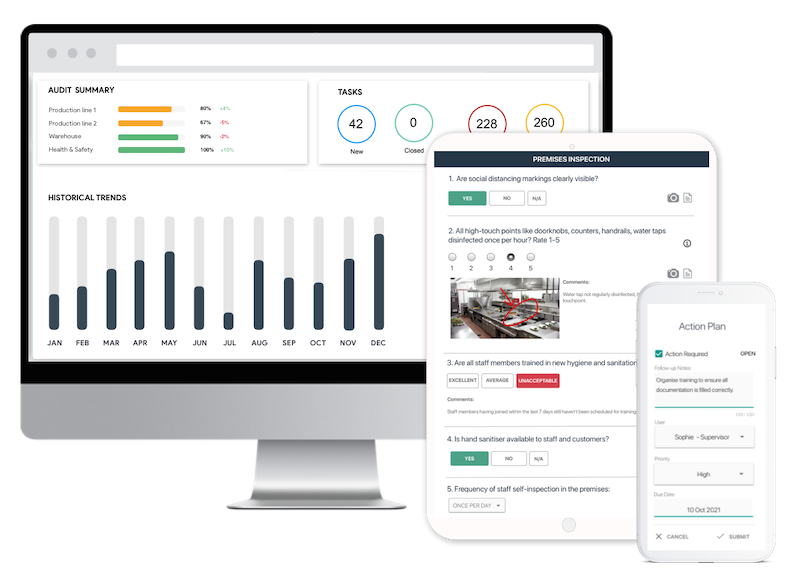
Easy inspection app for your digital checklists
- Conduct inspections anytime, anywhere - even offline
- Capture photos as proof of compliance or areas needing attention
- Instantly generate and share detailed reports after the inspections
- Assign & track follow-up tasks, view historical trends on a centralized dashboard