Convenience Store Cleaning Checklist
83 questions in 7 sectionsInteractive preview: try the answers
Section 1 of 7 · 10 questionsEntrance And External Areas
Parking lot and entrance walkways are free of litter, cigarette butts, and debris.
Exterior trash cans and recycling bins are emptied and liners replaced.
Entry doors, door handles, and push plates are wiped down and free of fingerprints and smudges.
Door glass and windows at the entrance are cleaned inside and out using glass cleaner.
Entry mats and floor grates are shaken out, swept, or vacuumed and are free of debris and standing water.
Exterior signage, menu boards, and promotional displays are clean and free of dirt and bird droppings.
Canopy supports, light fixtures, and overhead surfaces are free of visible cobwebs and buildup.
External walls near the entrance are free of gum, stickers, and graffiti.
Windshield service stations are stocked with clean squeegees, fresh washer fluid, and paper towels, and the surrounding area is wiped clean.
Exterior lighting is checked to confirm all bulbs are functional, including forecourt canopy lighting.
Section 2 of 7 · 10 questionsForecourt And Pump Islands
Pump island surfaces, including the top and sides of each dispenser, are wiped down and free of fuel residue, dust, and grime.
Pump handles, nozzles, and holsters are wiped clean and free of grease and fuel residue.
Keypad screens and card reader surfaces on each pump are sanitized and free of smudges and fingerprints.
Pump island trash receptacles are emptied and liners replaced before overflow.
Fuel spills and drips on the pump island concrete are addressed promptly using appropriate absorbent material and spill procedures.
Pump island floor surfaces are swept clear of litter, leaves, and debris.
Spill containment buckets at each pump are checked and emptied of accumulated water or fuel as needed.
Canopy posts and pump island bollards are wiped down and free of dirt and impact marks.
Any standing water or pooling around the pump islands is addressed to eliminate slip hazards.
Weekly: Pump island surfaces and concrete surrounds are pressure-washed or scrubbed to remove oil stains, tire marks, and fuel buildup.
Section 3 of 7 · 11 questionsSales Floor And Shelving
Sales floor hard floors are swept to remove loose dirt, crumbs, and debris throughout the shift.
Sales floor floors are damp-mopped using an appropriate floor cleaner, with wet floor signs placed during and after mopping.
Gondola shelving is dusted from top to bottom, including shelf edges, dividers, and price strip rails.
Shelf facings are straightened and any spilled product residue on shelves is wiped clean.
Refrigerated display case doors, handles, and glass panels are wiped down and free of smudges and fingerprints.
Cooler door seals and gaskets are wiped clean and free of mold, mildew, and food debris.
Floor mats, anti-fatigue mats, and transition strips are lifted, cleaned underneath, and replaced.
Endcap displays and promotional fixtures are dusted and free of product residue.
High-traffic floor areas including the main aisle and checkout queue are spot-mopped as needed throughout the shift.
Vents, ceiling tiles, and overhead fixtures above the sales floor are free of visible dust buildup.
Weekly: Shelving is fully cleared, wiped down with sanitizer, and restocked with product rotated front to back.
Section 4 of 7 · 14 questionsFood Service Area
Hot food display case glass, surfaces, and food trays are cleaned and sanitized between each restocking cycle.
Roller grill surfaces, end caps, and drip trays are cleaned and sanitized at defined intervals throughout the shift and at close of service.
Coffee and hot beverage station surfaces, including the counter, drip trays, and splash zones, are wiped down and sanitized after each rush period and at minimum once per shift.
Coffee carafes, airpots, and brew baskets are emptied, rinsed, and cleaned at defined intervals and at end of service.
Grounds bins and coffee waste containers are emptied and rinsed regularly and are not left to accumulate between shifts.
Fountain beverage station nozzles, drip trays, and drain covers are removed and cleaned at defined intervals using appropriate food-safe sanitizer.
Fountain beverage station surfaces, syrup lines, and ice chute areas are wiped down at each shift.
Microwave oven interior and exterior, including the door seal and turntable, are cleaned after each use period and sanitized at shift end.
Food preparation surfaces and cutting boards are cleaned and sanitized between uses with food-safe cleaner and are left dry between service periods.
Food service equipment — including nacho warmers, pretzel cases, and soup dispensers — is cleaned and sanitized according to manufacturer recommendations and at minimum at the close of each service period.
Food service area floors, including under and around equipment, are swept and mopped using food-safe cleaner, with attention to grease buildup around hot equipment.
Condiment stations and self-serve topping areas are wiped down, restocked, and sanitized at each shift.
Waste bins in the food service area are emptied before overflow and relined with a fresh bag.
Weekly: Hot equipment including roller grills, warmers, and fryers (where present) is fully degreased behind and underneath, and floor drains in the food service area are cleaned and deodorized.
Section 5 of 7 · 9 questionsCounter And Point Of Sale Area
POS counter surfaces, including the checkout counter top and any customer-facing ledges, are wiped down and sanitized at the start and end of each shift.
PIN pad and card reader surfaces are sanitized using appropriate electronics-safe cleaner at the start of each shift and after peak service periods.
Hand sanitizer dispenser is checked, filled, and the exterior wiped clean.
Cash register or POS terminal screen and surround is wiped clean of smudges and residue.
Impulse merchandise trays and display units on and around the counter are dusted and free of food residue and fingerprints.
Tobacco, lottery, and age-restricted product display cases behind the counter are wiped down and glass surfaces are polished.
Counter floor mats are shaken out and the floor behind the counter is swept and mopped at each shift.
The waste bin behind the counter is emptied and relined before overflowing.
Receipt printer, scanner, and counter peripherals are dusted and free of debris.
Section 6 of 7 · 15 questionsCustomer Restrooms
Restrooms are checked at minimum once per hour during operating hours and the check time and condition are recorded on the restroom log.
Toilet bowls, seats, lids, and exterior base are scrubbed, disinfected, and wiped dry at each inspection cycle requiring cleaning.
Urinals (where present) are flushed, scrubbed, and disinfected at each full cleaning cycle.
Sinks, faucet handles, and surrounding countertop surfaces are scrubbed and disinfected at each full cleaning cycle.
Mirrors are cleaned with glass cleaner and are free of streaks, smudges, and water spots.
Soap dispensers are refilled when below half capacity and the exterior is wiped clean.
Paper towel dispensers or hand dryers are restocked or checked to be operational at each inspection.
Toilet tissue holders are restocked before the roll is exhausted, with at least one spare roll available.
Restroom floors are swept and mopped with disinfectant cleaner at each full cleaning cycle and spot-cleaned between full cycles as needed.
Restroom trash bins are emptied and relined before overflow, at minimum at each full cleaning cycle.
Door handles, light switches, and other high-touch surfaces in the restroom are disinfected at each full cleaning cycle.
Sanitary waste disposal units (where present) are checked, emptied, and sanitized at each full cleaning cycle.
Restroom walls, partitions, and stall doors are wiped down and free of splashes, marks, and graffiti.
The restroom is checked for unpleasant odors, and deodorizer blocks or dispensers are replaced when depleted.
Weekly: Restroom floors and grout lines are scrubbed with a heavy-duty disinfectant cleaner, and caulk around fixtures is inspected for mold and deterioration.
Section 7 of 7 · 14 questionsBack Of House
The stockroom floor is swept and free of empty boxes, loose product, and debris.
The stockroom floor is mopped at minimum weekly and spot-cleaned as needed throughout the week.
The mop sink area is cleaned after each use and is free of residue, dirty mop water, and chemical buildup.
Mop heads and cleaning cloths are laundered or replaced at defined intervals and are not left wet between uses.
Cleaning chemical containers are correctly labeled, stored securely away from food products, and Safety Data Sheets (SDS) are accessible.
Cardboard is broken down promptly and placed in the designated recycling or compactor area.
The dumpster area and surrounding ground are clear of loose litter, spilled waste, and liquid runoff.
Dumpster lids are kept closed when not in active use.
Staff break room surfaces, including tables, countertops, and appliance exteriors, are wiped down daily and food waste is not left out between breaks.
The staff break room floor is swept and mopped at minimum daily.
The staff refrigerator interior is cleaned out weekly and any unlabeled or expired food is discarded.
Walk-in cooler floors and door seals are swept and wiped down at minimum weekly, and any spilled product is cleaned up immediately.
Walk-in cooler interior walls and shelving are wiped down and free of mold, mildew, and product residue.
Weekly: Stockroom shelving is dusted and reorganized, and high surfaces including tops of shelving units are cleared of debris and dust buildup.
Checklist by GoAudits. This checklist is an example: we do not guarantee compliance with the laws applicable to your territory or industry. Seek professional advice to adapt it to your workplace or jurisdiction.
Free PDF
Download the Convenience Store Cleaning Checklist
By downloading this checklist you agree to the GoAudits privacy policy and terms of service.
NEW! Try generating a custom checklist with our free AI tool:
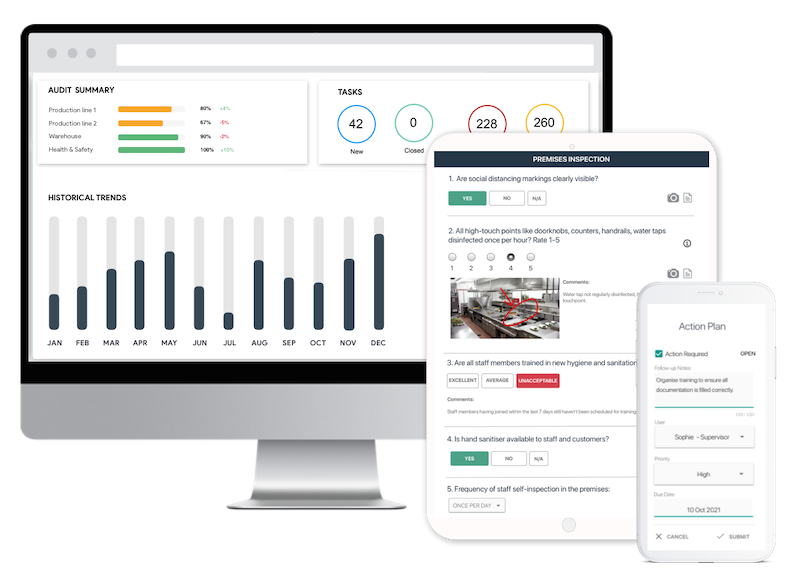
Easy inspection app for your digital checklists
- Conduct inspections anytime, anywhere - even offline
- Capture photos as proof of compliance or areas needing attention
- Instantly generate and share detailed reports after the inspections
- Assign & track follow-up tasks, view historical trends on a centralized dashboard