According to the International Labour Organisation, hazardous substances are estimated to be the cause of 651,279 deaths among workers annually. This staggering figure underscores the need for comprehensive COSHH risk assessments, a crucial step in safeguarding workers’ well-being. COSHH, or Control of Substances Hazardous to Health, encapsulates the regulations and practices designed to protect individuals from hazardous substances encountered in the workplace. It spans various chemicals, dust, fumes, biological agents, and more, posing risks to health when not managed effectively. A hazardous substances risk assessment involves identifying, evaluating, and controlling these substances to mitigate potential harm. COSHH assessment software can help you digitize the process, enhancing the efficiency and accuracy of these assessments.
Let’s find out how it enables continuous, comprehensive monitoring and management of hazardous substances, simplifying compliance, and safeguarding workplace health.
- What is COSHH Assessment Software?
- Key Features of COSHH Assessment Software
- Perform COSHH Assessments Faster with COSHH Software
- FREE & Customizable COSHH Assessment Templates
- How to Choose the Best COSHH Assessment Software
- What is COSHH Risk Assessment?
- Hazardous Substances that Need COSHH Assessment
- What are the COSHH Symbols and their Meanings?
- What is the Difference Between SDS and COSHH?
- FAQs
What is COSHH Assessment Software?
COSHH risk assessment software is a digital tool designed to help organizations manage and mitigate risks associated with hazardous substances. COSHH assessment software automates and streamlines the COSHH risk assessment process. It involves identifying, evaluating, and controlling chemical hazards in the workplace. Its main purpose is to ensure compliance with health and safety regulations, reduce human error, and enhance overall workplace safety by providing a systematic and efficient way to manage chemical risks.
Benefits of Using COSHH Assessment Software
Let’s look at the benefits COSHH risk assessment software brings to your organization.
- Automates data entry, risk evaluation, and reporting, reducing manual work and speeding up assessments.
- Standardised workflows and reliable data reduce human error and support stronger compliance.
- Stores all substance records, controls, and assessments in one place for easy access and audits.
- Cuts admin time, reduces compliance risks, and helps prevent incidents that lead to financial losses.

Key Features of COSHH Assessment Software
Here are the key features of COSHH risk assessment software.
Customizable Templates for Different Hazardous Substances
COSHH risk assessment software offers customizable templates tailored for various hazardous substances. Customization allows businesses to adjust the templates to specific needs, improving the accuracy and relevance of the assessments.
Integrated Hazard Databases and Safety Data Sheets (SDS) Management
The COSHH assessment software typically includes integrated hazard databases and SDS management systems. This feature provides instant access to up-to-date information on thousands of hazardous substances, including their properties, associated risks, and recommended control measures.
Real-Time Monitoring and Alerts for Hazard Control
Real-time monitoring capabilities of the COSHH risk assessment app enable businesses to continuously check hazardous substance levels and conditions in the workplace. The COSHH assessment software can generate alerts when conditions exceed safe thresholds, allowing for immediate action to mitigate risks.
Comprehensive Reporting and Documentation Tools
Effective reporting and documentation are crucial for compliance and safety audits. COSHH risk assessment software includes comprehensive tools for generating detailed reports and maintaining thorough documentation of all assessments, controls, and monitoring activities. These tools ensure that businesses can demonstrate compliance with regulations and quickly produce necessary documentation during inspections.
User-Friendly Interfaces and Mobile Access
Modern COSHH assessment software is designed with user-friendly interfaces that simplify navigation and use. Many COSHH risk assessment software also offer mobile access, enabling employees to perform assessments, access data, and receive alerts on the go. It ensures that safety management is not confined to a desktop environment, making it more accessible and responsive.
Perform COSHH Assessments Faster with COSHH Software
Digitization has transformed how assessments are handled, and GoAudits is a valuable tool for simplifying COSHH compliance. With the GoAudits safety inspection software, COSHH risk assessments become seamless, offering streamlined data entry, easy evidence attachment, and error reduction.
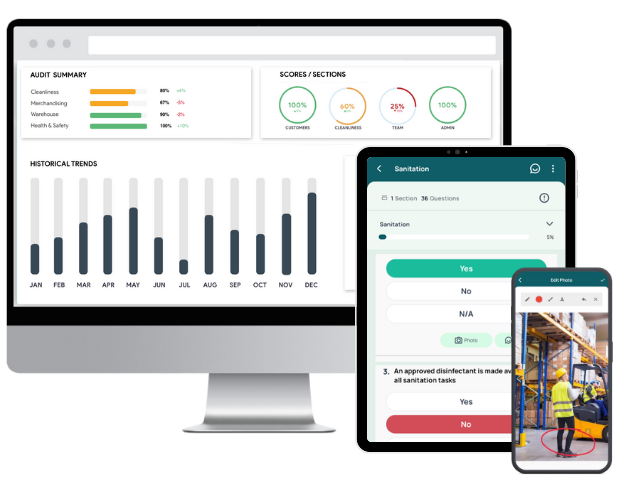
GoAudits COSHH assessment app & software enables you to do the following and more:
- Conduct inspections using your mobile device, even offline. Capture photos, add notes, and compile all information in one place, eliminating the need for paper forms.
- Generate professional, real-time reports with detailed insights. Identify and address risks easily with comprehensive analytics.
- Assign tasks for any issues found, monitor progress, and document evidence of completed actions. Ensure no tasks slip through the cracks with robust tracking and accountability features.
- Set up custom workflows to share reports, assign actions, and send reminders. Ensure the right people are involved at the right time, enhancing team collaboration.
- Use interactive dashboards to gain insights into trends and patterns, helping drive continuous improvement.
FREE & Customizable COSHH Assessment Templates
Here are a few COSHH risk assessment templates to get you started. Alternatively, you can digitize your chemical SOPs into actionable checklists to ensure chemical safety in the workplace.
- COSHH Form Template
- Chemical Safety Checklist – COSHH
- HSE COSHH Assessment Template
- MSDS Checklist – COSHH
- Chemical Risk Assessment
- Chemical Substance COSHH Assessment Template
- COSHH Form Template
- Chemical Spill Kit Checklist
COSHH assessments are a form of risk assessment designed to identify and assess hazards linked to the handling of hazardous materials. COSHH zooms in on risky materials, while regular risk assessments look at all hazards.
In addition to COSHH assessment templates, GoAudits offers checklists that help develop comprehensive control measures to reduce risks and ensure workplace safety for both employees and customers.
- Monthly Manufacturing Risk Assessment Checklist
- Fire Hazard Inspection
- Workplace Hazard Assessment Checklist
- Office Hazards Checklist
- Hazard Identification Form
- OSHA Hazard Communication Checklist
- Hazardous Material Inspection Checklist
- Hazardous Waste Inspection Checklist
- Job Risk Assessment Template
- Fire Risk Assessment Checklist – UK

How to Choose the Best COSHH Assessment Software
Here are the key factors you should consider when choosing the right COSHH risk assessment software:
User-Friendly Interface
A user-friendly interface is essential to minimize the learning curve and increase adoption rates among employees. Look for COSHH assessment software with intuitive navigation, clear instructions, and accessible help resources.
Customization and Flexibility
Every organization has different requirements. Choose COSHH risk assessment software that allows for customization in assessment templates, risk-scoring methods, and reporting formats to adapt to your specific processes and workflows.
Compliance and Regulatory Support
Ensure the COSHH risk assessment software supports compliance with relevant health and safety regulations. It should be regularly updated to reflect changes in legislation and generate reports that meet regulatory requirements, helping maintain legal compliance and reducing the risk of penalties.
Integration with Other Systems
Integration with other business systems, such as HR, ERP, and incident management systems, ensures a seamless flow of information. Choose COSHH risk assessment software that can integrate with your existing systems to streamline processes and improve overall efficiency.
Data Security
Data security measures are essential, especially when handling sensitive information. Ensure the COSHH assessment app uses encryption, secure access controls, and regular security audits to protect your data from breaches and unauthorized access.
Support and Training
Reliable support and training are vital for successful implementation. Opt for a software provider that offers comprehensive training programs, user manuals, and responsive customer support to assist your team effectively.
Cost and Return on Investment (ROI)
While cost is a significant factor, consider the ROI of the COSHH risk assessment software. Evaluate its potential to improve efficiency, reduce risks, and ensure compliance. This can help justify the initial investment and highlight the long-term benefits.
What is COSHH Risk Assessment?
A COSHH risk assessment is a systematic process used to evaluate and manage the risks associated with hazardous substances in the workplace. The purpose of a COSHH assessment is to protect employees from health risks posed by exposure to harmful substances.
The assessment involves identifying hazardous substances, evaluating the risks to health, and implementing control measures to minimize exposure.
Who Needs to Perform COSHH Risk Assessments?
COSHH risk assessments are typically performed by employers. These can be performed in collaboration with health and safety officers. The responsibility lies with the employer to ensure these assessments are conducted to identify and control the risks associated with hazardous substances in the workplace. COSHH risk assessments should be performed regularly, at least annually, and whenever there are significant changes to work processes, new hazardous substances are introduced, or an incident occurs that suggests the current assessment may no longer be valid.
What are the Steps Involved in Conducting COSHH Risk Assessment?
The first step in a COSHH risk assessment is identifying all hazardous substances present or generated in the workplace. This includes chemicals, fumes, dust, biological agents, and by-products. Without a complete inventory, it’s impossible to evaluate exposure risks or design effective control measures.
After identifying hazardous substances, the following steps are performed for a complete COSHH risk assessment:
- Assessment of risks
- Determining exposed individuals
- Implementing control measures
- Regular review and maintenance
Why are COSHH Assessments Important?
Here are the primary reasons why you need a COSHH risk assessment:
- Protecting Worker Health: COSHH risk assessment ensures a thorough understanding of the substances used, their risks, and necessary precautions, preventing acute and long-term health issues.
- Preventing Workplace Accidents: Neglecting COSHH assessments heightens the risk of accidents. Understanding substance properties and exposure limits mitigates accidents like spills, inhalation risks, or chemical reactions, enhancing overall workplace safety.
- Legal Implications: Failing to comply may lead to fines, legal action, or even closure due to endangering employee safety and violating health and safety regulations.
- Regulatory Mandates: The Health and Safety Executive (HSE) mandates employers to manage hazardous substances effectively. COSHH regulations cover a broad spectrum, from traditional chemicals to nanomaterials, spanning various industries like manufacturing, healthcare, and construction.
- Data-Driven Control Measures: A comprehensive assessment provides crucial data for implementing tailored control measures. This includes substance properties, health impacts, exposure limits, quantity, and surveillance results.

Hazardous Substances that Need COSHH Assessment
COSHH assessments categorize substances into two types: generic and specific. Generic assessments cover widely used substances with known hazards, while specific assessments delve into less familiar or situation-specific substances, often needing specialist input for detailed evaluation.
According to HSE, the following substances are hazardous to health, mandating a COSHH risk assessment:
- Chemicals: Substances like solvents, acids, alkalis, and pesticides, along with products containing these chemicals, warrant assessment due to their potential health risks.
- Dust: Wood dust and silica dust generated from various industrial processes pose respiratory threats, necessitating thorough assessment for exposure control.
- Fumes: Welding fumes and soldering fumes, often containing harmful particulates and gases, require assessment to mitigate respiratory hazards.
- Biological Agents: Bacteria, viruses, and molds in lab settings or healthcare facilities need assessment to prevent infections and health risks to workers.
- Mists and Vapors: Inhalation of mists and vapors, often encountered in industrial processes or cleaning activities, can pose health risks that require careful assessment.
- Gases and Asphyxiating Gases: Hazardous gases like chlorine or carbon monoxide, as well as asphyxiating gases, demand assessment due to their severe health impact and potential fatalities.
What are the COSHH Symbols and their Meanings?
Understanding the COSHH symbols provided by the GB Classification, Labelling and Packaging of Chemicals Regulation (GB CLP) is crucial for enhancing worker safety through effective communication. Familiarizing oneself with these symbols can significantly reduce the risk of workplace injuries and illnesses.
The table below highlights the symbols and their meanings.
| Symbols | Meanings |
| Explosives | Indicates substances that may explode under certain conditions, posing a significant risk of injury or damage. |
| Flammable | Materials that can catch fire easily and sustain combustion, leading to fire hazards. |
| Oxidizing | Indicates chemicals that promote combustion by providing oxygen or other oxidizing agents, increasing fire hazards. |
| Gas Under Pressure | Denotes substances stored under pressure, which can lead to explosive ruptures or cause physical hazards if mishandled. |
| Corrosive | Indicates substances that cause severe damage or destruction to living tissues upon contact, posing serious health risks. |
| Toxic | Represents materials that, when ingested, inhaled, or absorbed, can cause severe health issues or even death. |
| Harmful/Irritant | Denotes substances causing mild irritation upon contact but can result in harmful effects upon prolonged exposure or in large quantities. |
| Serious Health Hazards | Represent chemicals that pose chronic health risks or can cause serious long-term damage to health. |
| Environmental Hazards | Indicates substances posing risks to the environment, such as aquatic life, soil, or vegetation. |
What is the Difference Between SDS and COSHH?
SDS (Safety Data Sheet) and COSHH both contribute to workplace safety but focus on different aspects. Let’s see how.
| SDS | COSHH | |
| Purpose | It provides detailed information about the hazards of individual substances. | It regulates the assessment and control of hazardous substances in the workplace. |
| Focus | Chemical composition, physical properties, toxicological effects, and safety precautions. | Identification of hazards, risk assessment, control measures, and training. |
| Role in workplace safety | It provides essential information for understanding the hazards of substances. | It provides a structured framework for managing the risks associated with hazardous substances in the workplace and protecting worker health. |
FAQs
COSHH assessment software helps organisations identify hazardous substances, evaluate exposure risks, implement control measures, and maintain compliance records. Platforms like GoAudits also streamline inspections, automate reporting, and track corrective actions, making safety management faster and more consistent across teams.
Digital COSHH tools centralise substance data, SDS information, and inspection findings, making hazards easier to detect and track. Real-time updates and mobile reporting with tools like GoAudits reduce blind spots and improve visibility of risks across sites, helping teams intervene earlier and maintain safer working environments.
Organisations can use specialised COSHH management software, EHS platforms, or inspection apps. Modern tools such as GoAudits offer templates, the ability to attach photo evidence, workflows, and reporting into one system. Teams can manage COSHH assessments alongside broader safety inspections and compliance processes.
COSHH assessments should be reviewed regularly and whenever substances, processes, exposure levels, or regulations change. Many organisations review annually as a minimum, but high-risk environments may require more frequent updates to ensure controls remain effective and legally compliant.
A COSHH assessment examines hazardous substances, exposure routes, potential health effects, existing controls, and required improvements. It also documents responsibilities, monitoring requirements, and training needs to ensure risks are controlled and compliance obligations are met.
Workplaces, materials, and regulations evolve over time. Regular reviews ensure control measures remain effective, new risks are identified early, and documentation reflects current practices. This reduces legal exposure while maintaining a proactive safety culture.
COSHH platforms like GoAudits automatically store assessment records, inspection data, evidence photos, and action logs in one place. This makes it easier to demonstrate compliance during audits, produce reports quickly, and maintain a clear audit trail of safety decisions.