Warehouse Safety Walkthrough Checklist
55 questions in 10 sectionsInteractive preview: try the answers
Section 1 of 10 · 6 questionsFloors, Aisles, And Walkways
Floor surfaces are free of spills, leaks, and standing water
Floors are even, with no cracks, potholes, or raised edges
Aisles are clear of stock, empty pallets, and waste
Cables and hoses do not cross walkways
Pedestrian walkways are unobstructed along their full length
Aisles and intersections are lit well enough to read rack labels and spot floor hazards
Section 2 of 10 · 7 questionsRacking And Storage Systems
Load limits are displayed on each racking run
Uprights, beams, and braces are free of dents, bends, and corrosion
Post protectors and beam safety pins are in place
Pallets are in good condition, with no broken boards or protruding nails
Loads sit square on the pallet with no overhang past the beam edge
Stack heights stay within the marked limit for each bay
Damaged racking is isolated, tagged, and reported
Section 3 of 10 · 6 questionsMaterial Handling Equipment
Forklifts and reach trucks show no visible damage, leaks, or worn tires
Overhead guards and load backrests are fitted and undamaged
Operators wear seat belts while equipment is moving
Unattended equipment is parked with forks lowered and brake applied
Pallet jacks and lifting aids move freely and are stored clear of walkways
Conveyor guards and emergency stops are in place and accessible
Section 4 of 10 · 6 questionsLoading Docks And Vehicle Movement
Open dock doors and edges are protected by barriers, gates, or chains
Wheel chocks or trailer restraints are in use at every occupied bay
Dock levelers and dock plates are secure and in working condition
Vehicles and pedestrians are separated by barriers or marked routes
Drivers reverse with a spotter or in line with site traffic rules
Speed limits are observed in the yard and inside the building
Section 5 of 10 · 6 questionsFire Safety And Emergency Preparedness
The full width of each exit route is clear, including the ground outside the door
Fire exit doors open easily from the inside
Extinguisher pressure gauges read in the green zone and safety pins are intact
Sprinkler heads have the required clearance below them
Alarms, detectors, and emergency lighting show no fault indicators
Evacuation routes and assembly points are signed and visible
Section 6 of 10 · 5 questionsElectrical Safety
Sockets, plugs, and switches are undamaged and free of scorch marks
Power leads are free of fraying, cuts, and exposed conductors
Extension leads are not daisy-chained or overloaded
Electrical panels are closed, labeled, and clear of stored items
Isolation points are accessible and lockout devices are available
Section 7 of 10 · 5 questionsHazardous Substances And Spill Control
All containers are labeled with their contents and hazard warnings
Chemicals are stored in compatible containers with lids secured
Incompatible substances are segregated in storage
Spill kit contents match the chemicals stored nearby and the tamper seal is unbroken
Areas where chemicals are handled are ventilated and free of fumes
Section 8 of 10 · 4 questionsPersonal Protective Equipment
Staff on the floor wear the PPE required for their task
High-visibility clothing is worn in all vehicle operating areas
PPE in use is clean, intact, and correctly fitted
Spare PPE is available and stored in a designated place
Section 9 of 10 · 4 questionsSignage, Markings, And Communication
Mandatory PPE zones are signed at every entry point
Floor markings for pedestrian and vehicle routes are intact and visible
Warning signs on high-risk equipment and areas are legible
Blind corners have mirrors or visibility aids in working condition
Section 10 of 10 · 6 questionsWorking Practices And Supervision
Staff use lifting aids for loads that are heavy or awkward
Staff lift with the load close to the body and without twisting
Nobody climbs racking or rides on forklifts or pallet jacks
Work at height is done from approved platforms or steps, not pallets or shelving
No horseplay, bypassed guards, or unsafe shortcuts are observed
A supervisor is present in high-risk areas during active operations
Checklist by GoAudits. This checklist is an example: we do not guarantee compliance with the laws applicable to your territory or industry. Seek professional advice to adapt it to your workplace or jurisdiction.
Free PDF
Download the Warehouse Safety Walkthrough Checklist
By downloading this checklist you agree to the GoAudits privacy policy and terms of service.
NEW! Try generating a custom checklist with our free AI tool:
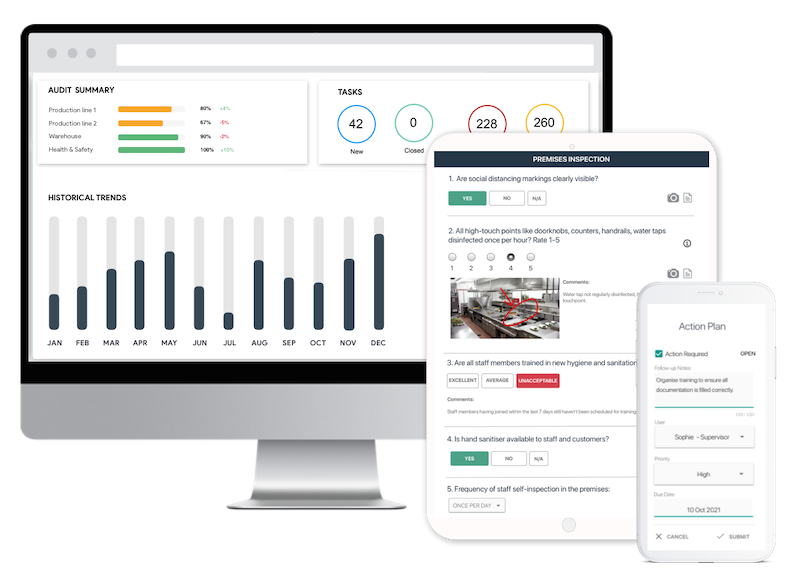
Easy inspection app for your digital checklists
- Conduct inspections anytime, anywhere - even offline
- Capture photos as proof of compliance or areas needing attention
- Instantly generate and share detailed reports after the inspections
- Assign & track follow-up tasks, view historical trends on a centralized dashboard