- Library
- Health & Safety
- Fire Safety Inspection Checklist
Fire Safety Inspection Checklist
61 questions in 4 sectionsInteractive preview: try the answers
Section 1 of 4 · 19 questionsPREVENTION
Are all flammable fuels, gases and chemicals stored correctly?
Are oxygen cylinders and oxidising substances stored appropriately to minimise fire risk?
Are all materials stored correctly and separately?
Are sources of ignition effectively controlled?
Have suitable measures been taken to reduce the risk of arson, including avoiding the storage of combustible materials close to buildings?
If hot work takes place are fire risks adequately controlled?
Are combustible materials like paper, dry waste, etc. kept to a minimum and properly stored?
Are electrical sockets being used safely and not overloaded?
Are portable electrical appliances subjected to PAT testing?
Has the fixed electrical wiring been subject to a test and inspection within the last five years (Inspections should be carried out more frequently for higher risk premises)?
Is the use of portable heaters appropriately controlled?
Are appropriate signs displayed where needed to highlight fire hazards, i.e. smoking rules, gas storage, flammables?
Are smoking rules adhered to?
Are all rubbish bins emptied regularly?
If paper is recycled, are storage vestibules emptied regularly?
Are combustible and flammable materials kept away from ignition sources?
Are high housekeeping standards maintained?
If there is a risk of an explosive or flammable atmosphere developing, are the risks assessed and properly controlled?
Is heating and cooking equipment subject to regular servicing, maintenance and cleaning, as appropriate?
Section 2 of 4 · 9 questionsCONTROL AND CONTAINMENT
Are all fire extinguishers in their designated places, readily accessible and in good condition, including fire blankets and hose reels where applicable?
Have fire extinguishers been serviced within the last twelve months?
Are all fire doors and doorframes free from damage?
Do fire doors close properly under their own weight, where fitted with closing devices?
Are all fire doors either kept shut or held open on a device which releases automatically in the event of a fire alarm?
Are fire doors signed correctly on both sides (except for cupboard doors which are to be signed on the front only)?
Are there any breaches of floors or compartments filled with fire resistant materials e.g., holes made for pipes and cables?
If there is a fire sprinkler system, is it subject to a weekly pressure/bell test and routine servicing?
Are there service and testing arrangements for fire-fighting lifts and lightning protection?
Section 3 of 4 · 12 questionsMEANS OF ESCAPE
Are escape routes kept clear?
Can all fire exits be opened immediately and easily?
Are all fire exits clearly identifiable?
Are directional signs in place to direct occupants to the fire exits?
Are metal fire escapes in good condition?
Is there an effective means of raising the alarm which can be heard throughout the building(s)?
Is the fire alarm system routinely serviced and tested weekly?
Is the fire alarm panel showing that the system is fully functional?
Is there a zone plan adjacent to the alarm panel?
Is there sufficient emergency lighting covering internal and external escape routes?
Is emergency lighting subject to monthly activation testing and annual discharge testing?
Is there a designated fire assembly point?
Section 4 of 4 · 21 questionsPROCEDURES, INFORMATION AND TRAINING
Is the fire risk assessment up to date?
Are there written fire arrangements for the premises designating responsibilities for fire safety and outlining emergency procedures?
Are all staff named in the procedures still fulfilling these roles?
Have staff with specific responsibilities under the procedures, been trained in their role, e.g., fire marshals, fire safety officers, etc.?
Has a manager been given overall responsibility for fire safety for the premises and are they named within the written fire arrangements?
Do all staff know what the fire alarm sounds like?
Have all tests identified as necessary in the fire risk assessment been completed and recorded?
Are fire drills being undertaken at the frequency identified in your risk assessment (usually six monthly, but more frequently for higher risk premises)?
Are there records of fire drills and have improvements been made if deficiencies were identified?
Are false alarms investigated and action taken as necessary to prevent further occurrences?
Are all Fire Action notices clearly displayed and completed properly?
Have all staff been trained in what to do in the event of a fire or on hearing the fire alarm?
Are new joiners instructed in the fire safety procedures on day one?
Have sufficient numbers of staff, including fire marshals, been trained in the practical use of fire extinguishers?
Are there arrangements to call the fire brigade to suspicions of fire?
Are visitors made aware of emergency arrangements or otherwise kept under supervision at all times?
Are there suitable arrangements for checking that the premises have been evacuated in case of any emergency?
Have staff who need a personal emergency evacuation plan (PEEP) assisted in developing one and is it up-to-date?
If any staff require a PEEP, are others trained in how to implement it?
If there is a need for special evacuation arrangements for groups of visitors with disabilities, have these practices been put in place?
Are there routine fire safety inspections?
Checklist by GoAudits. This checklist is an example: we do not guarantee compliance with the laws applicable to your territory or industry. Seek professional advice to adapt it to your workplace or jurisdiction.
Free PDF
Download the Fire Safety Inspection Checklist
By downloading this checklist you agree to the GoAudits privacy policy and terms of service.
NEW! Try generating a custom checklist with our free AI tool:
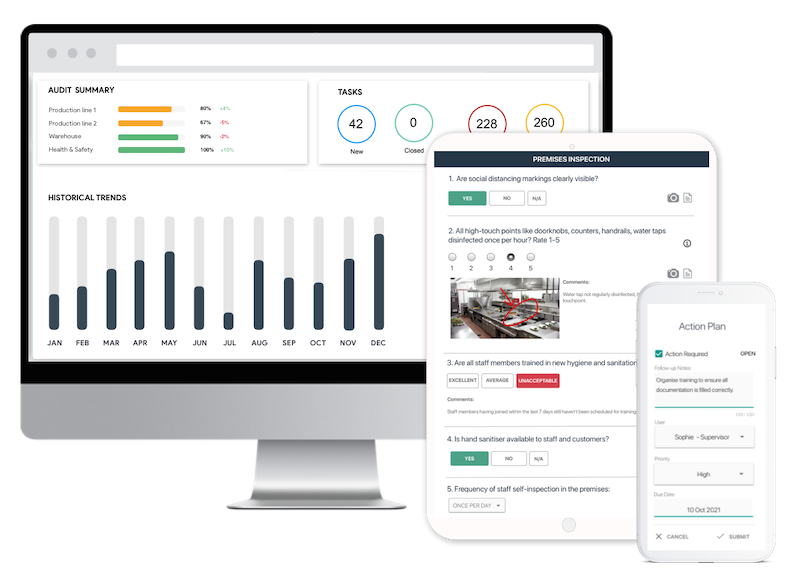
Easy inspection app for your digital checklists
- Conduct inspections anytime, anywhere - even offline
- Capture photos as proof of compliance or areas needing attention
- Instantly generate and share detailed reports after the inspections
- Assign & track follow-up tasks, view historical trends on a centralized dashboard